
Chair Seat Depth: The Measurement That Decides Whether a Chair Actually Fits
- 29 Oct, 2026
- Guides
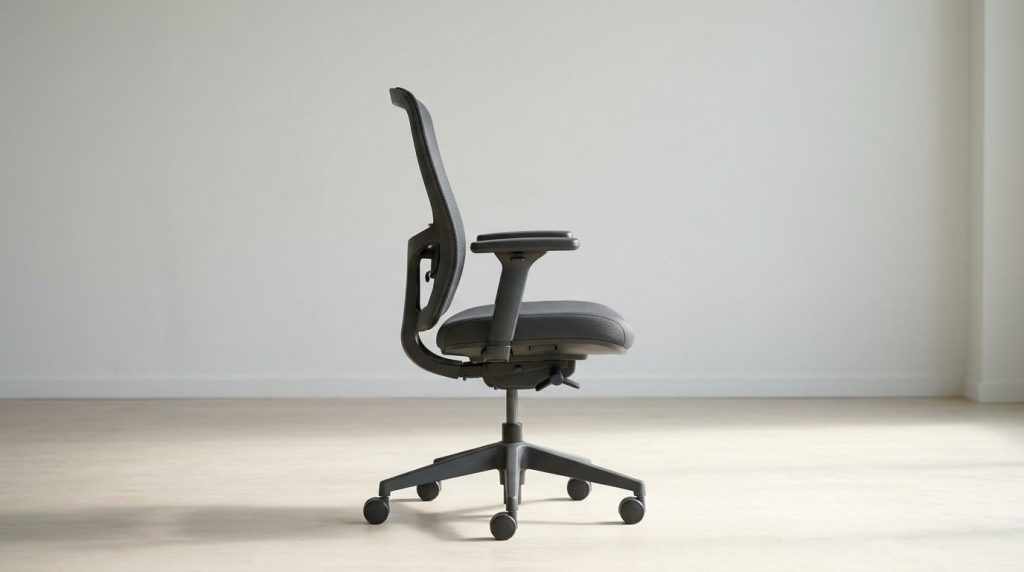
Seat depth is the front-to-back distance from the face of the backrest to the front edge of the seat, and it decides fit because it is the one dimension that cannot be changed once the order is placed. A pan deeper than your thigh pushes you forward until your lower back leaves the backrest; a pan shorter than your thigh puts your body weight on a narrow strip and leaves the rest of the leg hanging. Seat height, armrests and lumbar pads can all be changed after the chair arrives. Depth is settled when the chair is specified, and the only lever that adjusts it is a seat slider, which has to be chosen at that stage, as Section 5 explains.
Key takeaways
- Measure from the backrest contact plane to the crease behind your knee, then treat that figure as your maximum: the pan should stop just short of the crease, not touch it.
- A quoted pan depth is not usable depth. A contoured backrest or thick lumbar pad sits forward of the rear edge and eats space, so ask for the side-elevation drawing before you compare two chairs.
- If your flat hand will not slide down behind your knee at the front edge of the seat, the chair is too deep for you, whatever the spec sheet says.
- A seat slider belongs on hot-desk, multi-shift and wide-range team orders. For one person with a fixed depth that already fits, the money goes further on height and armrest adjustment.
- Specify usable depth, the measurement reference and the tolerance, then measure the first chair of every batch against the approved sample before the rest of the pallets are opened.
Seat Depth Measures Front to Back, and the Spec Sheet Usually Hides It
Two chairs can carry the same seat depth figure and fit completely differently, which is why comparing that single number across product pages gets buyers into trouble. The definition worth holding on to is narrower than most spec sheets imply: seat depth is the horizontal distance from the plane of the backrest where your lumbar actually rests, out to the front edge of the pan, with the seat at its working angle rather than flipped flat.
Total pan depth and usable depth are different figures
A thickly contoured backrest or a deep lumbar pad sits forward of the pan’s rear edge. Whatever that contour occupies is not available to your thighs, so a chair quoted at one depth can offer noticeably less usable depth than a flatter chair quoted at the same figure. This is the single biggest reason two chairs with identical paperwork feel like different sizes under the same person.
The number moves once someone sits down
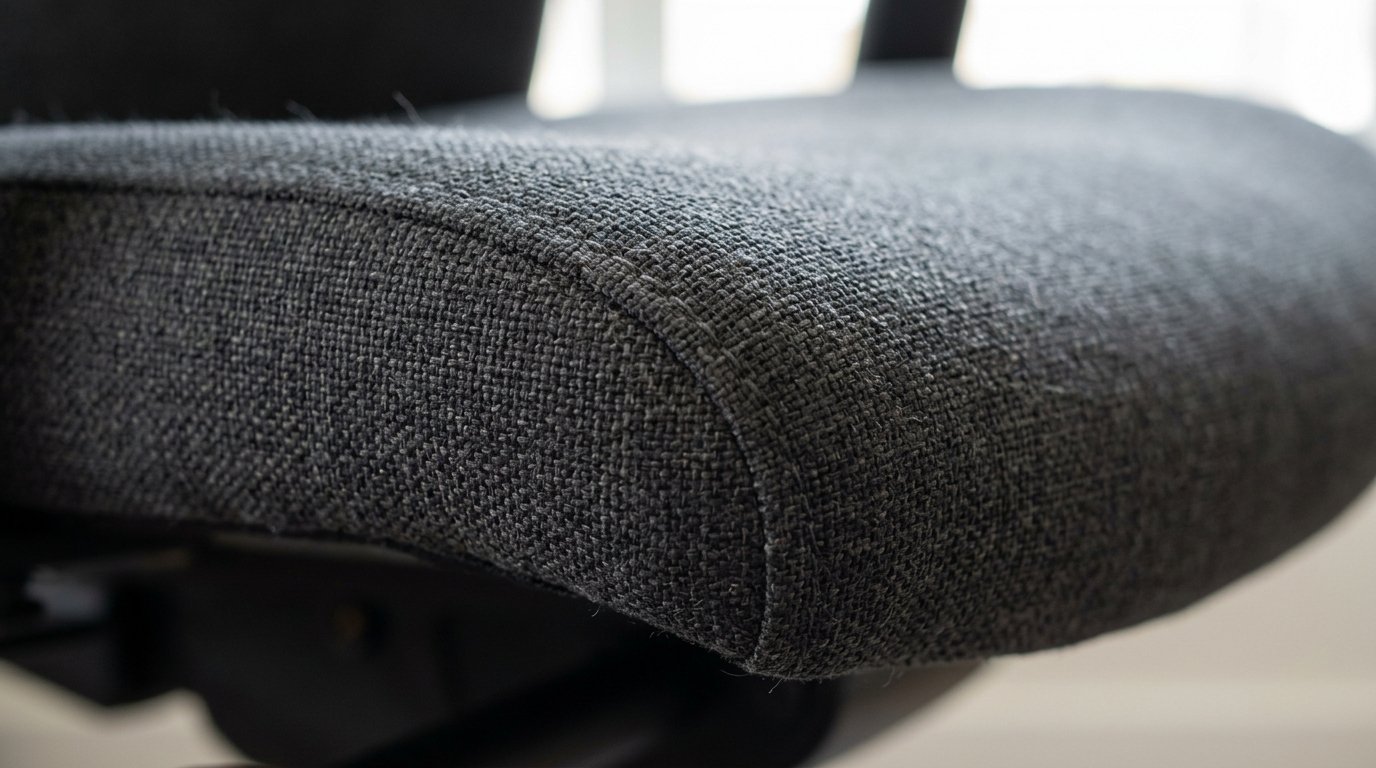
Foam compresses under load, and a waterfall front edge lowers the point where the seat actually meets the underside of the thigh. A soft pan therefore gains effective depth the moment it takes weight, while a firmly upholstered pan with a pronounced contour behaves closer to its quoted figure.
Why the figure is often missing
Product pages lead with seat height, seat width and weight rating because those are easy to compare and easy to photograph. Depth tends to appear only on the side elevation of a technical drawing, if the manufacturer publishes one at all. Nor is depth a proxy for quality or size class: executive chairs frequently run deeper than task chairs as a styling decision rather than an ergonomic one, and a deeper pan does not mean a roomier chair.
There is also no single legal depth figure to comply with. Ergonomic guidance such as BIFMA G1 treats depth as an anthropometric range rather than one number, the applicable standard differs by market, and you should verify the current edition rather than trusting a figure quoted on a blog.
The practical consequence is that depth has to be read off a technical drawing or measured on the chair itself before the order goes out, because the marketing page will rarely volunteer it.
Find Your Own Number in One Minute
You need a tape measure, a hard flat chair and about a minute. Do this before you open another product page, because a depth figure means nothing until you have one of your own to hold it against.
- Sit properly first. Hips and lower back against the backrest, feet flat on the floor, shins roughly vertical. A soft-seated chair will not do, because the foam gives and the measurement drifts as you settle.
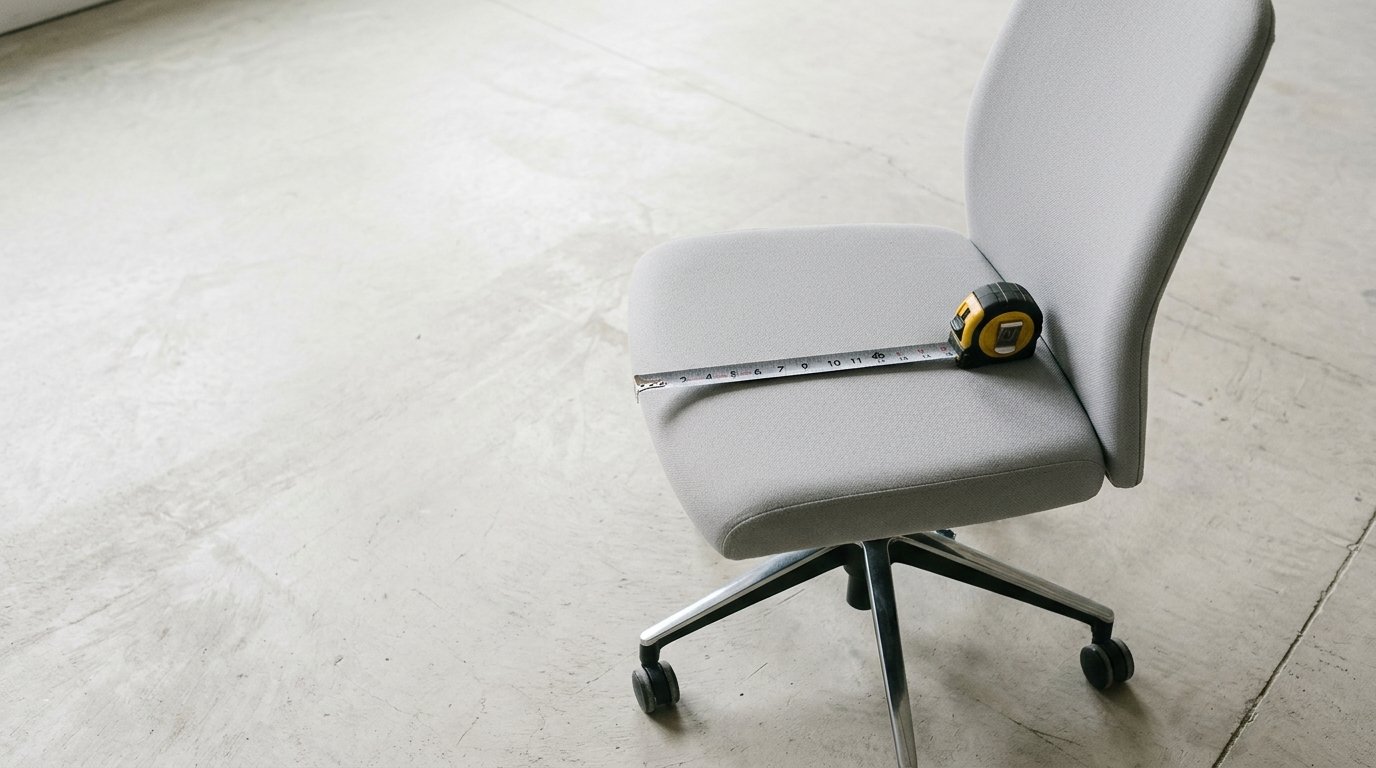
- Measure horizontally from the backrest contact plane to the crease behind your knee. Keep the tape level rather than angled down toward the floor.
- Treat the result as your maximum, not your target. The comfortable answer is a pan that stops just short of the crease, because the front edge has to clear the tissue behind the knee instead of pressing into it. Write both figures down: maximum and target.
- Run the hand check on any chair you already own. Feet flat, back against the backrest, slide a flat hand vertically down behind the knee at the seat’s front edge. If the hand does not fit, the pan is too deep for you, whatever the label says.
- Do not use height as a proxy. Two people of the same height can differ noticeably in leg-to-torso ratio. Assuming the tall colleague needs the deep seat, or that the short one does not, is how the wrong chairs get assigned.
- Record depth next to seat height, never on its own. A chair that fails on depth can sometimes be rescued by changing height, and a depth decision taken in isolation tends to get reversed once people are sitting in the room.
- For a team, buy against the range. Collect the measurements, then specify chairs that cover the shortest and the longest. An average depth is the one option guaranteed to fit nobody at either end.
When a Seat Is Too Deep, You Slide Forward and Lose the Backrest
The failure has a clear mechanism, and once you know it you will spot it in half the meeting rooms you walk into. The front edge of the pan presses into the back of the calf, the body relieves that pressure by sliding forward, and the moment the hips travel the lower back leaves the backrest. The lumbar support is still bolted to the chair. It simply is not touching anybody.
Symptoms that point to depth rather than cushioning
Users perched on the front third of the seat. A visible gap between the lower back and the backrest. Legs going numb, or a red line behind the knee after an hour. People describing the seat as slippery or too soft when nothing about the upholstery has changed.
It gets misdiagnosed because the complaint arrives as a cushion problem or a lumbar problem, so the fix attempted is a gel cushion or a lumbar roll. Whether either one helps depends on how far out the depth is. A firm pad sitting behind the lumbar moves the effective backrest plane forward and takes up part of the pan, which is enough to partly rescue a chair that is only slightly too deep, and that is the case Section 4 and the first FAQ are describing. On a badly oversized pan the pad would have to be thick enough to become its own problem, pushing the hips forward and recreating the perch a little further out. So padding absorbs a small oversize and nothing more, and it never changes the measurement the chair is ordered at.
Take a hypothetical: a facilities team standardises one chair model across an open floor. The tall users are fine. The shorter users spend the afternoon perched forward and report that the chairs are uncomfortable without being able to say why. Nothing is defective. One size has been asked to serve many bodies, and depth is where the mismatch surfaces first.
Reclining does not rescue it. As the backrest tilts back the hips travel forward relative to the pan, so a chair that was borderline upright becomes too deep the moment the user leans back. The wider the recline range, the further that shift runs, which means a quoted depth describes the chair at its most upright and understates the pan a reclining user is actually sitting on.
When a Seat Is Too Shallow, the Problem Gets Quieter
A pan shorter than your thigh supports only part of the leg. Body weight concentrates on a smaller area, the thigh hangs unsupported near the knee, and the pressure builds in a way that is easier to feel at the end of the day than to describe in the moment. If you want the mechanics of how load distributes across a seat and where it accumulates, the science of sitting, posture and pressure points goes deeper into it.
Compensation often looks like good posture and is not. Users push hard back into the backrest to feel supported, or tuck their feet under the seat and perch. Both change the pelvic angle the chair was designed around, so the chair ends up blamed for a posture it never asked for.
Short depth is a legitimate specification in meeting rooms, training rooms and touch-down zones, where people are in and out constantly and easy entry and exit beats eight-hour support. It also buys clearance: under a fixed apron, a shallow drawer stack or a compact workstation, a shorter pan is often what lets knees and thighs sit where they need to.
Front-edge shape confuses the judgement. A pan with a pronounced downward waterfall front feels longer than it measures. It helps circulation at the contact point and adds nothing to the thigh support a long-legged user needs, so a chair can feel generous and still leave the leg hanging.
Judgement call, stated plainly: for anyone assigned a chair for a full working day, an over-short pan is the worse of the two failures. A deep pan can be partly corrected with a firm back cushion. An under-supporting pan leaves the user loading a narrow strip of thigh for eight hours, and that load follows them home.
Adjustable Seat Depth: Who Should Pay for the Slider
If the depth is decided per chair and per person, a seat slider solves a problem you do not have. It earns its cost when the occupant changes.
- What the mechanism actually does. It moves the pan forward and back on the understructure while the backrest stays where it is. Depth changes; the back angle does not.
- Where it pays for itself. Hot-desk and activity-based floors, multi-shift rooms where the chair changes occupant daily, training rooms with rotating groups, and any standardised order covering a wide height range.
- Where it does not. A chair assigned to one person, once the fixed depth is right. That budget belongs on height and armrest adjustment, or on two chair sizes rather than one chair with a slider. If you are choosing for long sessions, the 8+ hour office chair guide covers the other adjustments worth paying for first.
- What to verify before you buy. How far the pan travels, whether the mechanism locks positively rather than relying on friction, and whether the pan still supports the thigh at its most forward setting.
- The honest trade-off. A slider is one more mechanism under the seat with one more part to loosen or fail. With spares and warranty cover in place that is manageable. On second-hand or refurbished stock it is the first thing to inspect.
- The setup mistake to avoid. Buyers set the slider by how the seat looks or by a quick shuffle. Set it with exactly the same behind-the-knee check as a fixed chair, then leave it alone.
Test Depth at Your Own Desk, Not on a Showroom Bench
Depth only fails where the seat meets the desk. A chair that fits your body can still trap your thighs under a fixed apron or a drawer stack, so the two have to be judged as one system. That is also why a showroom minute tells you so little: chairs that feel great in the showroom fail in the real room, and the culprit is usually the desk rather than the chair.
Run it in this order
- Set seat height first, feet flat, thighs roughly level.
- Settle the hips fully back against the backrest.
- Check knee and thigh clearance under the desk with your hands, not your eyes.
- Run the hand-behind-knee check at the front edge.
- Work for ten full minutes on whatever the job actually involves, then repeat the hand check, because posture drifts once attention moves to the screen.
Bring the things that change the answer
A tape measure, the underside height of your desk, the depth of any apron or drawer stack, and the shoes you genuinely wear at work. Heel height changes your effective leg length and therefore the depth you need, which is why a chair can feel wrong in trainers and right in the shoes you sit in all day.
For a multi-chair order, run the test at scale. Put the sample in the real room for a week with two or three users of clearly different builds and ask them to report only what they noticed, unprompted. Then note whether the chair failed on depth, height or desk clearance. Those three get blamed for each other constantly, and one written line is the only thing that settles it six months later.
Seat Depth by Chair Type: Lounge, Meeting Rooms and Executive Seating
Depth requirements do not travel neatly between seating categories, and one building will contain most of them. Three categories are worth separating out because they are where the standard rule inverts or gets quietly ignored: lounge and reception seating, meeting-room chairs, and executive chairs. The notes below take them in that order.
Soft seating is the case where deeper is correct
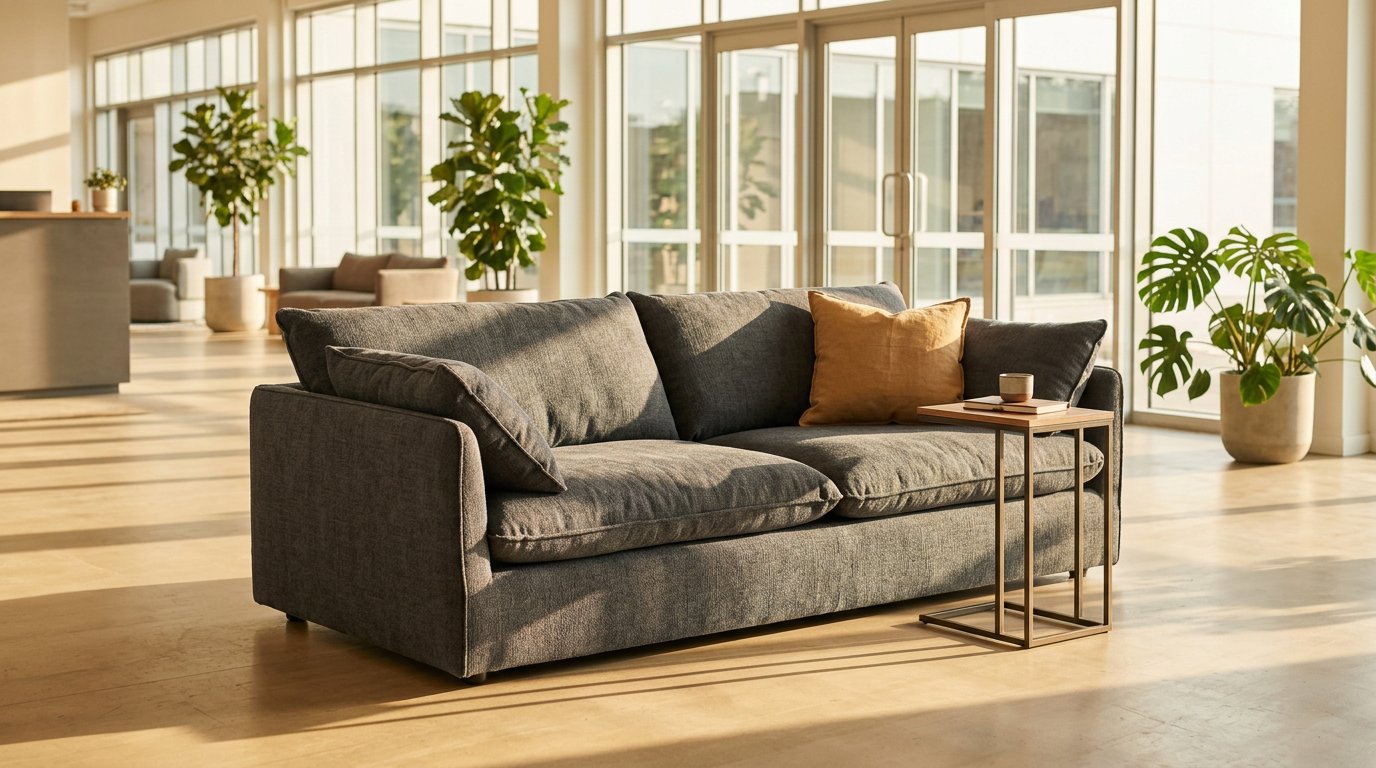
The behind-the-knee logic assumes an upright task posture with feet under the knees. Lounge and reception seating is used with the legs forward and the body reclined, so the measurement that matters becomes whether the feet of shorter or older users reach the floor once they are sitting back. A generous pan is a feature there, not a fault, and applying the task-chair test to a lounge sofa will have you reject the piece everyone actually likes. Choosing the most comfortable lounge chair at work walks through that trade-off properly. Vision builds its lounge range, including SOFA ONE, PIG and MOUNTAIN, alongside its task seating, so soft and hard seating can be specified in one order and inspected against one standard.
Meeting rooms split by dwell time
A conference room used for forty-minute updates tolerates a shallower pan and rewards easy entry and exit. A boardroom hosting full-day sessions should be specified like a task chair, because eight hours is eight hours whatever the room is called. Choosing chairs for a conference room is where that call gets made, and the table underneath the chair matters too: a training table with a boxed apron leaves less thigh clearance than a negotiation table with an open frame, which effectively changes the pan depth you can get away with.
Executive chairs need the same inspection
Vision’s leather chair models Ferine, Trivaro and Sovante sit in the part of the market where styling leads the specification. That is precisely where a quoted depth tells you least. An executive chair is often built on a deeper pan with a thicker backrest because it photographs well and signals status, so ask for usable depth and inspect the actual chair. The corner-office occupant sits as long as anyone else in the building.
Put It to Work: Four Checks Before You Sign the Order
These checks carry the measurement from your notebook onto the purchase order and out to the loading dock. Each one closes a gap where seat depth quietly disappears between intent and delivery.
- Write the real dimension into the specification. Ask for usable pan depth, the measurement reference used to arrive at it, and the tolerance. Never accept a phrase like generous seat depth, because nobody can inspect against an adjective.
- Ask for the drawing. A side elevation showing pan depth, seat angle and cushion profile settles arguments later, and it is the only document that reveals how much of the pan the backrest contour occupies.
- Approve a sample with named users of different builds, and record one line per person: depth measured, hand check passed, desk clearance passed. That record is what the delivery gets compared against.
- Inspect on arrival. Measure the first chair out of each batch against the approved sample before the remaining pallets are opened. A depth change is invisible once chairs are assembled and in use, and by then the whole batch is on the floor.
- For slider-equipped chairs, confirm the mechanism and the pan sit under spare-part support, so a single failed slider does not take one workstation out of service while the rest of the floor is fine.
Vision has spent over 30 years building office furniture in China, runs ISO-based production management across factory output and quality control, and offers OEM/ODM production for buyers who need a pan depth or configuration that is not in the catalogue. The collections cover office chairs, desks and workstations, sofas and couches, filing cabinets and meeting tables, which means chair depth and desk clearance can be settled with one supplier instead of two. Every order includes a warranty and spare-part support, the logistics team handles export documentation such as CO, BL and export licence, and installation is covered either by remote guidance or by professional installation workers attending on site. If you are specifying chairs for a mixed team and would rather start from your measurements than from a catalogue page, send the numbers and let the project team match them to models.
Frequently asked questions
Can a seat that is too deep be fixed after purchase?
Partly. A firm cushion placed behind the lumbar pushes you forward and reduces usable depth, which genuinely helps some users. You cannot shorten the pan itself, and adding thickness behind the back changes the angle the chair was designed around. Try it before replacing the chair, but do not rely on it as a permanent fix for a badly oversized pan.
How do I check seat depth when buying a chair online?
Ask the supplier for the usable pan depth, the measurement reference and a side-elevation drawing, then compare it against your own maximum figure. Lifestyle photos cannot show you how much of the pan the backrest occupies. Where the order allows it, take one sample before committing to a batch and run the hand-behind-knee check on it.


