
Library and Study Hall Furniture: Designing for Focus, Flexibility, and Foot Traffic
- 10 Oct, 2026
- Guides
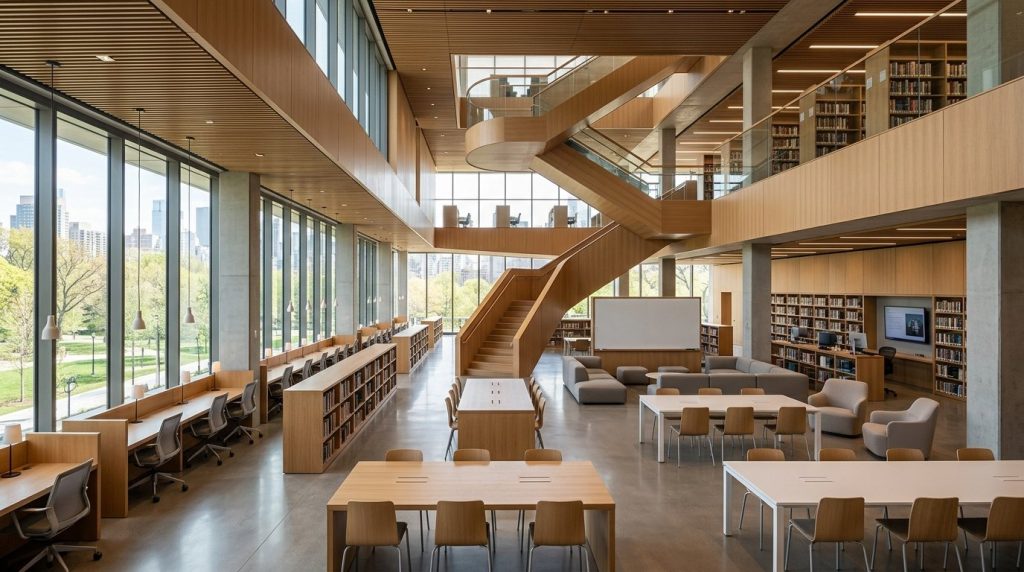
Library and study hall furniture has to solve a contradiction most office furniture never faces: the same floor plan has to support silent, hours-long concentration and noisy group collaboration, sometimes separated by nothing more than a bookshelf. The fix isn’t one universal chair or table — it’s zoning the room by cognitive mode (solo focus, group work, quick transit) and matching furniture durability and acoustic behavior to each zone’s actual traffic pattern. Get the zoning right first, and the furniture choices become obvious.
Why One-Size-Fits-All Furniture Fails Libraries
Walk into most under-performing study halls and you’ll find the same mistake: identical tables and chairs scattered evenly across the room, regardless of what’s supposed to happen there. That’s backwards. A library serves at least three distinct behavioral modes — deep solo focus, active group collaboration, and quick in-and-out browsing — and each one has different noise tolerance, dwell time, and furniture wear patterns.
Put a four-top collaborative table in a quiet zone and you’ll get groups chatting next to someone trying to finish a thesis. Put solo carrels in a high-traffic entry zone and nobody uses them because the ambient noise defeats the purpose. The furniture isn’t wrong — the placement is.
This is the same logic that separates good and bad open plan vs. private office layouts in corporate settings. Libraries just have more extreme versions of the same zoning problem, with far higher daily occupant turnover.
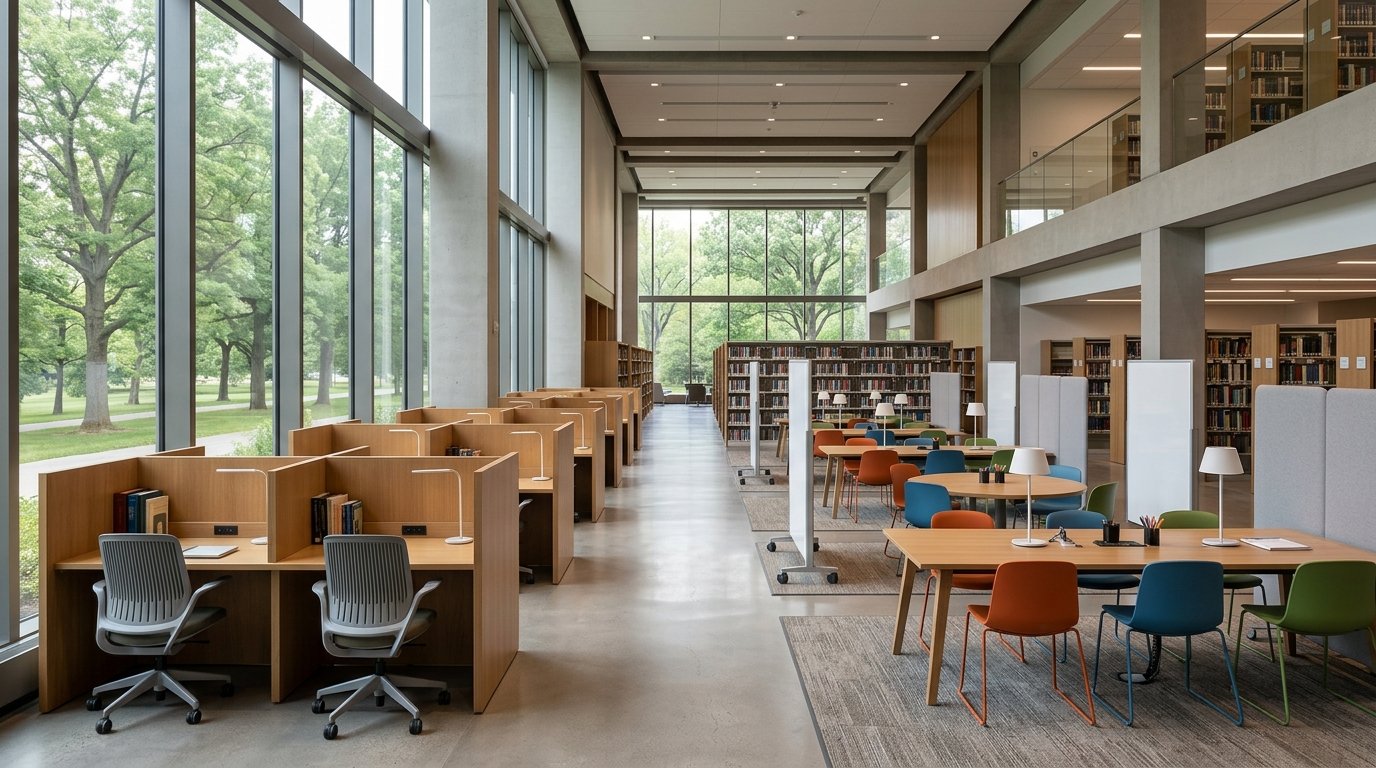
Quiet Zones: Designing Furniture for 4+ Hour Focus Sessions
Quiet study furniture has one job: disappear from the user’s attention for hours at a time. That means no squeaky joints, no wobble, no glare off the work surface, and enough physical separation that neighbors don’t register as a distraction.
What actually works
- Carrel desks with 18-24 inch side partitions — enough visual blocking to reduce peripheral movement distraction without feeling like a cubicle
- Matte, low-glare desktop finishes — glossy laminate under overhead fluorescents causes eye strain during long reading sessions
- Task chairs with passive recline, not active tilt mechanisms — students shift position often but rarely need the aggressive recline range an office task chair offers
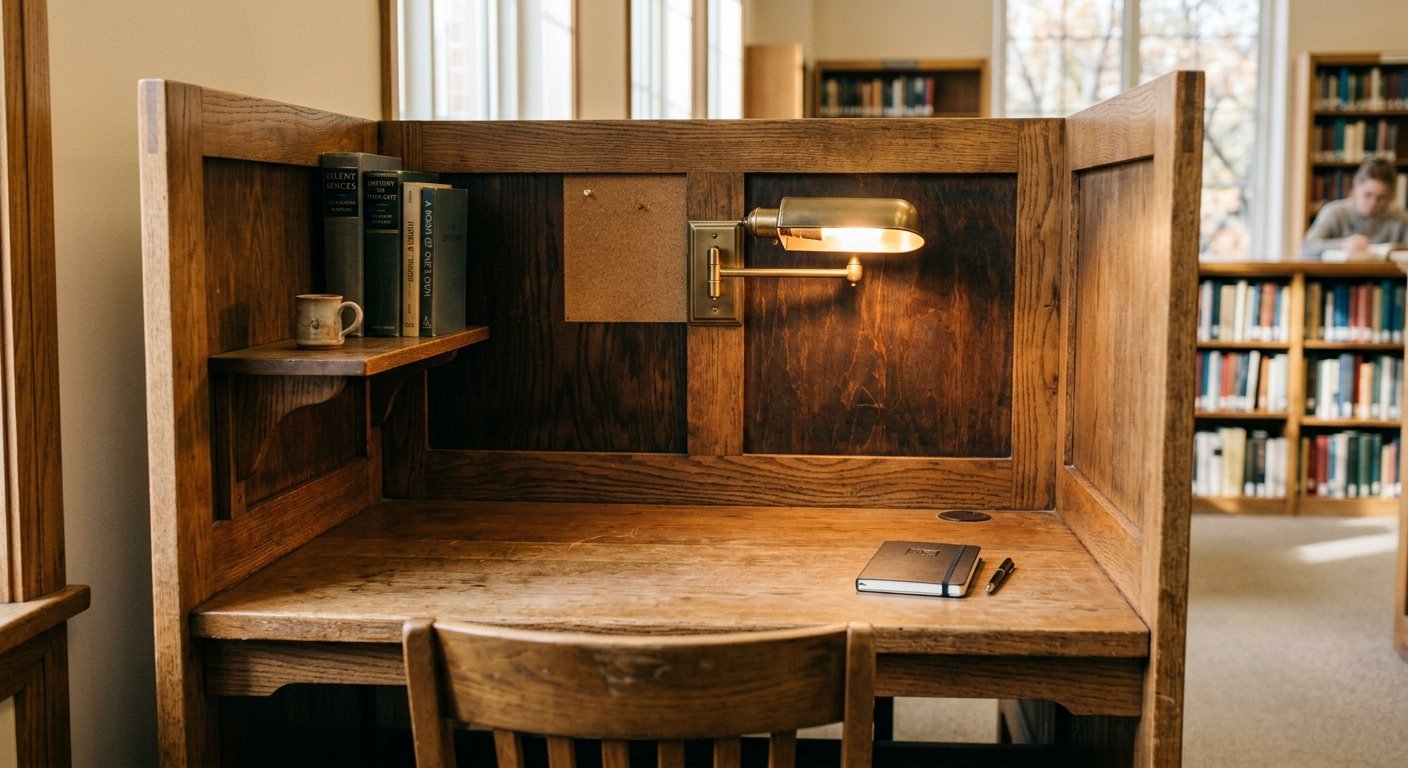
For instance, a university branch library replacing 1990s wooden carrels found that swapping to partitioned desks with integrated cable management (for laptop charging) increased average seat occupancy time by over 40% during exam weeks — students stopped leaving to find outlets, which was the real disruption, not noise.
The posture science here overlaps heavily with office ergonomics — see how posture, pressure points, and chair design actually interact for the underlying mechanics.
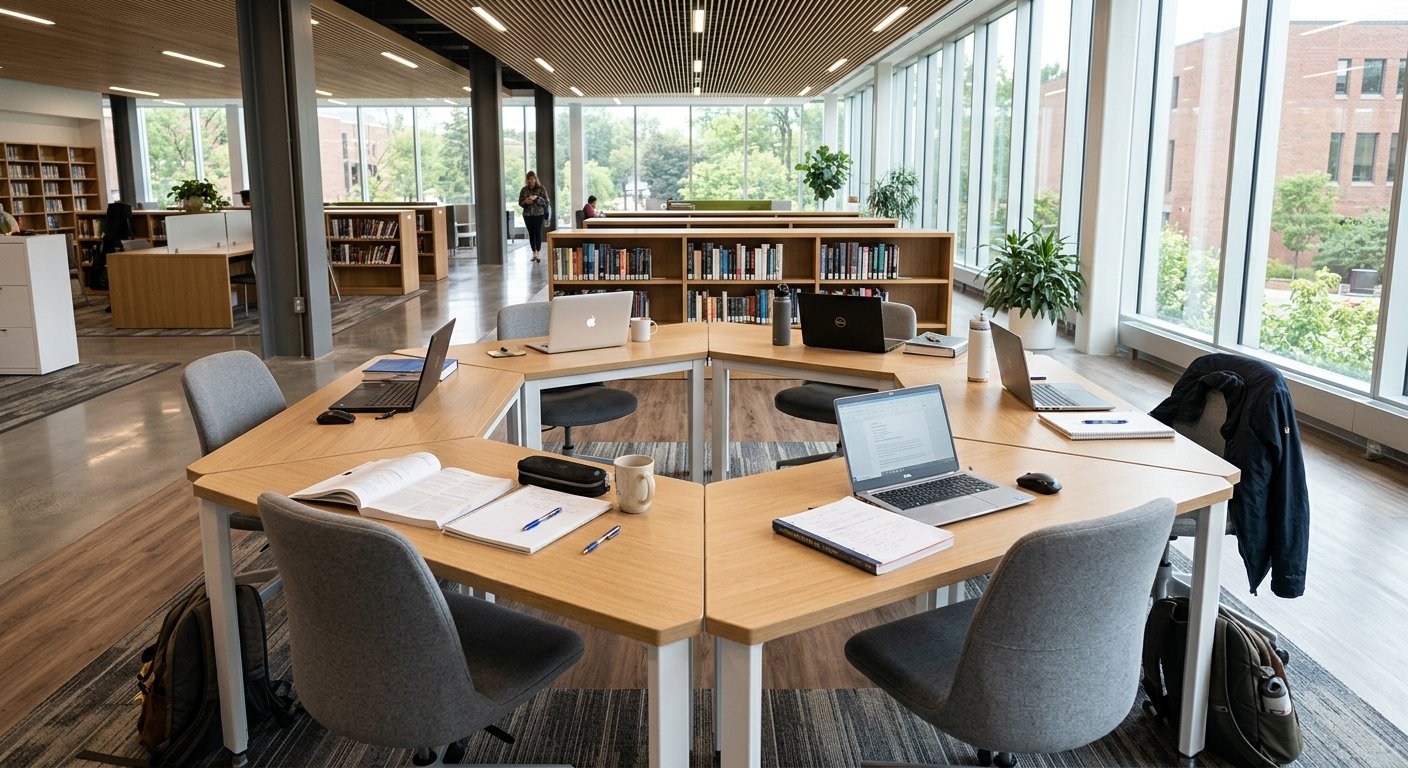
Collaborative Zones: Tables That Reconfigure Without Tools
Group study tables get rearranged constantly — sometimes three or four times a day by different groups. If reconfiguring a table requires a staff member with an Allen key, it won’t happen; students will just shove furniture around and damage floors or table legs instead.
The specification that matters most
Look for tables with nesting or flip-top capability and locking casters rated for daily movement, not occasional relocation. Standard office casters are rated for infrequent moves during office rearrangements — library casters need to survive multiple moves per day for years.
Modular trapezoidal or half-round tables that combine into larger shapes outperform rigid rectangular tables here, because students can form a 2-person huddle or a 6-person group with the same furniture set. This mirrors the thinking behind conference table shapes for different meeting styles — shape drives group size flexibility more than most people assume.
High-Traffic Commons: Built for Churn, Not Comfort
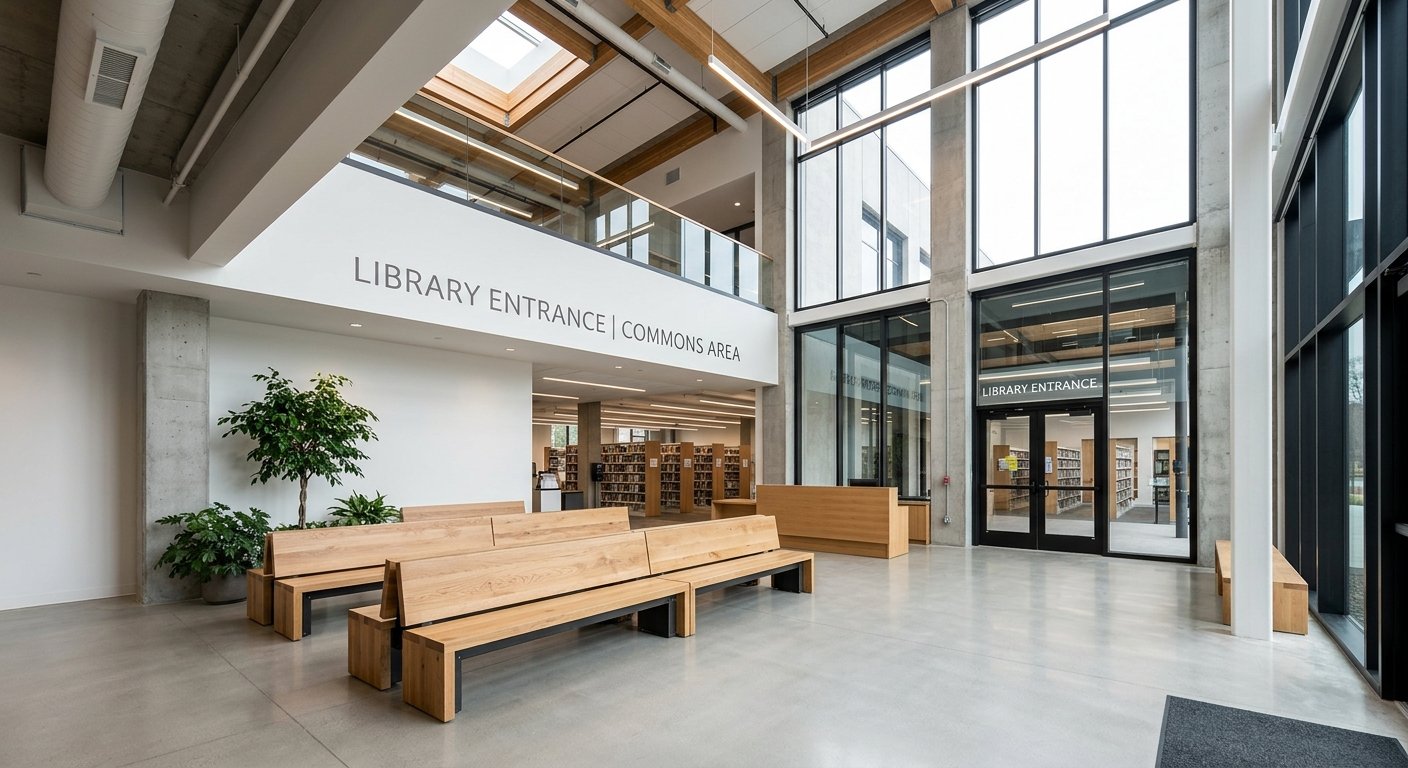
The entry commons, circulation desk waiting area, and browsing stacks see the highest foot traffic but the shortest individual dwell times — often under 15 minutes. Comfort matters less here than abrasion resistance and quick-clean surfaces.
- Bench seating with performance vinyl, not fabric — fabric absorbs spills and odors from thousands of daily contacts
- Standing-height counters for quick laptop checks — reduces seated furniture load in the busiest zone
- Rounded, protected edges on all commons furniture — this is the zone where bumps and collisions happen most
Think of this zone the way you’d think about furniture built for 24/7 call center use — constant churn, minimal personalization, maximum durability per dollar spent.
Acoustic Furniture Tricks Beyond Panels
Most libraries over-invest in wall-mounted acoustic panels and under-invest in furniture that does the same job. Upholstered seating, fabric-wrapped partition dividers, and even soft-close drawer mechanisms all reduce ambient noise without touching the architecture.
A practical example: a mid-size public library added fabric-wrapped bookshelf end-panels (instead of bare wood) along the quiet-zone perimeter and measured a 3-4 decibel drop in ambient noise bleed from the adjacent collaborative zone — enough to be noticeable to regular patrons within a week.
This approach overlaps directly with soundproofing an open office with furniture instead of acoustic panels, since both environments fight the same open-plan noise problem with similar furniture-based fixes.
Material Choices That Survive Years of Student Use
Library furniture gets abused in ways office furniture rarely does — backpacks dragged across edges, food and drink despite the rules, chairs tipped back onto two legs thousands of times. Specify accordingly.
What holds up
- Powder-coated steel frames over painted wood for chair bases — resists chipping from repeated floor contact
- High-pressure laminate (HPL) desktops rated for commercial use, not residential-grade laminate
- Polypropylene or performance vinyl seating that wipes clean without staining
This is the same durability-first mindset covered in furniture for classrooms and training centers that survives daily use by dozens of people — libraries just extend that daily cycle across 10-12 open hours instead of 6-7 class periods.
Sizing the Zones: A Practical Ratio
A rough but field-tested starting ratio for academic libraries: 40% quiet solo seating, 35% collaborative/group seating, 25% commons and transitional seating. Public libraries typically shift that toward 50% commons and browsing because dwell times are shorter and group study is less dominant.
Before finalizing any layout, measure actual room dimensions and traffic flow paths rather than working from an architect’s floor plan alone — the same principle covered in how to measure a space before ordering furniture without a floor plan applies just as directly to library commons as it does to open offices.


