
Furnishing a Fitness Studio Front Desk and Lounge: Durability Meets Brand Energy
- 09 Oct, 2026
- Guides
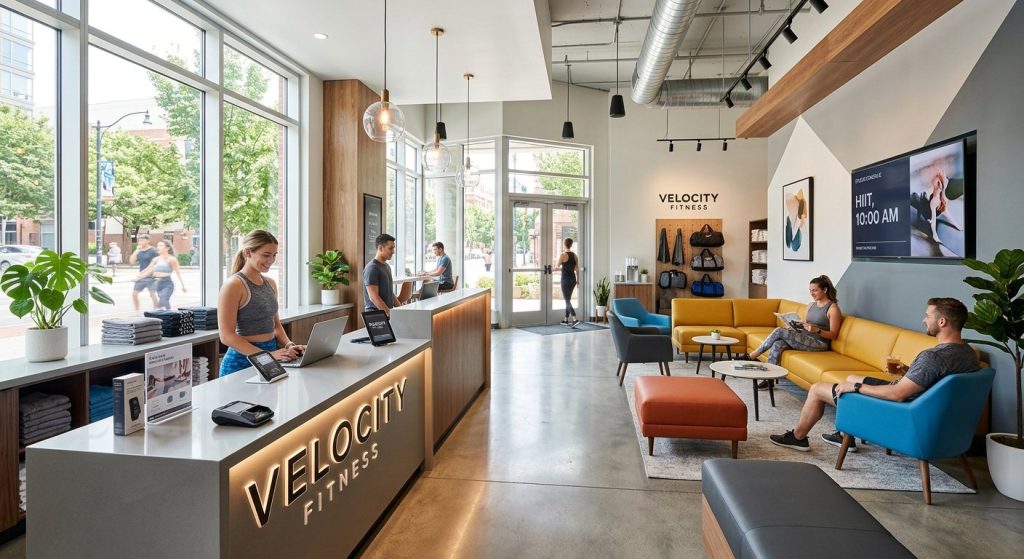
The front desk and lounge in a fitness studio need to survive conditions most commercial furniture never faces: sweat-soaked hands, dropped water bottles, gym bags dragged across surfaces, and a constant churn of bodies moving fast. The winning formula is simple — nonporous, moisture-resistant surfaces at every contact point (counters, seat edges, armrests), paired with bold color and texture choices that signal brand energy rather than clinical sterility. Get the materials right first, then layer in the personality; do it in reverse order and you’ll be replacing cushions within a year.
Why Standard Office Furniture Fails in a Gym Lobby
Here’s a mistake a lot of boutique studio owners make: they furnish the front desk like a corporate reception area, because that’s what the catalog photos look like. Then six weeks in, the fabric upholstery on the lounge bench is stained, the laminate countertop is peeling at the seams, and the whole space looks tired despite being brand new.
Standard office furniture is built for dry hands and occasional contact. A fitness studio front desk sees 200-500 touches a day from people who just finished sweating, and the lounge gets used by members in gym clothes sitting down while still damp. Porous fabrics absorb moisture and body oils; untreated wood veneers swell and delaminate; cheap particleboard cores soften from humidity exposure over time.
The fix isn’t exotic — it’s choosing materials rated for moisture and abrasion from day one. If you’re still mapping out general layout logic for the space, our office furniture solution resources cover the baseline planning principles that apply before you get into gym-specific material choices.
The Front Desk Counter: Your First Durability Test
The check-in counter takes more physical punishment per square foot than any other surface in the building. Water bottles sweat condensation rings onto it, keys and phones scrape across it, and cleaning staff wipe it down with disinfectant multiple times a day — which, over time, degrades cheap finishes.
What actually holds up
- High-pressure laminate (HPL) at 0.8mm+ thickness resists scratching and moisture far better than low-pressure laminate or thermofoil.
- Solid surface materials (quartz composites, acrylic blends) are nonporous and can be sanded to remove scuffs — a feature laminate doesn’t offer.
- Rounded, bullnose edges instead of sharp 90-degree corners reduce chipping from repeated bag and equipment contact.
For instance, a CrossFit-style studio chain we’ve seen furnish multiple locations switched from a wood-veneer counter to a solid-surface top after the original finish bubbled from disinfectant wipe-downs within four months. The solid surface version, two years in, still looks close to new with occasional buffing.
If you’re sizing the counter itself, the same dimensional logic in our desk sizes and dimensions guide applies — just add 4-6 inches of extra counter depth to account for retail displays and tablet check-in stands most studios now use.

Lounge Seating: Comfort That Doesn’t Trap Moisture
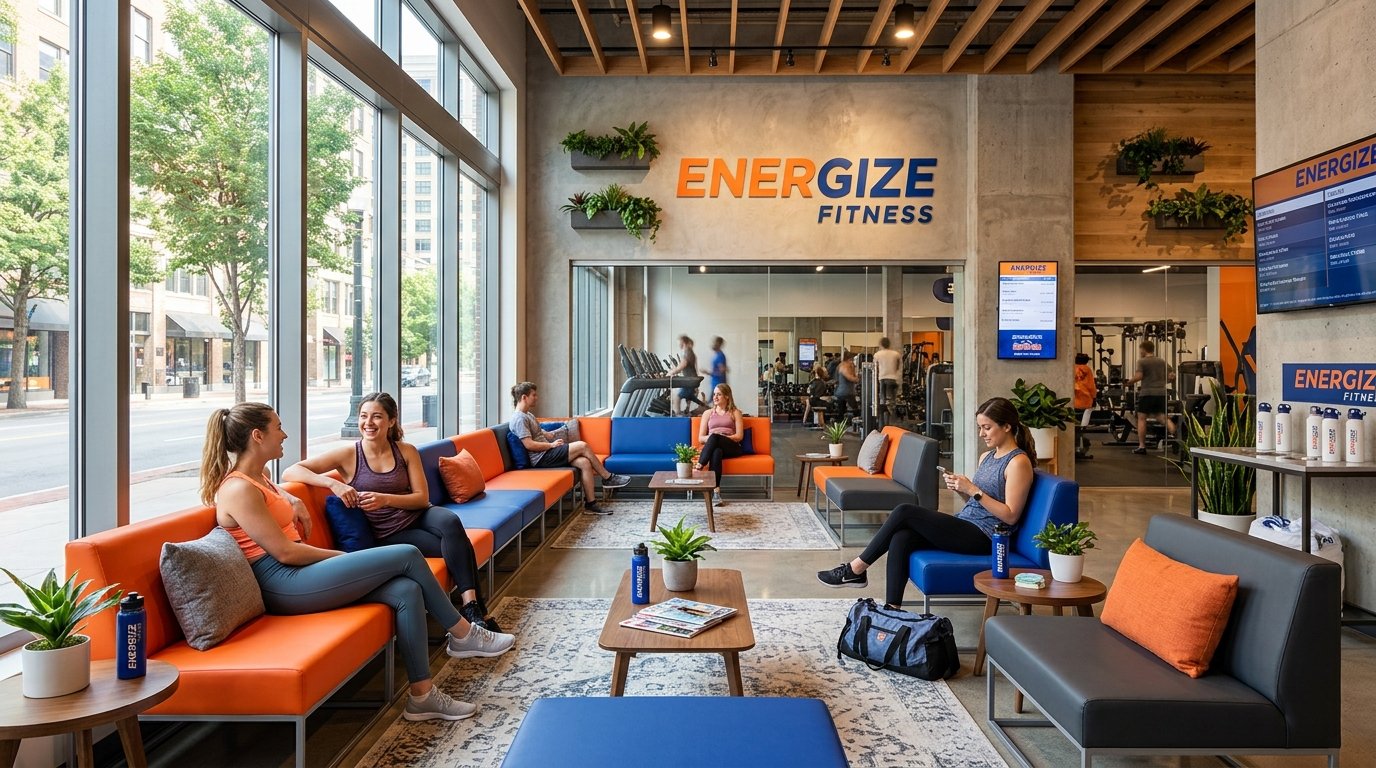
Members sit in the lounge area for exactly two reasons: waiting for a class or recovering after one. Both scenarios mean body heat, sweat, and fabric contact — which rules out most residential-style upholstery outright.
Performance vinyl vs. woven textiles
Performance vinyl is the workhorse choice. It wipes clean in seconds, resists bacterial growth when treated with antimicrobial additives, and doesn’t absorb odor the way porous fabrics do. The tradeoff is a slightly less premium feel and reduced breathability for long sitting periods.
Woven performance fabrics (often polyester or olefin blends with moisture-wicking treatments) feel warmer and more residential, which works well in recovery lounges or studios positioning themselves as wellness-forward rather than hardcore training spaces. They need more frequent cleaning and eventually show wear at contact points faster than vinyl.
For a deeper breakdown of which textile actually survives heavy commercial use, our guide on fabric vs. vinyl vs. performance textiles covers the technical specs — abrasion cycle ratings, hydrolysis resistance — that matter more in a gym lounge than almost any office application.
Frame construction matters just as much as the covering. Look for steel or aluminum frames with powder-coat finishes rather than painted wood — powder coat resists the chipping that happens when gym bags and weight equipment inevitably knock against furniture legs.
Flooring-Adjacent Furniture: Benches, Cubbies, and Shelving
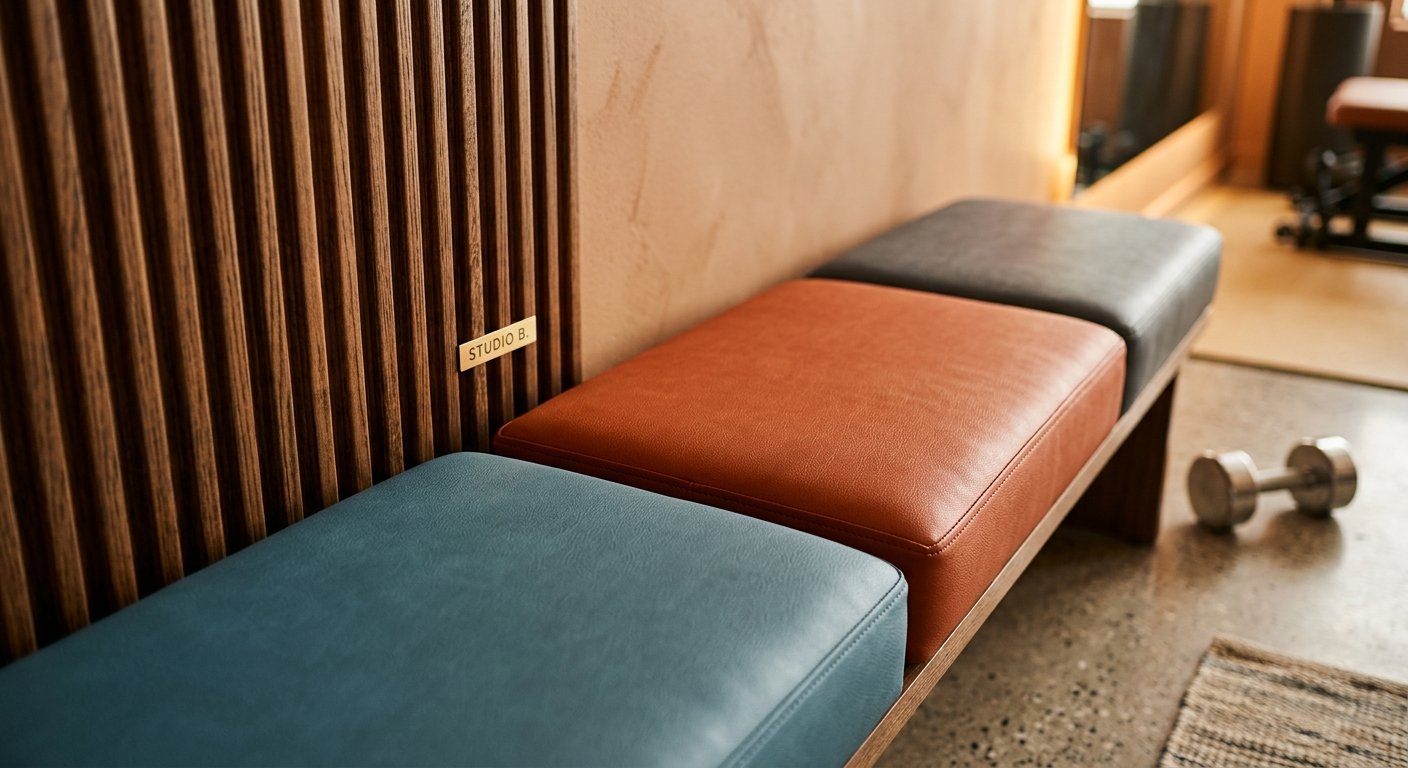
Fitness studios almost always need some form of bench seating or shoe/bag storage near the entry, and this zone takes abuse that front desks and lounges don’t — direct contact with shoes, weights set down on surfaces, and constant foot traffic brushing against legs and edges.
Material choices for entry benches
- Solid wood with a marine-grade polyurethane sealant resists moisture far better than standard furniture-grade finishes.
- Molded plastic or composite benches (common in locker rooms) are nearly indestructible but can feel out of place in a boutique studio aiming for upscale branding.
- Metal-frame benches with removable, washable cushion pads give you durability on the frame and easy replacement on the one component that wears out.
Cubbies and shelving should use closed-cell foam or powder-coated metal dividers rather than raw MDF — sweaty shoes and reusable water bottles will destroy an unsealed wood shelf within a season.
Brand Energy: Where Color and Texture Earn Their Keep
Durability gets you furniture that survives. Brand energy is what gets members posting photos and telling friends the space feels different from the gym down the street. This is where a lot of studios underinvest — they spend the whole budget on function and have nothing left for personality.
Practical ways to inject energy without sacrificing durability
- Accent walls paired with neutral furniture — keep the big-ticket seating neutral (grays, deep blues) and let paint or signage carry the bold color, so furniture stays timeless as brand colors evolve.
- Color-blocked upholstery — a performance vinyl bench in the studio’s signature color becomes a photo backdrop, not just seating.
- Texture contrast — pairing a matte solid-surface counter with a textured accent panel (reclaimed wood look, perforated metal) adds visual depth without adding maintenance burden.
A boutique Pilates studio chain, for example, used a single bold color — a deep terracotta — on just the lounge seating and front desk kick panel, keeping everything else neutral stone and white. The result reads as intentional and premium rather than loud, and it’s held up well because the color lives on wipeable vinyl, not porous fabric or paint that scuffs.
Layout Considerations Specific to Fitness Traffic Flow
Gym members move differently than office visitors — they arrive in waves right before class start times, often carrying bags, bottles, and phones, and they need to check in fast without bottlenecking the entryway.
A few layout rules that consistently work:
- Keep the front desk counter at least 36 inches from the entry door swing radius to prevent congestion during class-change rushes.
- Position lounge seating perpendicular to, not facing, the check-in line — it reduces the awkwardness of members waiting while being watched by people seated nearby.
- Leave at least a 42-inch clear path between any lounge furniture and high-traffic walkways, wider than the 36 inches typical in office settings, because gym bags add bulk to foot traffic.
These numbers echo a lot of the spacing logic in our hotel furniture sourcing guide — both industries deal with high-volume, bag-carrying foot traffic moving through compact lobby zones.
Cleaning Protocols That Extend Furniture Life
Even the best materials fail early if the cleaning routine is wrong. Disinfectant wipes with high alcohol content, for example, can dry out and crack vinyl upholstery over months of daily use if the vinyl isn’t rated for it — always check the manufacturer’s chemical resistance spec before adopting a cleaning product studio-wide.
A realistic daily/weekly routine
- Daily: wipe down counters and seating with a pH-neutral disinfectant, not straight bleach solutions.
- Weekly: inspect seams and welts on upholstery for early separation — catching it early means a repair, not a full reupholster.
- Monthly: tighten hardware on benches and stools; vibration from foot traffic and dropped equipment loosens screws faster than in a typical office.
This maintenance discipline matters more here than almost anywhere else we cover — it’s the difference between furniture that lasts 5+ years and furniture that needs replacing in 18 months.


