
Furnishing a Law Firm: Balancing Client Trust, Confidentiality, and Long Hours
- 12 Jun, 2026
- Guides
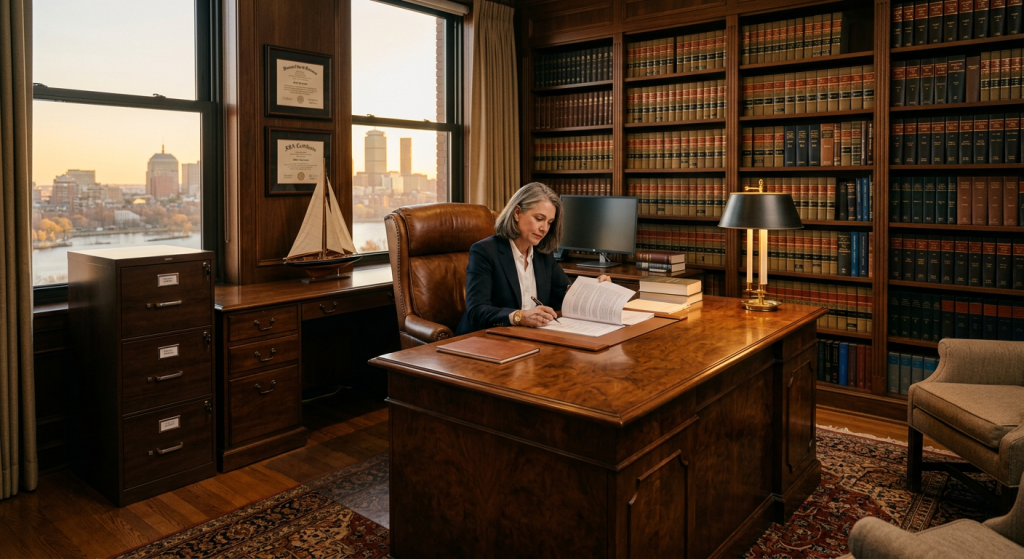
Furnishing a law firm comes down to three non-negotiables: pieces that communicate credibility the moment a client walks in, layouts and storage that keep privileged information genuinely confidential, and ergonomics built for the 60-hour weeks attorneys actually work. Get any one of these wrong and you pay for it — in client perception, malpractice exposure, or attorney burnout. The good news is that the same investment, planned correctly, solves all three at once.
Why Law Firm Furniture Is a Different Problem Than Generic Office Furniture
A tech startup can get away with bean bags and a ping-pong table. A law firm cannot. Clients are paying $400 to $1,200 an hour and their first impression is the lobby — if your reception furniture looks like it came from a coworking space, you've already started losing the room.
But law offices also have constraints most industries never think about. Privileged conversations happen behind those office doors. Original signed documents sit in those cabinets. Associates pull 14-hour due diligence shifts in those chairs. Every piece of furniture has to perform on the trust axis, the security axis, and the endurance axis simultaneously.
The firms that get this right tend to spend more per square foot than the average office — usually 30 to 50 percent more — but their furniture lasts 12 to 15 years instead of five, and their associate retention improves measurably. It's not a cost. It's infrastructure.
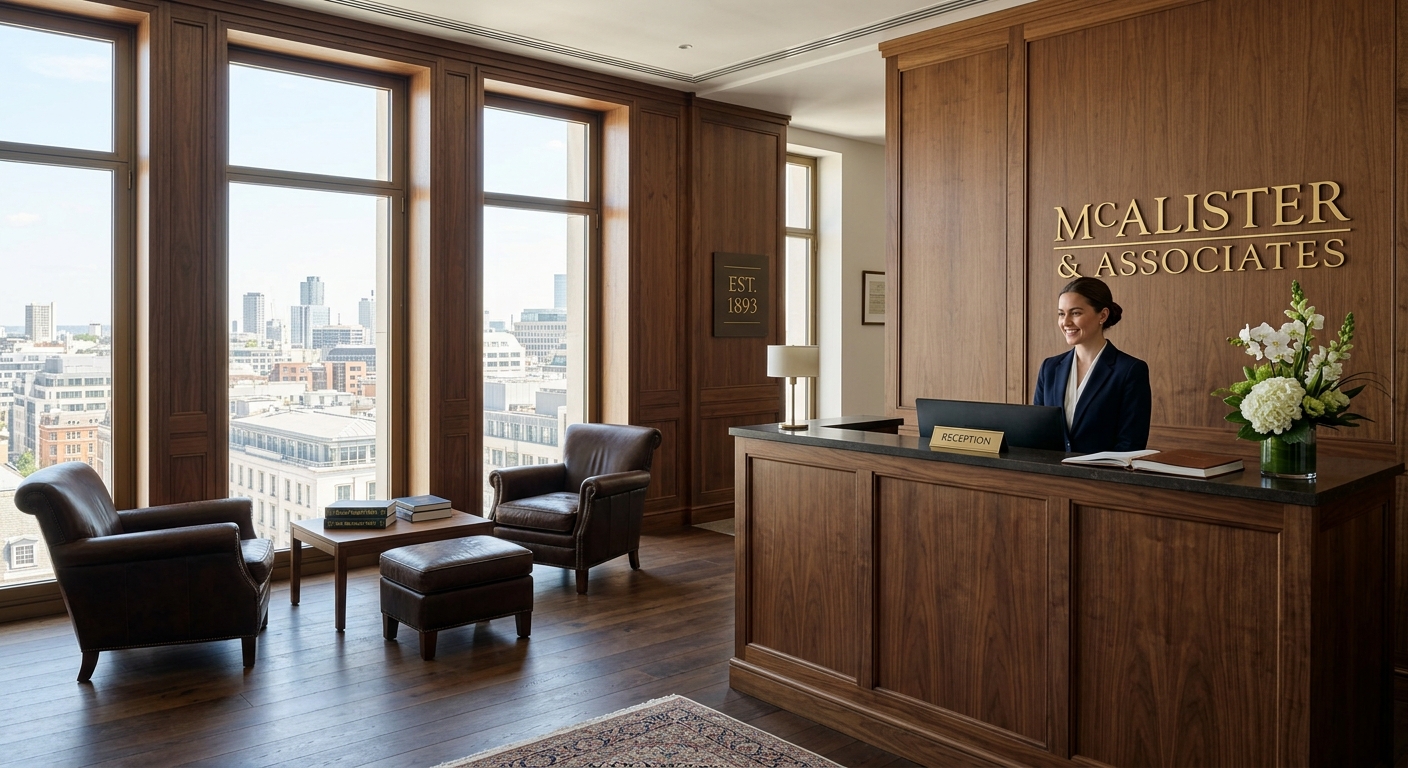
The Reception Area: Where Trust Is Won or Lost in 90 Seconds
Clients form a judgment about your firm before they shake anyone's hand. The reception is where that happens, and the furniture is doing more talking than your receptionist.
What actually signals credibility
- Material weight. Solid wood or full walnut veneer beats laminate every time. Clients can tell, even if they can't articulate it.
- Reception desk height. A standing-height transaction counter (42”) feels more formal than a low desk. It also gives the receptionist screen privacy.
- Seating that's firm, not sunken. Lounge chairs with 4” high-density foam communicate seriousness. A squishy sofa says “hotel lobby.”
- One genuinely good piece of art beats four mediocre ones. Same logic applies to furniture.
For example, a mid-sized litigation firm in Boston we worked with replaced their tired fabric lounge set with two walnut-framed leather club chairs and a single solid-wood coffee table. Nothing else changed. Three months later, partners reported clients spontaneously commenting on the “feel” of the office during intake meetings. Your lobby furniture is part of your pitch deck, whether you planned it that way or not.
Private Offices: Designed for 12-Hour Drafting Sessions
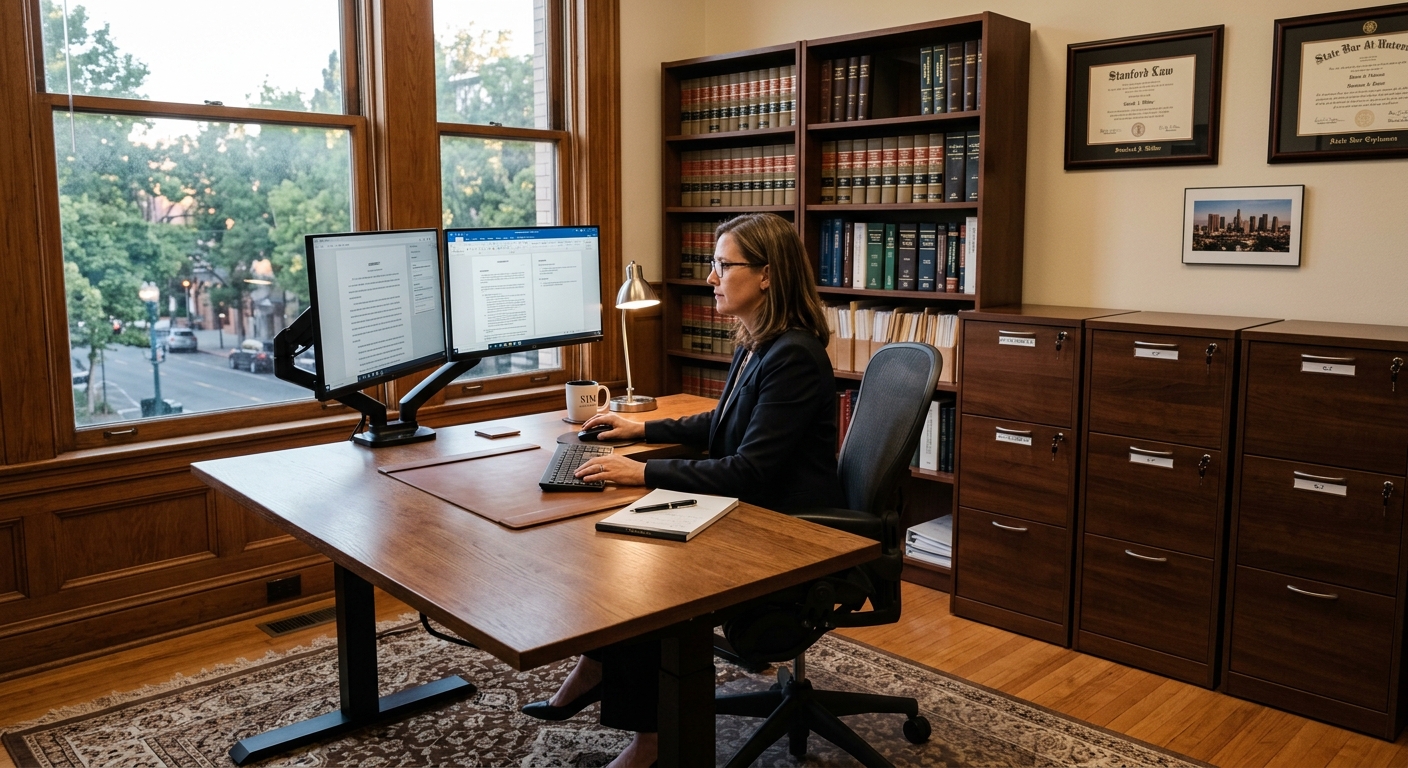
An attorney's private office is where the real work happens — and where most firms underspend. Partners will approve a $15,000 conference table without blinking, then put themselves in a $400 chair. That's backwards.
The non-negotiable ergonomic spec sheet
- Task chair rated for 10+ hours of daily use. Look for BIFMA X5.1 compliance and a minimum 12-year warranty on the mechanism.
- 4D adjustable armrests. Drafting on a laptop and reviewing paper documents require different arm positions. Fixed arms force compromise on both.
- Dual-monitor capable desk surface. Minimum 30” depth, 60” width. Anything smaller and the attorney ends up with the laptop on a stack of casebooks.
- Height-adjustable option. Standing desks aren't a perk anymore — they're how senior associates survive trial prep.
The economic case is straightforward. A partner billing at $800/hour who loses two productive hours a day to back pain or fatigue costs the firm $400,000 a year in opportunity cost. A $2,500 chair upgrade pays back in roughly six days. We covered the deeper math in how to choose the most comfortable lounge chair at work — the same logic applies to task seating, with even higher stakes.
Confidentiality by Design: Furniture That Protects Privilege
Most law firm furniture conversations skip right past the security implications, which is wild given that an unlocked file cabinet is technically a malpractice exposure. Confidentiality has to be designed into the furniture itself, not bolted on afterward.
Storage that actually keeps documents secure
- Locking lateral file cabinets with anti-tip interlocks. Cheap cabinets let you open multiple drawers at once — fine for office supplies, dangerous for sealed depositions.
- Counterweighted or floor-anchored cabinets for anything storing original wills, trusts, or signed contracts.
- Closed credenzas behind the desk rather than open shelving. Open shelves expose file labels to anyone visiting the office.
- Cable management that hides screens. A monitor angled toward the door is a confidentiality breach waiting to happen.
If you're weighing storage formats, the breakdown in lateral vs vertical file cabinets is worth a read — lateral wins for law firm use almost every time because of how case files are organized.
Acoustic privacy is a furniture problem too
Walls and doors handle the obvious sound paths. Furniture handles the rest. Heavy curtains, upholstered guest chairs, wool rugs, and fabric-wrapped acoustic panels behind credenzas drop conversational sound levels by 8–15 dB inside a private office. That's the difference between a paralegal in the hallway making out the words and just hearing muffled voices.
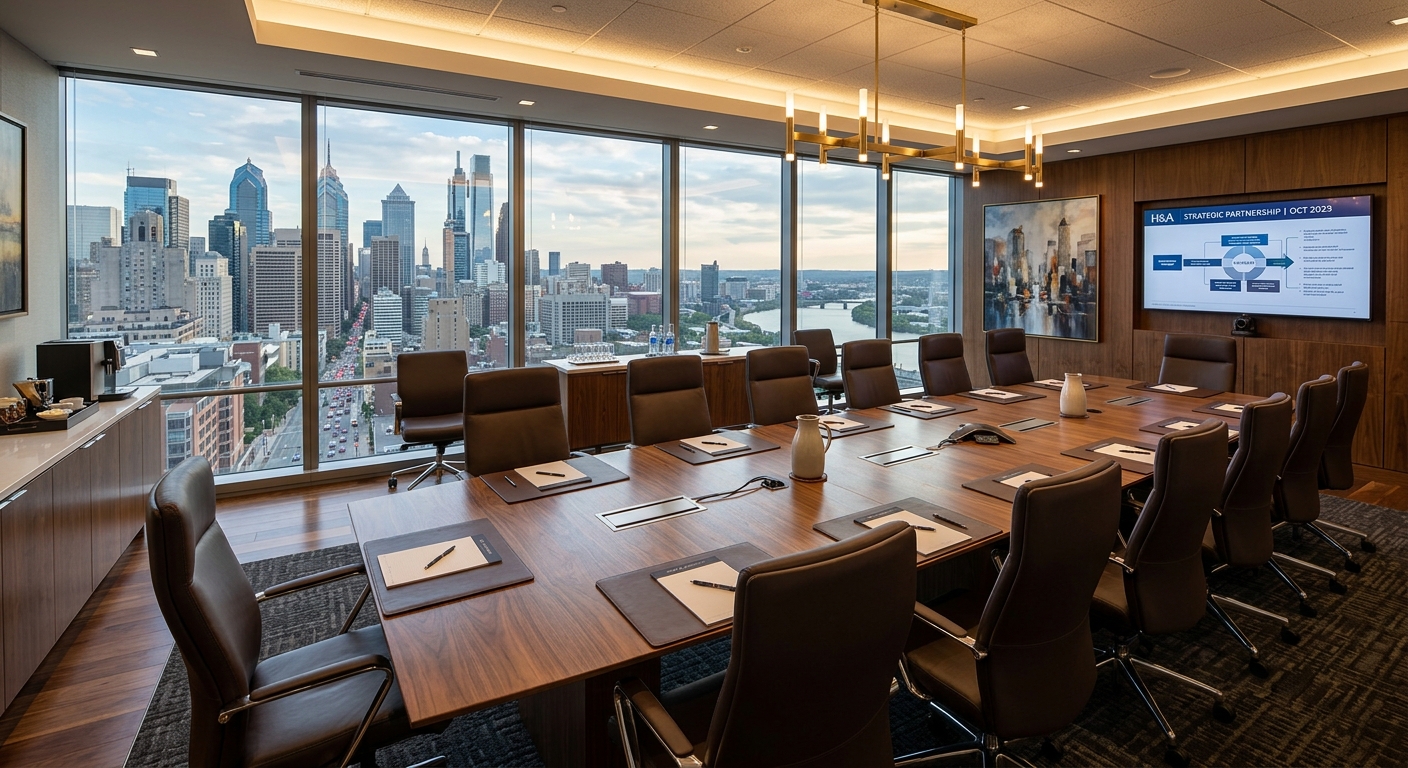
The Conference Room: Where Deals and Depositions Happen
Law firm conference rooms do double duty: client meetings on Monday, eight-hour depositions on Tuesday. The furniture has to work for both.
Table choices that matter
- Boat-shaped or racetrack tables let everyone see each other's faces during depositions — critical when assessing witness credibility.
- Integrated power and data at every two seats. Court reporters, videographers, and four attorneys with laptops will overwhelm a single floor outlet.
- Solid wood edge banding. Veneered MDF chips within 18 months under heavy use. Solid edges look the same in year 10.
- Chairs with casters and locking tilt. Static chairs feel cheap; chairs that recline freely make witnesses look distracted on video.
For instance, a corporate M&A practice we furnished specified two conference rooms: a 14-person “client” room with a fixed walnut table and high-back leather chairs, and an adjacent 8-person “working” room with a modular table that breaks into two smaller surfaces for breakout sessions. Same client, same week, completely different needs.
Paralegal and Support Bullpens: Where Throughput Lives
Paralegals and legal assistants are the firm's productivity engine, and their workstations get the least attention. That's a mistake. A well-furnished support area pays back faster than almost any other furniture investment because the work density is so high.
What support stations actually need
- L-shaped or U-shaped workstations with at least 72” of primary surface. Document review needs spread space.
- High-capacity lateral files within arm's reach. A paralegal walking 30 feet to retrieve a file 40 times a day loses 90 minutes of billable support time.
- Acoustic panels between stations — minimum 54” tall for phone privacy.
- Task chairs of the same quality as attorney chairs. This one is non-negotiable. Paralegals sit longer than partners do.
The collaborative dynamic between attorneys and support staff is also shaped by layout — there's more on this in open plan vs. private office: furniture choices. Most law firms land on a hybrid: private offices for attorneys, semi-open bullpens for support, with deliberate visual separation between them.
Materials and Finishes: What Survives 15 Years of Practice
Law firms keep furniture longer than any other professional services sector — 12 to 15 years is normal. That changes the material math entirely. You're not buying for 2026; you're buying for 2040.
Materials that age well in legal environments
- Walnut and quarter-sawn white oak. Develop patina rather than wear. Avoid red oak (looks dated within five years) and cherry (darkens unpredictably).
- Full-grain leather over bonded leather. Bonded leather flakes catastrophically around year four. Full-grain only gets better.
- Wool-blend upholstery for fabric chairs. Synthetic fibers pill and shine on the seat pan within two years of heavy use.
- Solid brass or bronze hardware. Chrome and nickel-plated finishes wear through. Brass develops character.
One thing that's changed: clients now notice sustainability claims. GREENGUARD-certified pieces and FSC-certified wood matter to corporate clients during firm selection — particularly for ESG-conscious general counsel. The intersection of durability and sustainability is exactly where the future of office furniture is heading, and law firms are surprisingly well-positioned to lead on it because their replacement cycles are already long.
Budget Allocation: Where to Spend and Where to Hold Back
Every firm has a furniture budget ceiling. The question is allocation. After furnishing dozens of firms, a clear pattern emerges in where dollars produce return and where they don't.
Spend generously on
- Reception desk and lounge seating (client perception)
- Attorney and paralegal task chairs (productivity + retention)
- Conference table in your primary client-facing room
- Locking storage that protects privileged materials
Hold back on
- Break room furniture (function over form is fine)
- Internal meeting room tables (where no clients see them)
- Decorative pieces in non-client zones
- Trendy items with short style cycles
A useful rule: if a client will sit in it, touch it, or see it within their first 10 minutes in your office, it deserves the premium tier. Everything else can be functional-grade. Our practical guide to selecting office furniture walks through the specifics if you're building out a procurement spec.
Planning Your Law Firm Furniture Project
The firms that end up happiest with their furniture share a few habits. They start the conversation 9 to 12 months before move-in, not three. They involve the managing partner, the office manager, and at least one senior associate in chair selection — because the people sitting in them daily catch problems the partner won't. And they prototype: ordering one chair, one workstation, and one guest chair before committing to a full floor order.
If you're furnishing a new office, expanding a practice, or replacing a tired buildout, we'd be glad to walk through specifications, samples, and phasing options with you. Browse our products to see what's possible, take a look at completed firm case studies, or get in touch to discuss your project. The right furniture won't win cases for you — but the wrong furniture will quietly cost you clients, associates, and billable hours for the next decade.