
Furniture for Medical and Dental Waiting Rooms: Comfort, Cleanability, and Compliance
- 08 Jun, 2026
- Guides
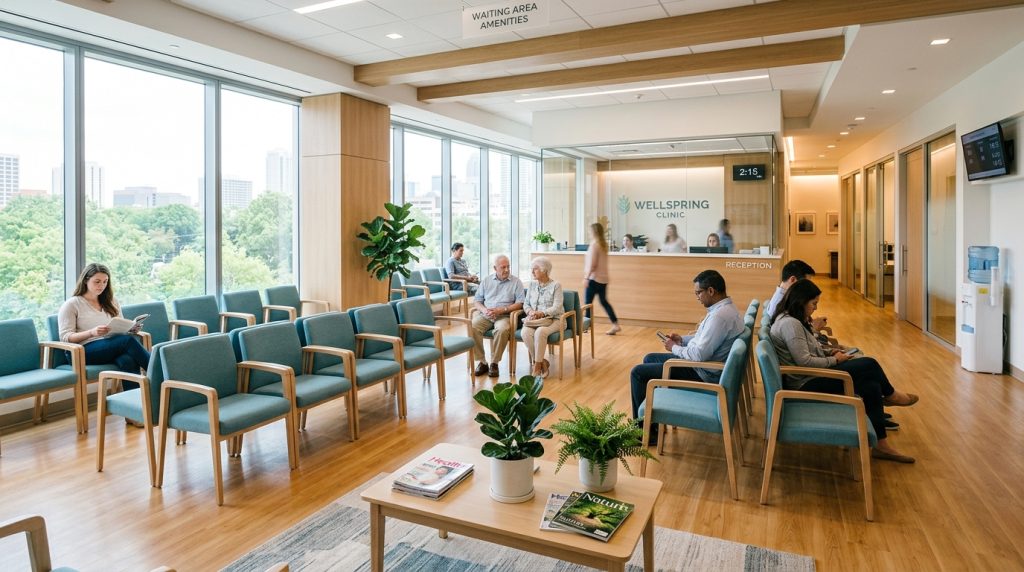
Furniture for medical and dental waiting rooms has to do three jobs at once: keep nervous patients physically comfortable for 15–60 minutes, withstand daily disinfection with bleach or quaternary cleaners, and meet infection-control and accessibility standards like ADA, CDC environmental guidelines, and often state-level health codes. The right specification balances seat depth and arm height with non-porous upholstery, sealed seams, and a layout that supports social distancing — without making the space feel clinical.
Start With the Patient, Not the Aesthetic
Most clinics buy waiting room chairs based on a showroom photo. That's backwards. Your patients aren't a catalog model — they're an 82-year-old with hip replacement, a pregnant mom at 36 weeks, a 280-pound construction worker with back pain, and a six-year-old who just got a filling.
That mix dictates your seat mix. A defensible specification includes:
- Standard seats with 18–19 inch seat height (taller than residential furniture) so older patients can stand without strain.
- Bariatric chairs rated 500–750 lbs, at least 10–15% of total seating, with reinforced steel frames.
- Armed chairs for the majority of seats — arms are critical for sit-to-stand assistance.
- Armless or bench seating for parents holding infants or larger patients who need a wider footprint.
For instance, a pediatric dental practice in Phoenix replaced its uniform row of armless loveseats with a mix of single armed chairs and one three-seat bariatric bench. Patient complaints about “not being able to get up” dropped to zero in six months.

Cleanability Is a Spec, Not a Marketing Word
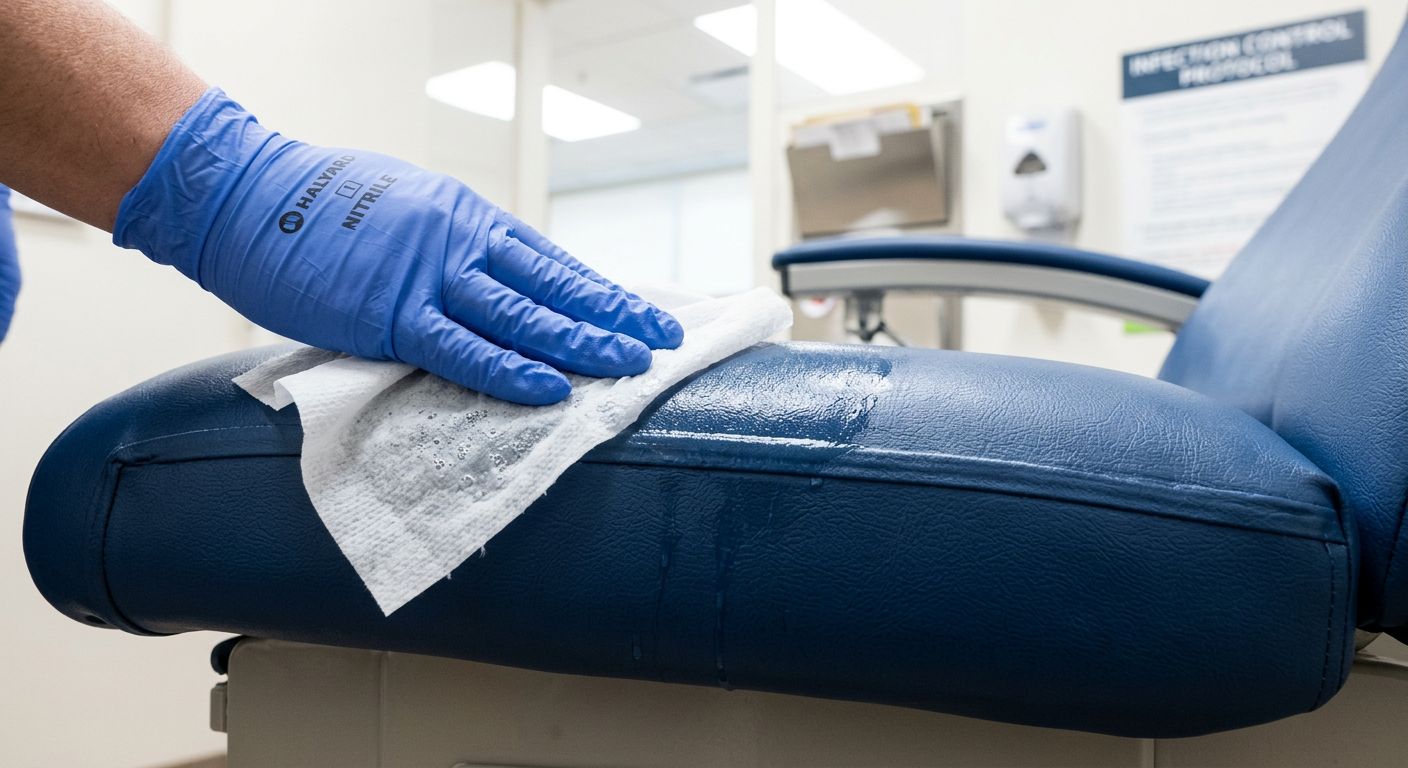
If a manufacturer says their fabric is “easy to clean,” ask exactly what cleaner it tolerates and for how many cycles. The CDC recommends EPA List N disinfectants for healthcare environments, and many of those — especially sodium hypochlorite (bleach) and hydrogen peroxide solutions — destroy standard polyester upholstery within months.
What to demand on the spec sheet
- Bleach-cleanable to a 1:9 dilution for at least 1,000 wipe cycles.
- Moisture barrier backing so spills don't reach the foam (foam is porous and can harbor bacteria).
- Welded or sealed seams rather than stitched seams that wick fluids.
- Removable, replaceable seat cushions — when one chair gets damaged, you swap a $90 cushion, not a $700 chair.
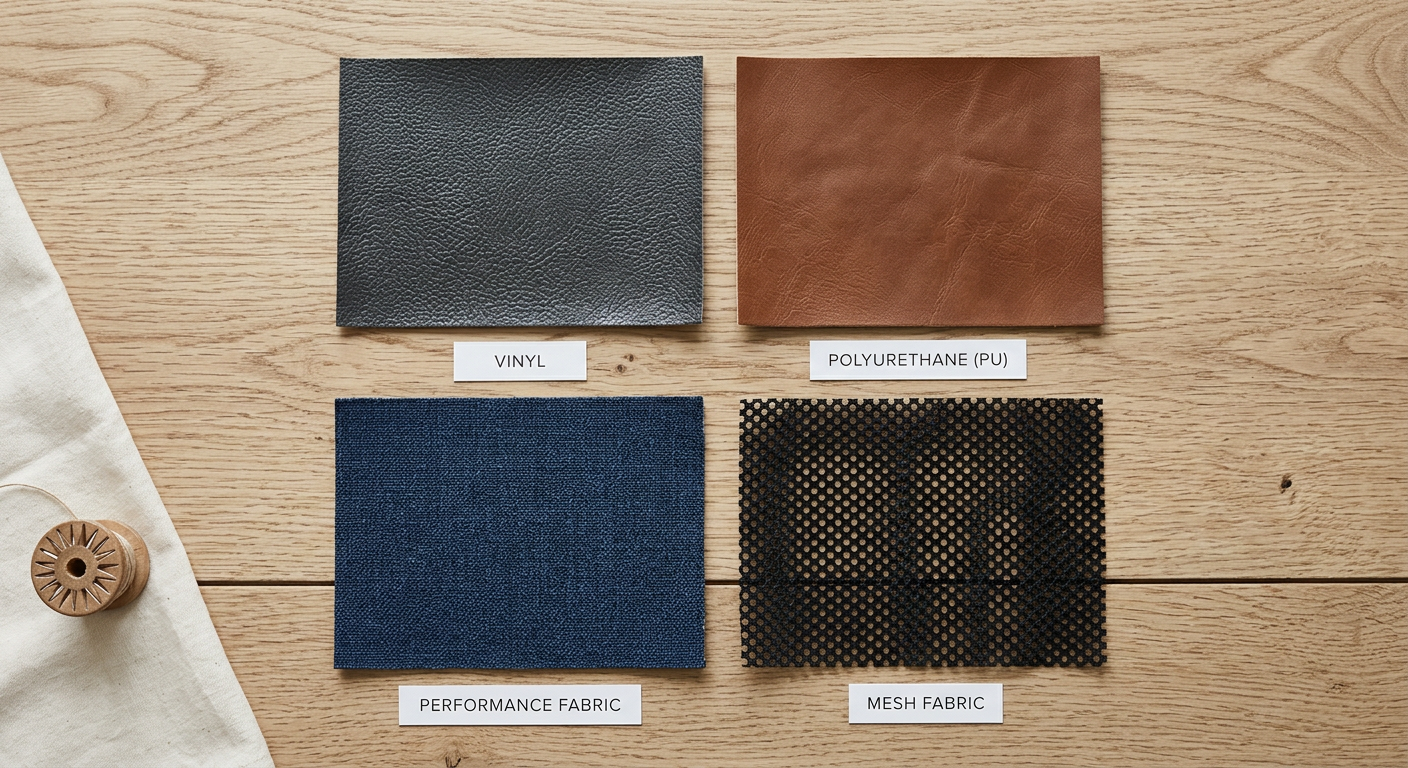
Vinyl is the workhorse. Polyurethane (PU) feels softer and more residential but cracks faster under heavy disinfection. Performance fabrics like Crypton offer the best of both — breathable, bleach-tolerant, and warm to the touch — at a higher upfront cost that usually pays back in lifespan.
Compliance: ADA, Fire Code, and Infection Control
Three regulatory frameworks shape every furniture decision in a clinical waiting room.
ADA accessibility
You need clear floor space of at least 30" x 48" for a wheelchair at one or more seating areas, and aisles a minimum of 36" wide. Bariatric and accessible seats should be distributed throughout the room, not clustered in a corner.
Fire code (NFPA 260 / CAL 117-2013)
Most jurisdictions require upholstery and foam to pass cigarette-ignition resistance testing. Specify CAL 117-2013 compliance at minimum; for hospitals and ambulatory surgery centers, CAL 133 (full-assembly burn test) is often required.
Infection control
The CDC and Joint Commission both reference cleanable, non-porous surfaces as part of environmental infection control. Wood arms and fabric without moisture barriers are increasingly flagged during accreditation surveys. If you're a Joint Commission–accredited facility, document your furniture's cleaning protocol in writing and keep manufacturer cleaning guides on file.
Choosing Upholstery: A Side-by-Side Look
The four materials below cover roughly 95% of healthcare waiting room installs. Pick based on your cleaning protocol and patient volume — a busy urgent care wipes chairs 20+ times a day, while a private dental practice may only do a deep clean nightly.
Vinyl wins on raw durability and price. Crypton wins on patient experience (it doesn't feel sticky in summer or cold in winter). PU is a compromise that often disappoints in high-volume settings. Antimicrobial mesh has a place in well-ventilated reception areas but isn't appropriate where bodily fluid exposure is likely.
Layout: Distancing, Sightlines, and Flow
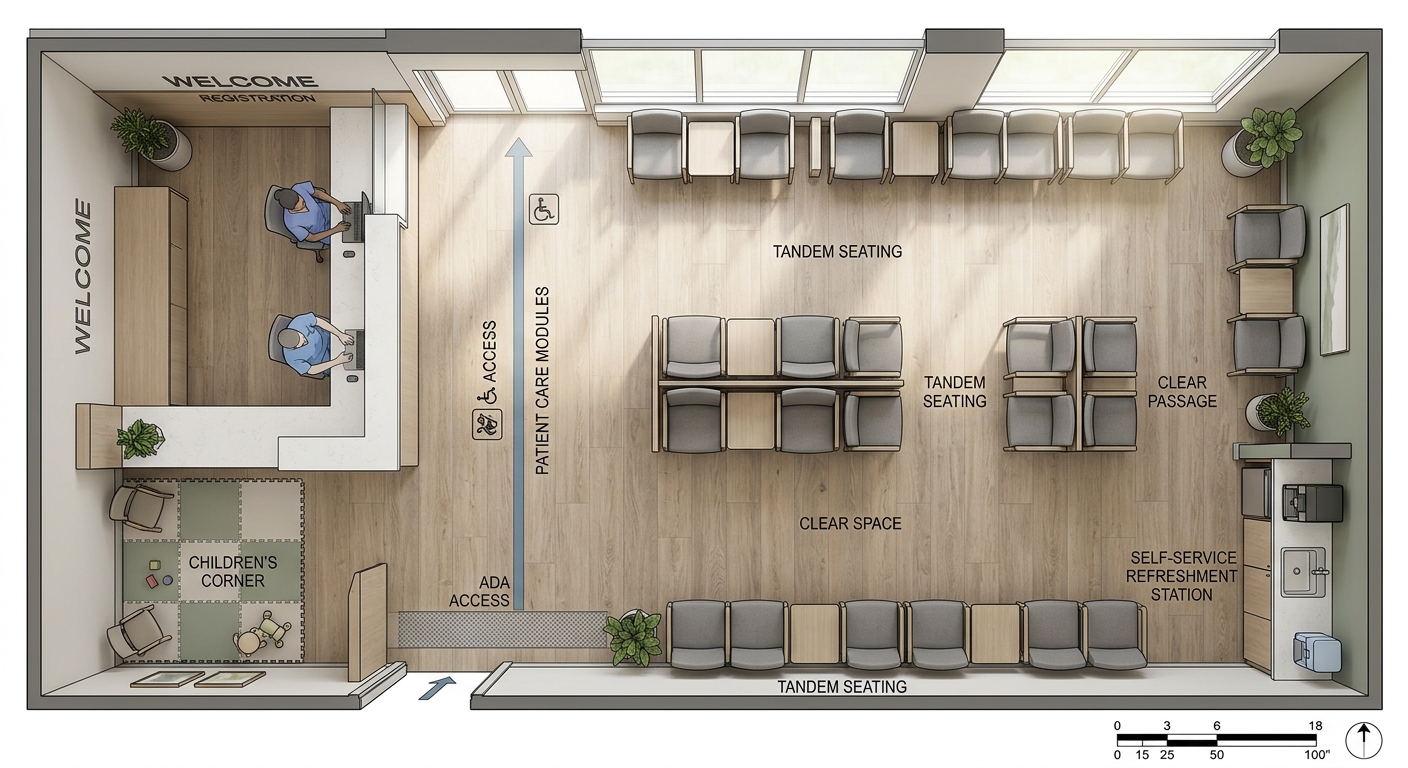
Post-pandemic, most healthcare designers plan for 6 feet between seat centers as a default, with the option to remove or close off seats during outbreak surges. But spacing is just one variable. Layout also has to manage:
- Sightline to the reception desk — patients want to know they've been seen and are next.
- Path of travel — wheelchair, stroller, and walker users need a straight shot from entry to check-in to seat.
- Acoustic privacy — HIPAA conversations happen at the front desk; seating shouldn't be 4 feet from the check-in glass.
- Zoning — pediatric clinics benefit from a separate “sick” and “well” area, ideally with different chair colors to reinforce the boundary.
Modular tandem seating (chairs ganged on a beam) makes reconfiguration easy and prevents patients from dragging chairs around. Loose chairs feel more residential but become a daily reset task for staff. The same principles around space optimization in compact workspaces apply here — small waiting rooms need furniture that earns its footprint.
Comfort Without Compromising Cleanability
The biggest objection to vinyl and welded-seam seating is that it feels institutional. It doesn't have to. Three details transform a clinical chair into something patients actually want to sit in:
1. Seat depth and lumbar shape
Aim for 17–18" seat depth and a slight lumbar curve at 6–8" above the seat. Too deep and short patients can't get their feet down; too shallow and tall patients perch uncomfortably.
2. Foam density
Use medical-grade high-density foam (1.8–2.5 lb/ft³) with a firmer support core and softer top layer. Cheap 1.2 lb foam compresses to a pancake within 18 months under heavy use.
3. Visual warmth
Wood-look poly arm caps (sealed, non-porous) read as residential but clean like plastic. Mid-tone fabrics in muted greens, blues, or terracotta hide minor staining better than gray and feel less hospital-like. Skip pure white — it shows everything.
If you're outfitting an attached staff break area or consultation room, our guide on choosing comfortable lounge seating covers complementary specs.
Tables, Side Pieces, and Power
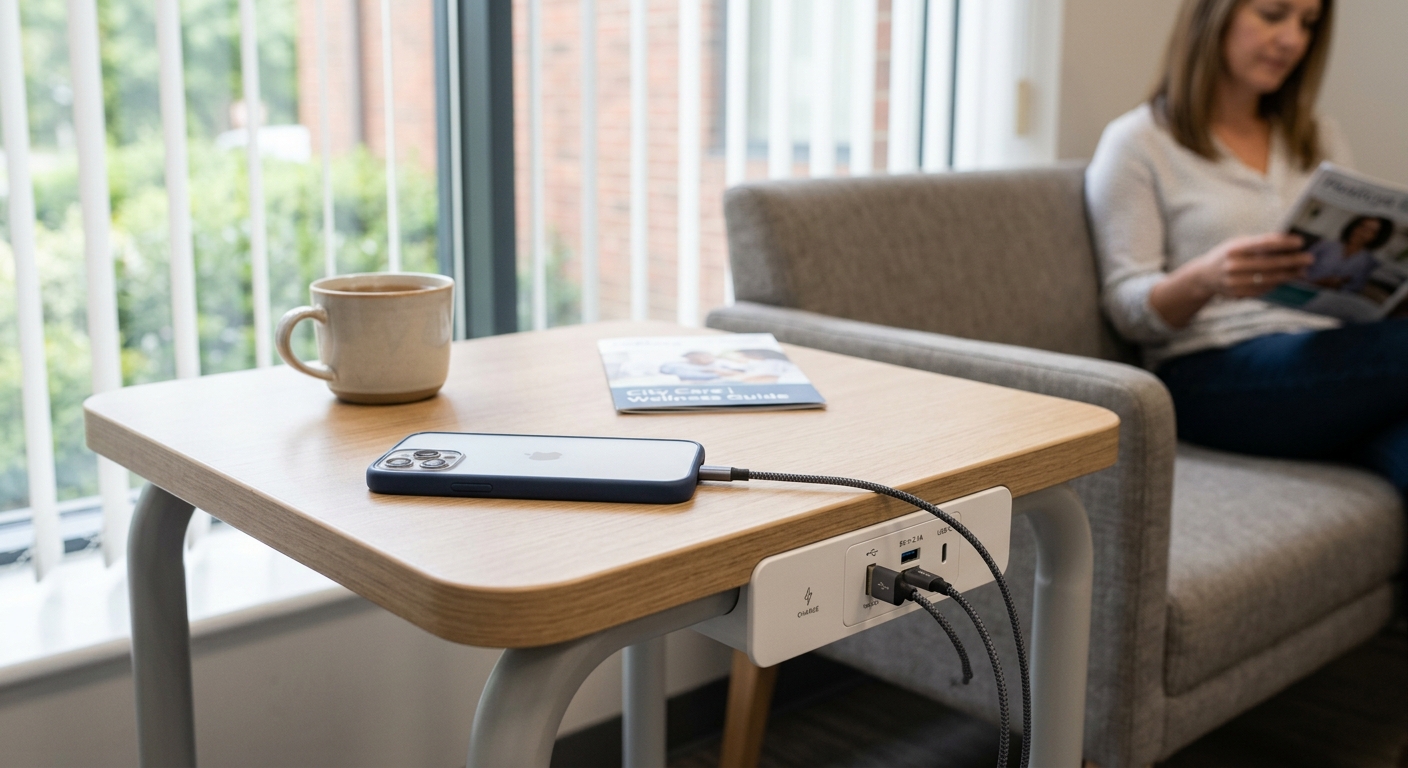
Magazine-strewn coffee tables are out. Today's waiting room patients are on phones, tablets, or laptops — and they're charging them. Specifications worth building in:
- USB-A and USB-C ports at every other seat, ideally at arm height, not floor level (older patients won't bend down).
- Small individual side tables rather than large communal ones — easier to wipe, less shared-surface contact.
- Solid surface or laminate tops with rounded edges (no sharp corners at child eye-level) and no fabric or leather wraps.
- Recessed cup holders in larger waiting areas where patients may wait 45+ minutes.
For pediatric or family practices, a single low play table with antimicrobial laminate handles toy storage without becoming a germ farm. Avoid soft toys and shared books entirely — they're nearly impossible to disinfect.
Total Cost of Ownership Beats Sticker Price
A $280 vinyl side chair that lasts 7 years costs $40/year. A $180 chair that delaminates and gets replaced in 2 years costs $90/year — and that's before factoring in the staff time to swap them out, the disposal cost, and the patient impression of a clinic with peeling chairs.
When you're evaluating quotes, normalize on:
- Warranty length — look for 10–15 year frame warranties and 5+ year upholstery warranties for healthcare-grade product.
- Replacement parts availability — can you order a single replacement cushion in year four without buying a whole chair?
- Cleaning protocol cost — fabric that requires a special cleaner adds operational expense forever.
For example, a multi-location urgent care group standardized on bleach-cleanable vinyl tandem seating across 12 sites. Their three-year furniture replacement spend dropped 62% versus the previous mixed-residential approach, and accreditation findings related to environmental cleanliness went to zero.
Putting It All Together
The right medical or dental waiting room furniture isn't the cheapest option, the prettiest option, or the easiest to clean — it's the chair that does all three at acceptable levels. Start with patient mix, write a real cleanability spec, verify fire and accessibility compliance, and budget on total cost of ownership rather than unit price. Get those four right and the aesthetic choices become easy.
If you're planning a clinic refresh or new build, our team works with healthcare practices to specify seating, tables, and reception layouts that pass accreditation and feel welcoming to patients. Browse the full furniture solutions catalog or reach out through our service page for a project consultation. You can also explore more applied guides on the vision-furniture blog.


