
Furnishing a Restaurant or Hospitality Back Office: Durable Furniture for Fast-Paced Teams
- 08 Sep, 2026
- Guides
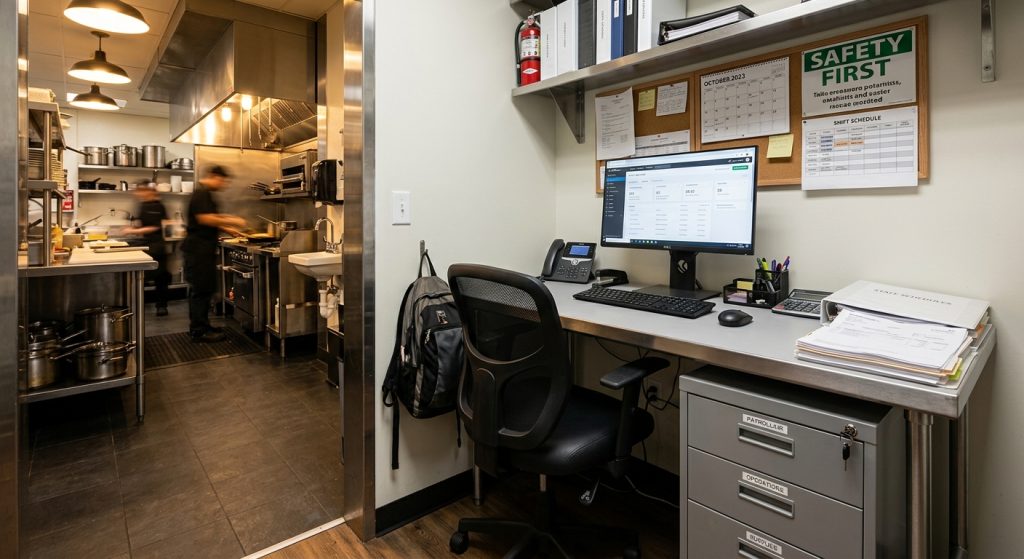
A restaurant or hospitality back office needs furniture built for grease, humidity, constant shift turnover, and zero maintenance downtime — not the padded, carpet-friendly gear made for a typical corporate space. The right setup means sealed, wipeable surfaces, vinyl or coated upholstery instead of fabric, and steel or laminate construction that shrugs off spills near a kitchen. Get this wrong and you’re replacing chairs and desks every 18 months instead of every 8-10 years.
Why Standard Office Furniture Fails in a Restaurant Back Office
Here’s the mistake most restaurant owners make: they order the same desk and task chair they’d buy for a regular office. Six months later, the chair fabric is stained with sauce, the desk laminate is peeling near the edges, and the file cabinet drawers are sticking from humidity. That’s not bad luck — it’s a mismatch between the furniture’s design intent and its actual environment.
Back offices in restaurants sit adjacent to kitchens, walk-in coolers, and loading docks. Temperature swings, grease-laden air, and constant foot traffic from staff cycling through breaks all take a toll. A chair rated for “light commercial use” in a quiet insurance office simply wasn’t engineered for that. Manufacturer weight and use ratings assume a controlled environment — something we’ve covered in detail in our breakdown of how weight capacity ratings mislead buyers, and the same logic applies to durability claims generally.
The Real Cost of Cutting Corners
A $90 fabric task chair might look like a bargain next to a $280 vinyl-upholstered alternative. But if the fabric chair needs replacing every year because of stains and wear, you’ve spent $270 over three years versus $280 once. Do the math before you order in bulk.
Desks and Workstations: What Actually Holds Up
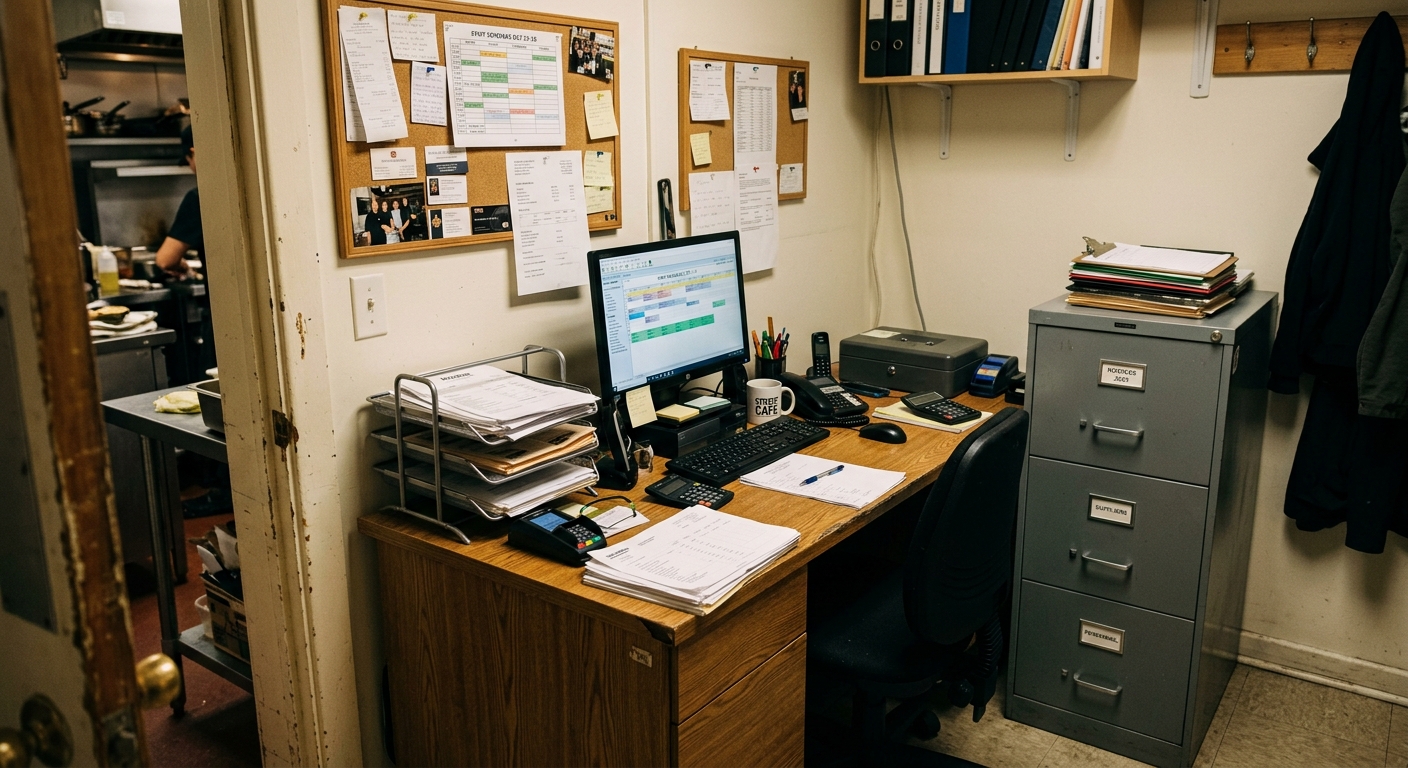
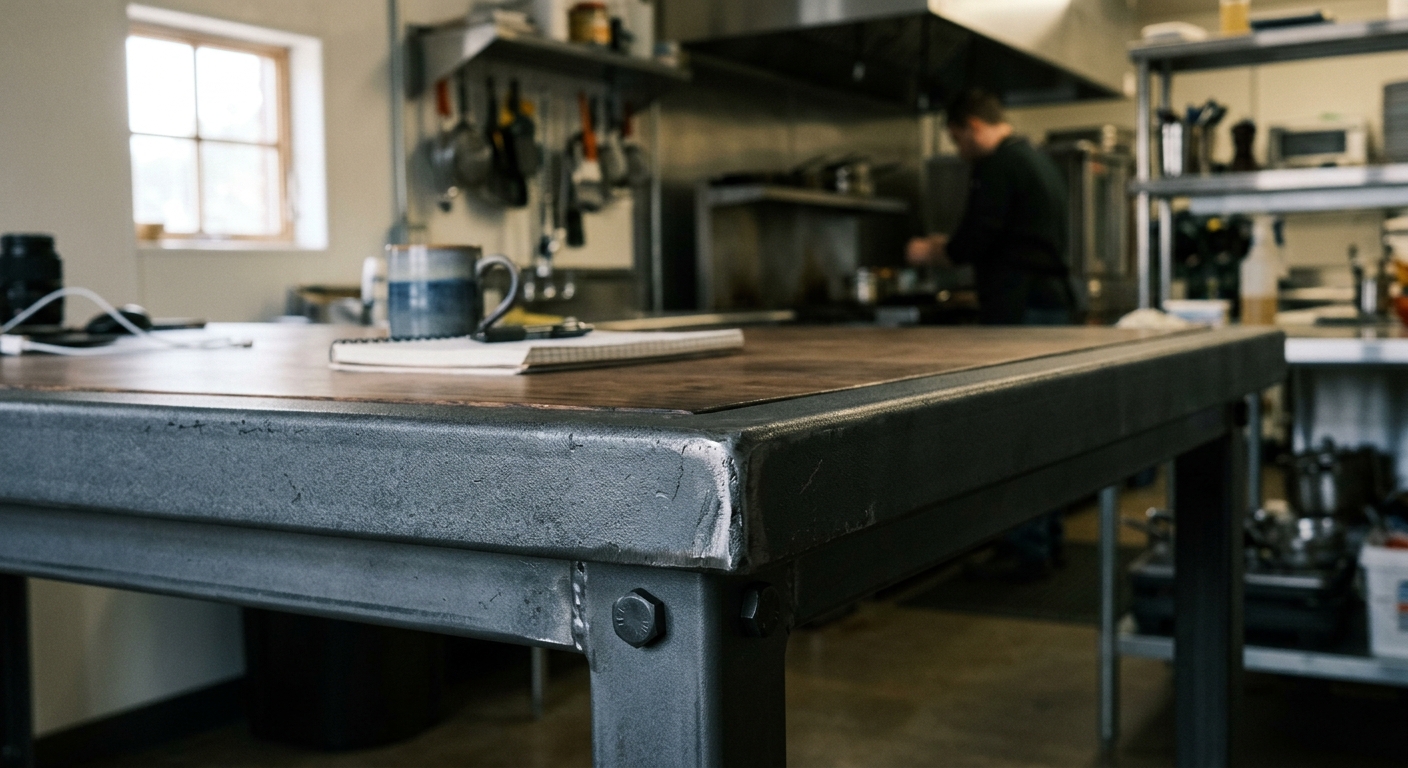
Sealed laminate or powder-coated steel desktops are non-negotiable for a restaurant back office — anything else will absorb spills and stain within weeks. Skip raw wood, unsealed MDF, and anything with exposed particleboard edges. Those materials swell and delaminate the first time a manager sets down a wet mop bucket or spills coffee mid-schedule-planning.
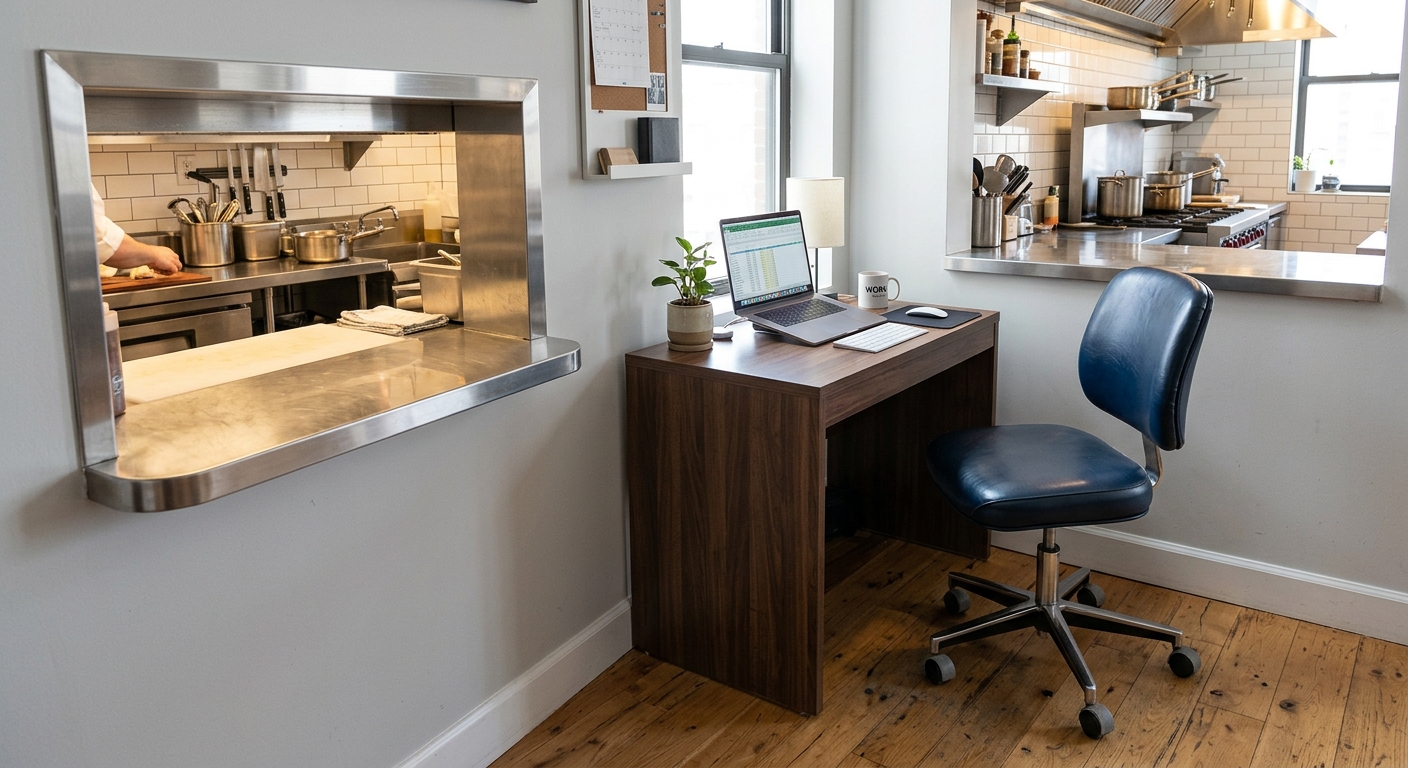
Size matters too, but not in the way you’d think. Most restaurant back offices are small — often under 80 square feet, shared by a GM, an assistant manager, and sometimes a bookkeeper on rotation. A compact 48-inch desk with a built-in modesty panel works better than a sprawling executive desk that eats the room. If you’re unsure what dimensions actually fit your space, our desk sizes and dimensions guide breaks down standard footprints so you’re not guessing.
For Instance: A Regional Pizza Chain’s Fix
One regional pizza chain we worked with was replacing back-office desks every 14 months across 22 locations — the laminate kept lifting near the front edge where managers leaned while doing inventory counts. Switching to a powder-coated steel desk with a rounded, sealed edge eliminated the problem entirely. Same layout, same room, completely different failure rate.
Chairs: Vinyl Beats Fabric, Every Time
If there’s one rule for hospitality back-office seating, it’s this: performance vinyl or coated polyester upholstery, never woven fabric or mesh. Fabric absorbs grease and odor and is nearly impossible to fully clean once it’s stained. Vinyl wipes down in seconds with the same sanitizer used on kitchen counters.
Beyond upholstery, look at the base and casters. Most back offices sit on tile, vinyl composite, or sealed concrete — not carpet. Standard carpet casters will skid and struggle for grip on hard floors, and they wear unevenly fast. Swap in hard-floor casters, which are firmer and grip better on smooth surfaces. This is a small spec detail that gets missed constantly, and if you want the deeper mechanics of how upholstery choice affects long-term wear, our post on mesh vs. foam vs. hybrid seat cushions is a useful companion read even though that piece focuses on corporate seating.
Storage That Survives Humidity and Grease
Cardboard boxes and open wire shelving are common in restaurant back offices — and they’re both a mistake. Cardboard wicks moisture and disintegrates near walk-in coolers. Open wire shelving collects airborne grease particles that are genuinely difficult to clean off wire mesh.
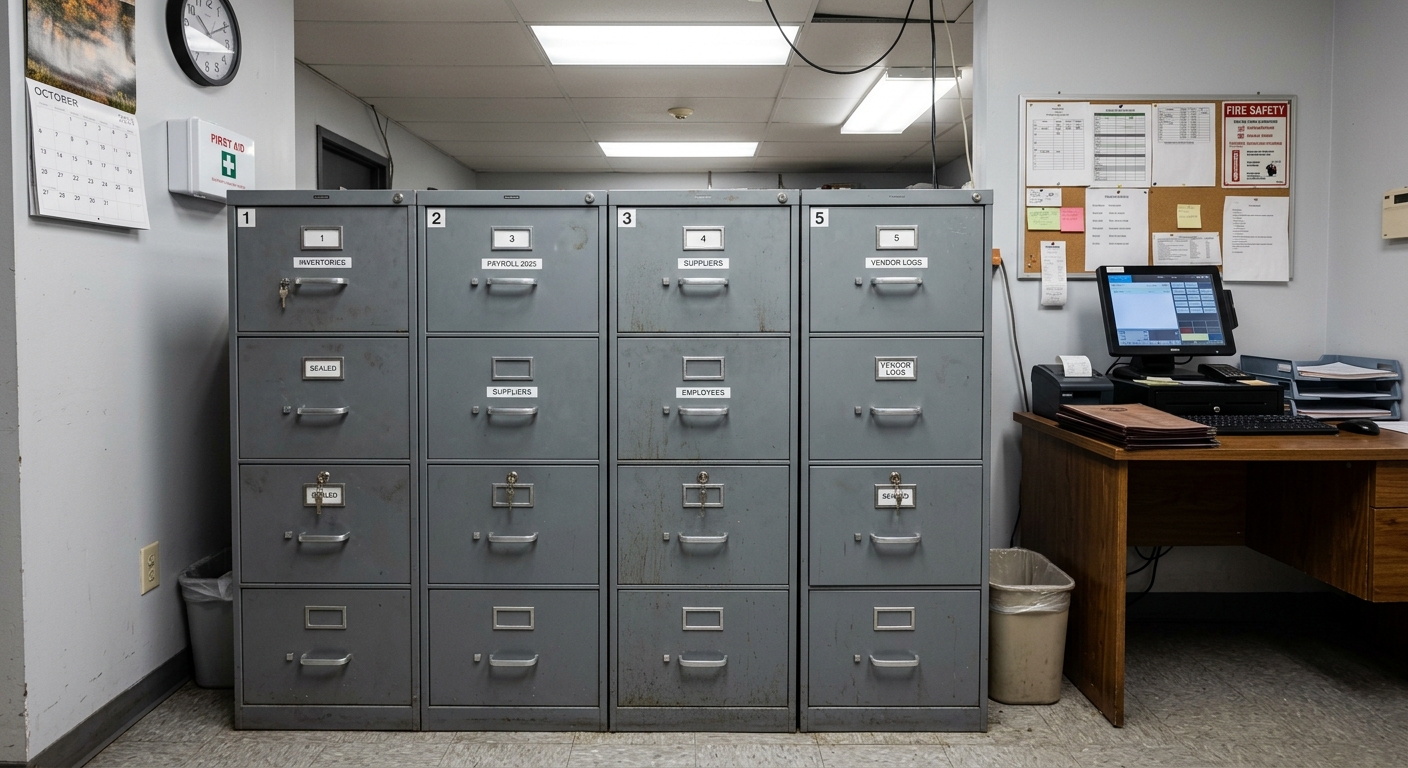
Steel filing cabinets with gasketed or tight-seal doors are the better call. They keep out moisture, wipe clean easily, and actually lock — which matters when payroll records, vendor contracts, and cash-handling logs live in that same small room. If your back office also doubles as a mini break area or POS terminal storage space, treat it like the breakroom furniture guidance we’ve written before: durability and cleanability outrank aesthetics every time.
Space Planning for a Room That’s Never Big Enough
Most restaurant back offices are an afterthought in the building’s layout — a converted storage closet or a sliver of space behind the kitchen. That means every piece of furniture has to earn its square footage.
What Actually Works in Tight Quarters
- Wall-mounted or corner desks that free up floor space for a second person to squeeze through during shift handoffs.
- Stackable or foldable secondary seating for when two managers overlap during a shift change.
- Vertical storage instead of wide filing cabinets — tall, narrow steel units use less floor footprint.
Our guide on space optimization in small workspaces covers layout principles that translate directly here, even though it wasn’t written with restaurants specifically in mind. The core idea — every piece must serve double duty — applies just as much to a 70-square-foot back office as it does to a startup’s cramped HQ.
The Shift-Change Problem: Furniture for Multiple Users, Zero Downtime
Unlike a typical corporate desk assigned to one person, a restaurant back-office chair and desk might get used by three or four different managers across a 24-hour cycle. That’s a different durability profile than an office chair used by one person eight hours a day.
Adjustability matters more here than in most office settings — a chair needs quick, tool-free height adjustment because whoever sits down next probably didn’t set it. Gas-lift mechanisms with a simple lever, rather than knob-adjustable models, save real time during hectic shift overlaps. It’s a small detail, but multiply it by three shift changes a day, 365 days a year, and it adds up to meaningful wear-and-tear savings on the mechanism itself.
Ventilation, Heat, and Why Placement Matters as Much as Material
Even the most durable furniture fails faster if it’s placed wrong. A back office directly adjacent to a fryer station or dish pit runs hotter and greasier than one near a walk-in cooler. If you have any say in placement, keep furniture — especially anything with foam padding or laminate seams — at least a few feet from direct heat sources and exhaust vents.
Grease-laden air condenses on cooler surfaces, which is exactly what furniture near a kitchen doorway becomes. Wipeable, sealed materials handle this fine long-term, but even they benefit from being positioned away from the worst of it. This is one of those practical, non-obvious details that separates a back office that looks fine after five years from one that needs a refresh every 18 months.


