
How to Soundproof an Open Office with Furniture (Not Just Acoustic Panels)
- 10 Jun, 2026
- Guides
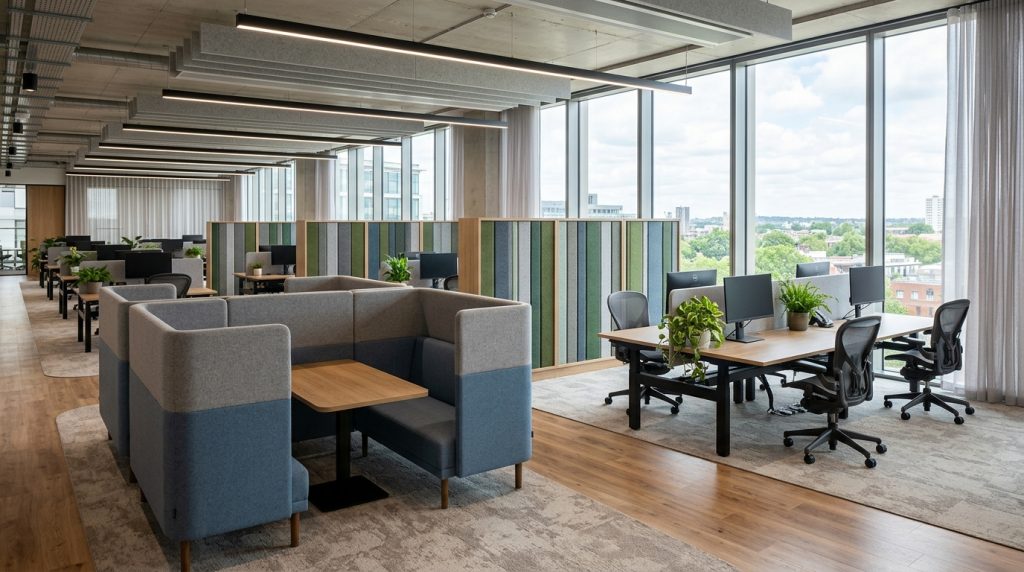
You can cut open-office noise by 6–10 decibels using furniture alone — no foam panels required. The trick is choosing pieces that absorb mid-range speech frequencies (500–2,000 Hz) and physically block sound paths between workstations: upholstered booths, tall bookcases, partition desks with fabric screens, and dense storage walls. Done right, acoustic furniture solves the noise problem while also giving you storage, seating, and division of space you already needed.
Why Furniture Beats Panels for Open-Office Noise
Acoustic wall panels treat reverberation. They don't stop your coworker's sales call from traveling 20 feet across an open bullpen. That's the gap furniture fills.
Open offices have two distinct noise problems. The first is reverb — sound bouncing off hard floors, glass, and ceilings. The second, and the one that actually kills focus, is direct speech intelligibility: you can clearly understand conversations happening near you, so your brain can't tune them out. Wall panels help with reverb. They do almost nothing for the second issue.
Furniture, on the other hand, sits between people. A 6-foot-tall bookcase loaded with binders blocks the line-of-sight path that speech travels along, while the soft contents absorb high frequencies. You get both mechanisms — absorption and blocking — in one piece of equipment that you were going to buy anyway.

Understand NRC Before You Buy Anything
If a furniture spec sheet doesn't list an NRC value, assume the piece does nothing for acoustics.
NRC (Noise Reduction Coefficient) is a 0 to 1 scale measuring how much sound a surface absorbs versus reflects. A bare concrete wall sits around 0.05. A heavy upholstered sofa lands around 0.45–0.60. A purpose-built acoustic phone booth can hit 0.85 or higher. Aim for an average NRC of 0.50 across the soft surfaces in your space — that's typically where conversation noise stops feeling fatiguing.
The frequencies that matter most
Human speech sits primarily between 500 Hz and 2,000 Hz. When you compare acoustic furniture, look at how each piece performs in that band specifically — some materials are great at killing high-frequency hiss but transparent to speech, which is the opposite of what you want.
Use Tall Storage as Acoustic Barriers
The single highest-leverage move in most open offices: replace short, open shelving with tall, filled storage units placed perpendicular to desk rows.
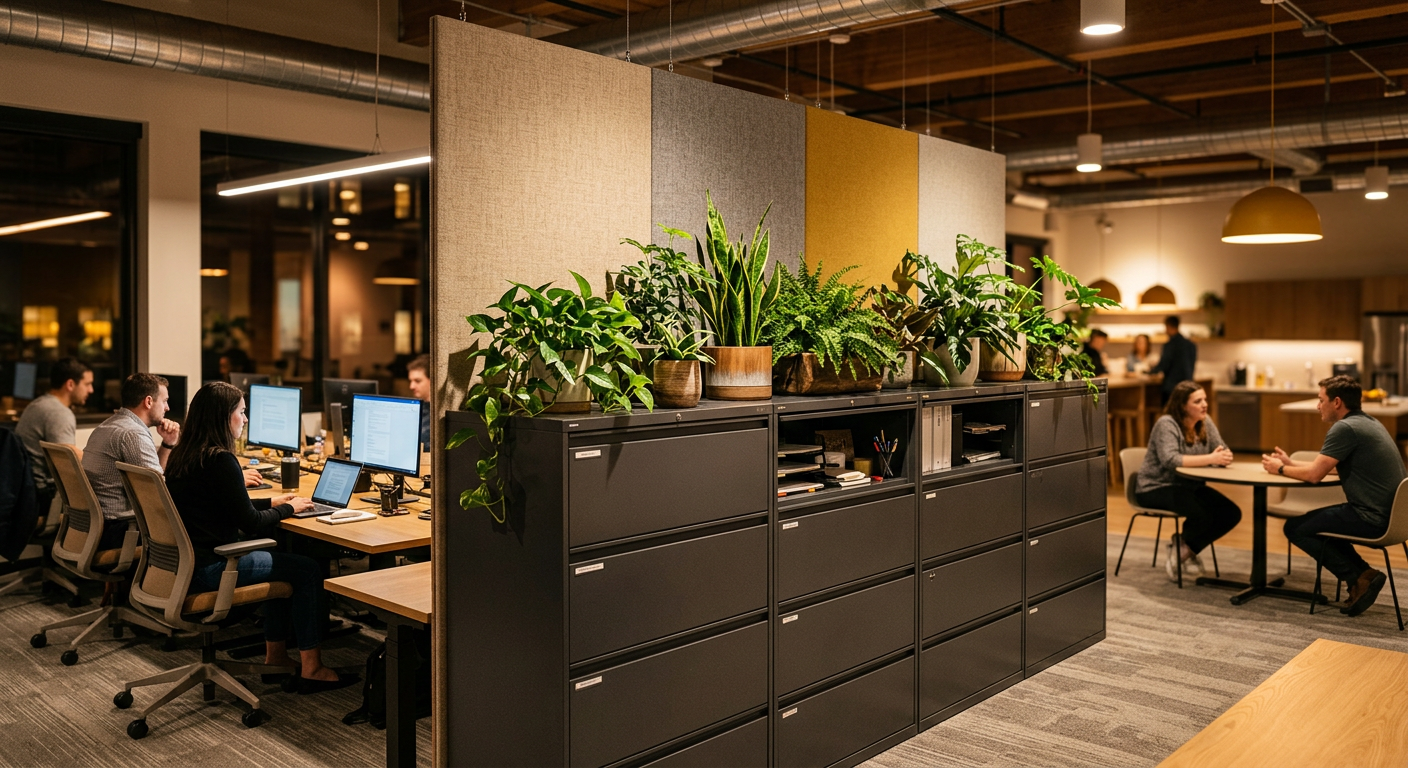
A 72-inch lateral cabinet loaded with files is essentially a mass-loaded barrier. It blocks the direct sound path between two work zones and adds roughly 8–12 dB of speech-level reduction on the far side. Stack soft-fronted shelves on top, or face the cabinets with fabric-wrapped panels, and you also pick up absorption.
For instance, a 40-person SaaS team we worked with had engineers complaining that the sales floor 15 feet away was unworkable. Instead of building walls, they specified two rows of lateral file cabinets between the zones, topped with planters and 18-inch fabric headers. Measured noise at the engineering desks dropped from 64 dBA to 55 dBA — the difference between “distracting” and “background.”
Pick Desks With Built-In Acoustic Screens
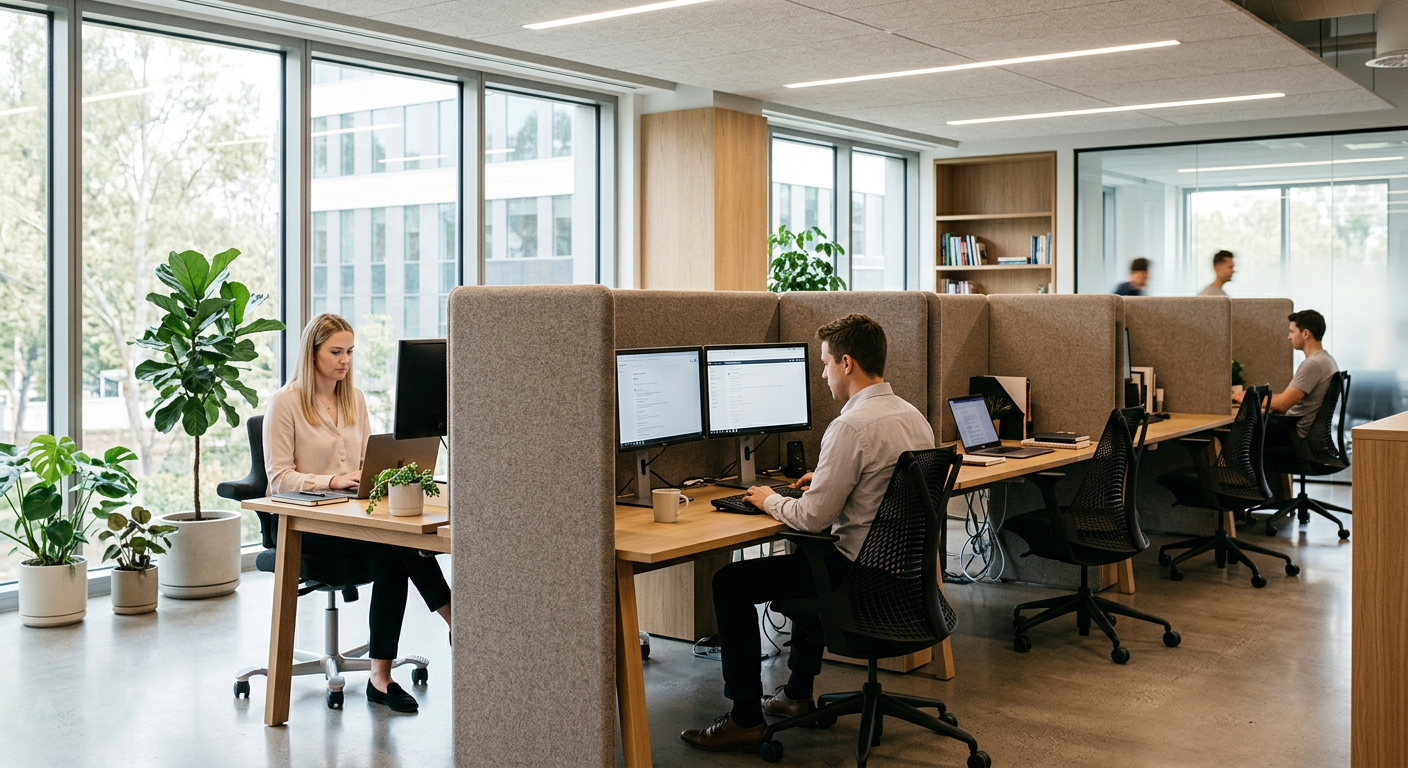
Most workstation noise leaks between facing desks. A fabric-wrapped privacy screen at the desk edge — 16 to 24 inches tall — kills it.
The key spec is the screen substrate. Hollow plastic screens look the part but barely register on an NRC test. What you want is a 25–40mm PET felt or mineral wool core, fabric-wrapped, with NRC 0.50 or higher. These add real absorption right at the source of the sound: the person's mouth, six inches from the screen.
When you're spec'ing new workstations, choose desks designed for acoustic screens from the start rather than bolting on aftermarket clamp-ons. Our desk selection guide walks through which bench systems integrate cleanly with vertical screens versus which fight the install.
Height matters more than people think
A 12-inch screen is decorative. A 24-inch screen sitting above the desk surface actually breaks the line of sight from one speaker's mouth to the next person's ear. That single dimensional choice can change a workstation's perceived privacy more than any other factor.
Add Upholstered Seating in High-Traffic Zones
Hard chairs, hard floors, hard tables — that's the acoustic disaster of most break areas and lounges. Soft furniture fixes it cheaply.
Heavily upholstered sofas, banquettes, and booth seating combine porous fabric (high-frequency absorption) with deep foam (mid-frequency absorption). A single 3-seat sofa with thick cushions can deliver the absorption equivalent of about 25 square feet of acoustic panel. Cluster three or four pieces in a collaboration zone and you've effectively treated the whole area without mounting anything.
High-back lounge chairs and booth seating do double duty: they absorb sound and block it. A pair of high-back armchairs facing each other creates a semi-enclosed micro-meeting room with no construction. This is how WeWork-style spaces achieve their quiet pockets — it's furniture, not architecture.

Carpet, Rugs, and What's Under Your Feet
Hard flooring is the single biggest noise multiplier in modern offices, and it's also the one nobody wants to rip out.
You don't have to. Large area rugs under desk clusters and collaboration zones do most of the work. A 9-by-12 wool rug with a felt underlay can shave 3–5 dB off the reverberant noise floor of a 400 sq ft zone. Carpet tiles with attached cushion backing perform even better and let you keep the polished-concrete look elsewhere.
If you're choosing rolling chairs, check that the casters are rated for hard floors — hard-floor casters are softer and quieter, while carpet casters on concrete sound like a snare drum. Small detail, big difference. Our breakdown on desk chair types covers caster selection in more detail.
Acoustic Pods and Booths: When Furniture Becomes Architecture
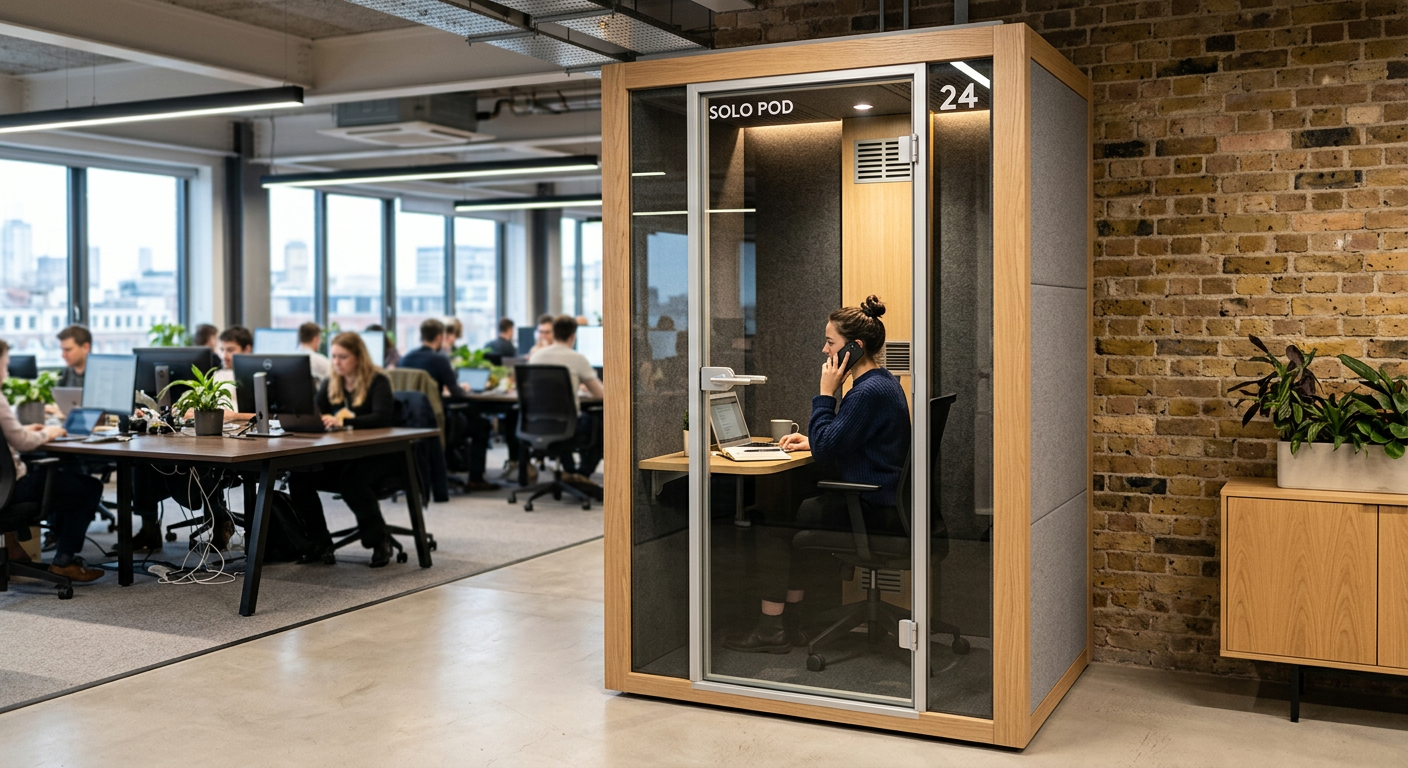
For phone calls and one-on-ones, nothing beats a sealed phone booth — and modern pods now count as furniture, not construction.
A free-standing acoustic pod with double-glazed glass, ventilated airflow, and dense wall cores typically delivers 30–35 dB of speech attenuation. That's enough that a normal call inside the booth registers as a faint murmur outside. They plug into a standard outlet and roll into place — no permits, no buildout, no landlord conversation.
Two-person booths handle quick meetings; four-to-six person pods replace small conference rooms entirely. For a growing company that doesn't want to commit to permanent walls (because the floor plan will change again in 18 months), pods are the right answer. We cover layout strategy for these in our piece on open plan vs. private office furniture.
Layout: Where You Put Things Matters as Much as What You Buy
You can buy the best acoustic furniture on the market and still have a loud office if you arrange it wrong.
Three layout rules that move the needle:
- Break long lines of sight. Sound travels along the same paths as sight. If you can see across the entire floor, you can hear across it. Stagger workstations and place tall storage at break points.
- Cluster loud functions. Sales, customer service, and recruiting belong together — and ideally on the opposite side of the floor from engineering, finance, and writers. Separating them by 30+ feet of furniture and soft surfaces makes both happier.
- Buffer with collaboration zones. Place sofa areas, library nooks, or kitchenettes between loud and quiet zones. They act as acoustic shock absorbers and give people a place to take spontaneous conversations.
For a deeper layout discussion, see our notes on office design and productivity.
A Realistic Budget Approach
You don't need to acoustically treat every square foot. Treat the 30% of the office where focus actually happens, and accept that the other 70% will be lively.
For a typical 5,000 sq ft open office (around 40 people), a furniture-driven acoustic upgrade usually breaks down like this:
- Two acoustic phone booths: $12,000–$18,000
- Desk-mounted fabric screens for 40 workstations: $8,000–$14,000
- Tall storage as dividers (6–8 units): $9,000–$15,000
- Upholstered booth/lounge seating for two zones: $10,000–$20,000
- Area rugs and soft flooring add-ons: $3,000–$6,000
Total: roughly $42,000–$73,000 — and unlike acoustic panels, every dollar is also buying you functional furniture you needed. The same budget spent on wall treatments alone gives you a quieter ceiling and nothing else.
Where to Start This Week
If you do nothing else, do these three things in the next two weeks: install 24-inch fabric screens between facing desks, place tall filled storage perpendicular to the longest sight lines, and add one acoustic pod near the loudest team. Those three moves alone fix 70% of open-office noise complaints in most spaces we've measured.
The rest — upholstered lounges, rugs, soft ceilings — layer on top as budget allows. Acoustic comfort is cumulative, not binary. Every soft surface helps, and the right furniture choices compound.
If you want help mapping which pieces will move the needle in your specific floor plan, our team puts together acoustic-aware office furniture solutions built around how your people actually work. Browse the product range or get in touch through our service page to start a conversation.


