
Furnishing a Veterinary Clinic: Furniture That Survives Fur, Fluids, and Anxious Pets
- 27 Aug, 2026
- Guides
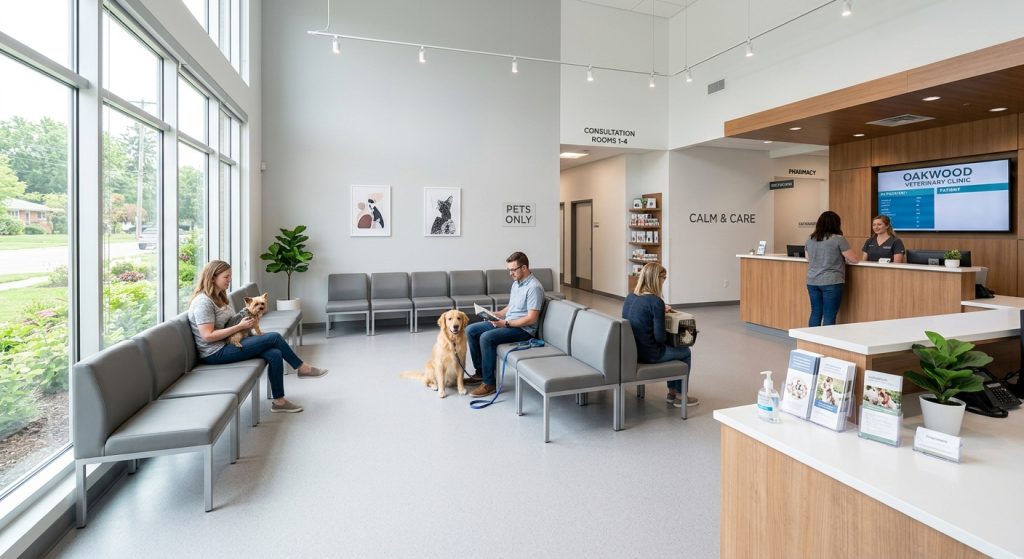
Veterinary clinic furniture needs three things office furniture doesn’t: fluid-proof surfaces that survive bleach-based disinfectants, materials that resist claws and chewing, and seating layouts that reduce animal stress instead of amplifying it. Get those three right — vinyl or non-porous surfaces, reinforced frames, and flexible waiting room spacing — and everything else about clinic furnishing falls into place. Get them wrong, and you’re replacing waiting room chairs every 18 months while dealing with a lobby full of panicked animals bumping into each other.
Why Standard Commercial Furniture Fails in a Vet Clinic Within Months
Walk into most vet clinics furnished with generic office or retail seating, and you’ll spot the damage fast: torn fabric at armrests where dogs braced their paws, dark stains along seat edges from anxious accidents, and wobbly frames from being pushed around to make room for a carrier. Standard commercial-grade furniture is built for human traffic patterns — sitting, standing, occasional spills. It’s not built for a 90-pound Rottweiler leaning its full weight against a chair arm, or a cat carrier being set down and dragged across a fabric cushion.
The failure point is almost always the upholstery seam. Fabric seams that would survive years in a break room split within months under repeated claw contact and frequent industrial cleaning. Frame joints matter too — clinics need furniture rated for irregular, sudden loads, not just steady seated weight.

The Waiting Room: Designing for Anxiety, Not Just Capacity
A well-designed vet waiting room isn’t measured by how many chairs fit — it’s measured by how much distance you can put between a nervous dog and the cat carrier three feet away. That means modular, moveable seating beats fixed benches every time. Bolted-down rows force incompatible animals into close quarters; individual or two-seat units let staff rearrange the room in seconds when a growling patient walks in.
Real-world layout example
A mixed-practice clinic in a suburban strip mall switched from a fixed six-seat bench to four separate two-seat vinyl loveseats on locking casters. Front desk staff could now angle seating to create visual barriers using planters and low dividers, cutting reported in-lobby incidents (barking matches, lunges) by more than half within the first month — without adding square footage.
Raised seating height also matters more than people expect: chairs sitting too low put a client’s lap at nose height for a large anxious dog, which can escalate tension. Aim for seat heights around 18–19 inches, similar to standard task chair height discussed in seating ergonomics guides, but paired with non-porous upholstery instead of mesh or foam-only builds.
Exam Room Furniture: Built for Constant Wipe-Downs
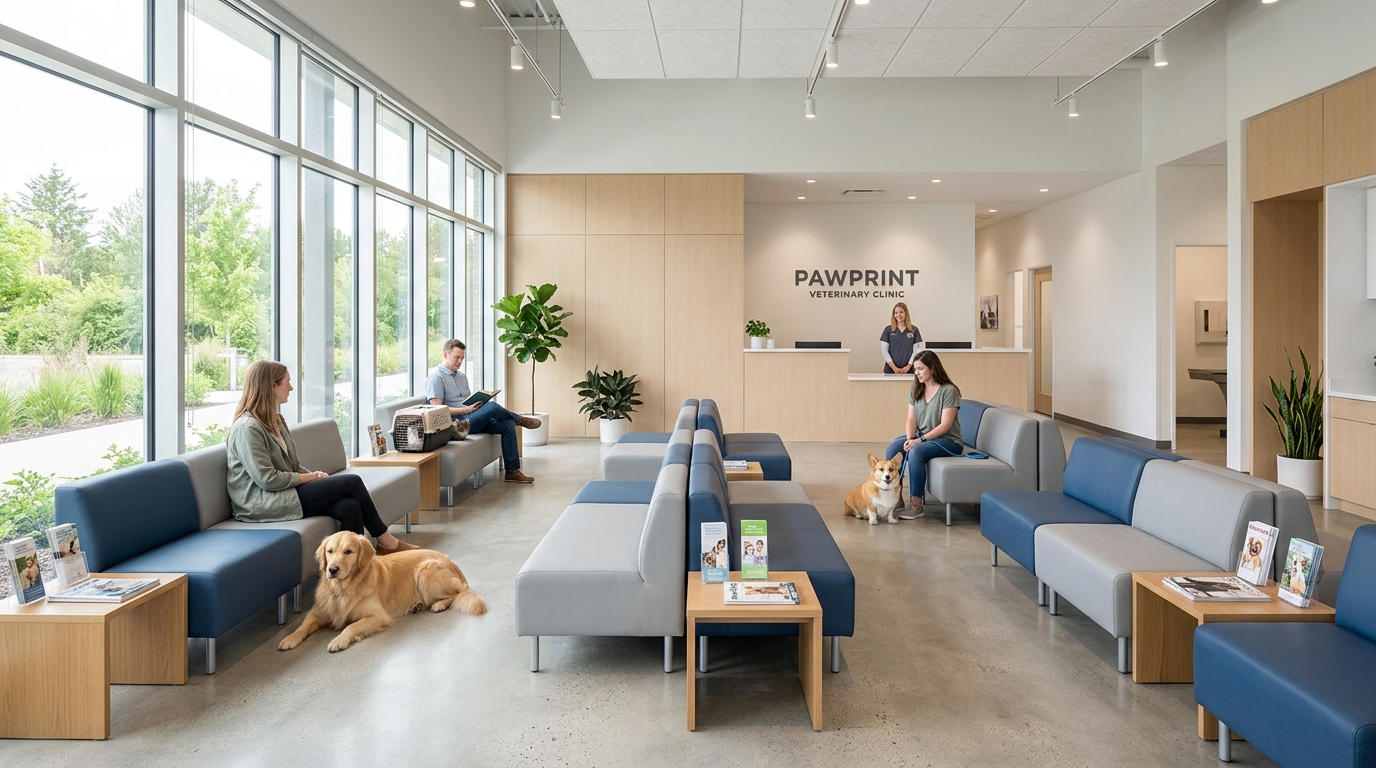
Exam rooms get disinfected between every single patient — sometimes 15-20 times a day. That cleaning frequency is the real furniture-killer, not the animals themselves. Any material that isn’t rated for repeated quaternary ammonium or bleach-based disinfectant contact will degrade, crack, or discolor within a year.
Look for exam room stools and benches with:
- Medical-grade vinyl or polyurethane upholstery, not standard vinyl — the difference is chemical resistance rating, and cheap vinyl yellows and cracks under bleach exposure.
- Seamless or heat-welded seams instead of stitched seams, which trap fluid and bacteria.
- Powder-coated steel frames rather than painted wood — moisture exposure over time causes wood joints to loosen.
This same logic applies to consult chairs used by pet owners during exams — they need to survive the occasional nervous pet jumping up, plus the same disinfectant routine as the exam table itself. For general durability benchmarking in high-cleaning environments, the approach mirrors what’s covered in medical and dental waiting room furniture guidance, though vet clinics push cleaning frequency even higher.
Reception Desks: The Front Line for Scratches, Leashes, and Spills
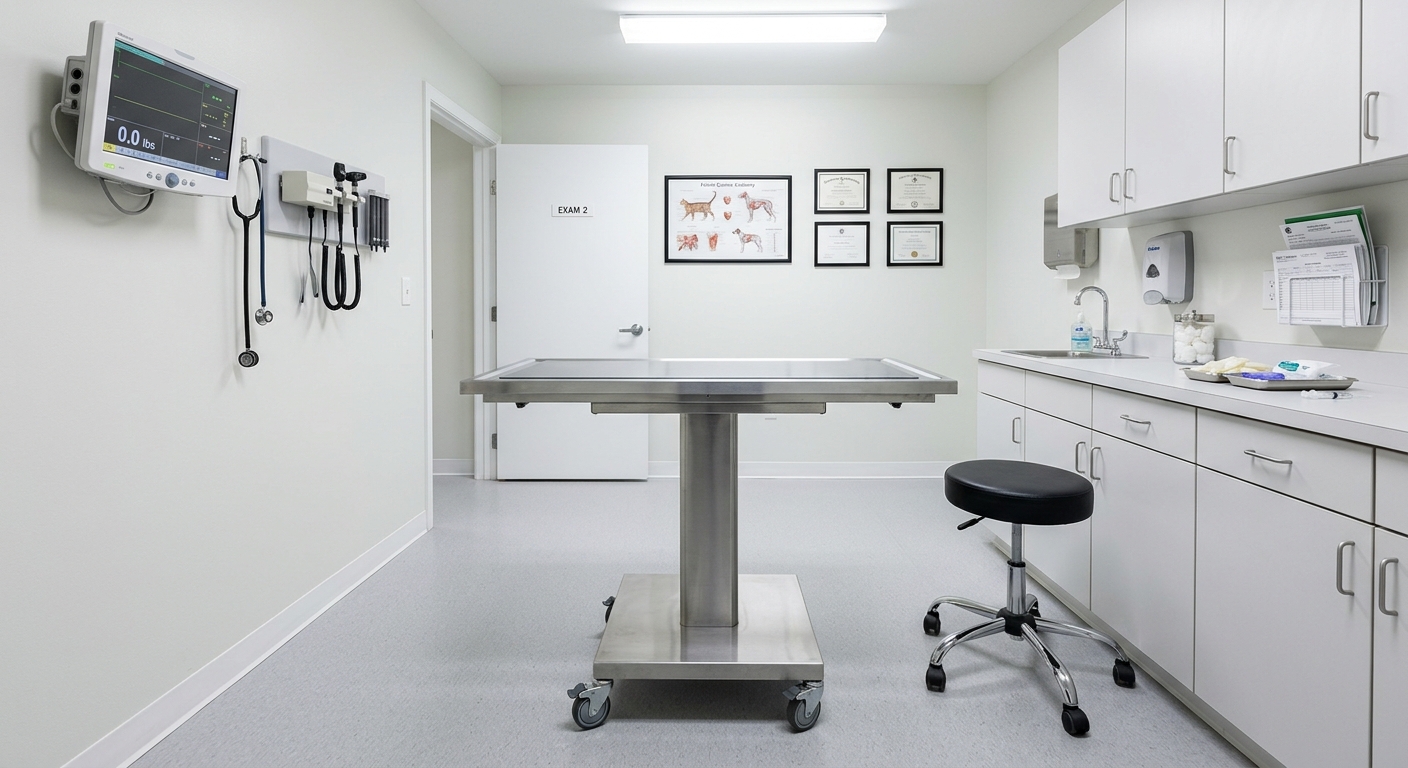
Reception counters in vet clinics take a different kind of abuse than a corporate front desk — leashes dragging across edges, wet paws on countertops, and carriers slammed down mid-panic. Laminate counters with softened, rounded edges outperform sharp-edged wood veneer here, both for durability and for reducing injury risk when a struggling animal brushes against the desk.
Lower counter sections at accessible height also matter more in vet clinics than typical offices — clients frequently need to set down a carrier or steady a large dog while checking in, so a stepped-height reception design (a lower shelf section plus a standard-height counter) reduces the awkward juggling that leads to dropped items or startled pets.
Treatment and Kennel-Adjacent Areas: Non-Porous by Default
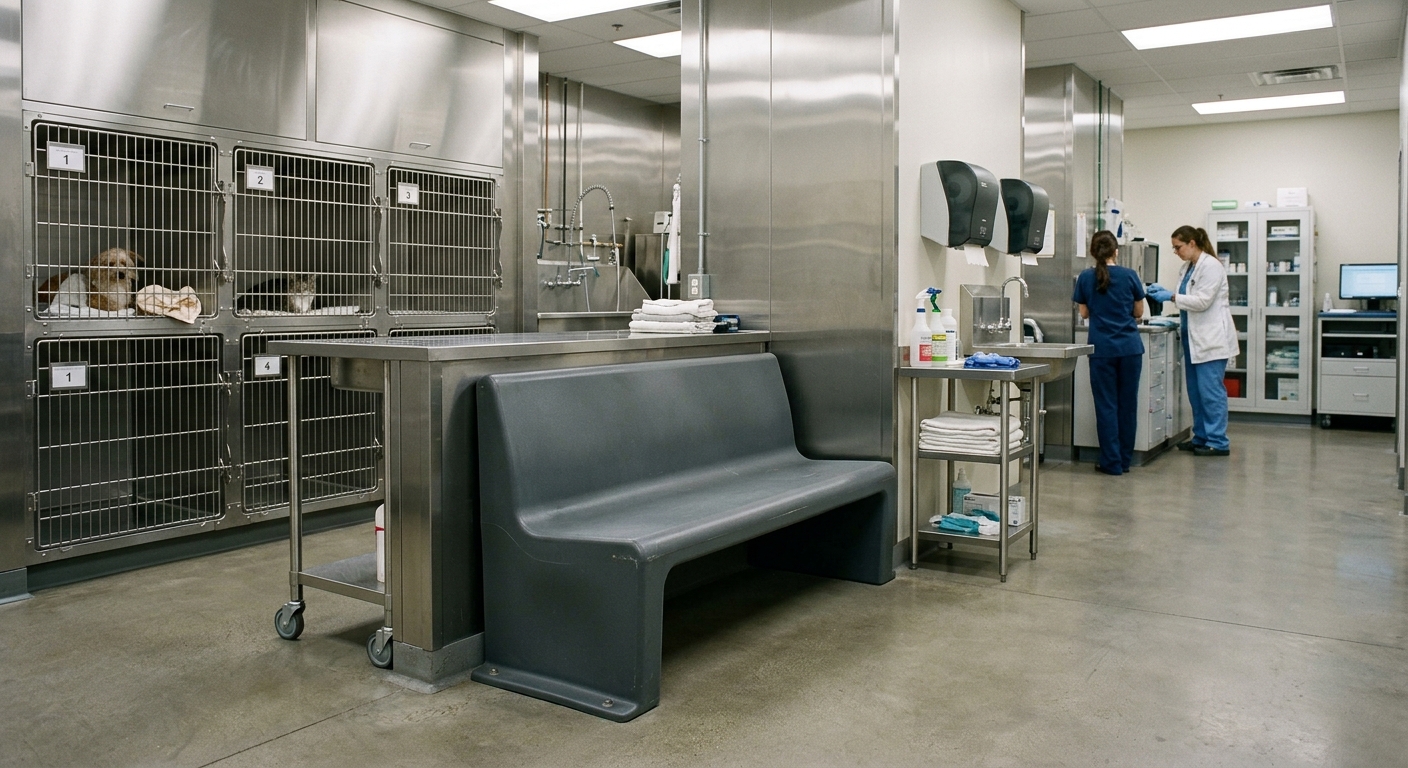
Anywhere animals are unsupervised near furniture — treatment holding areas, recovery benches, staff observation seating near kennels — porous materials should be off the table entirely. That means no untreated fabric, no open-cell foam padding without a sealed vinyl cover, and no bare wood surfaces. Urine, blood, and cleaning chemicals will find every gap.
Molded plastic or polyethylene benches, the same category used in some school and training-center furniture for heavy daily abuse (see how similar logic plays out in classroom and training center furniture built for constant use), translate surprisingly well to vet back-of-house areas. They’re non-absorbent, hose down easily, and don’t degrade under repeated disinfectant contact the way fabric-wrapped foam does.
Storage: Where Clinics Underspend and Regret It
Vet clinics juggle medication storage, surgical supplies, and client files, often in the same cramped back office. Lateral filing units tend to work better here than tall vertical cabinets — they don’t tip as easily when bumped by a cart, and they keep frequently accessed supply bins within reach without a step stool. The tradeoff-and-decision logic is the same one covered in lateral vs. vertical file cabinet comparisons, just applied to a clinic’s mixed medical-and-administrative storage needs.
One detail specific to vet clinics: any cabinet storing medication needs lockable drawers rated for daily heavy use, not decorative locks meant for occasional office use. Cheap cabinet locks fail within a year under multiple-times-daily access.
Staff Seating: The Part Clinics Forget Until Backs Start Hurting
Vet techs and front-desk staff often sit through 8-10 hour shifts on furniture chosen entirely for client-facing durability, with zero thought given to actual ergonomics. That’s a mistake — turnover in vet clinic support staff is already high, and chronic back pain from bad task chairs doesn’t help retention. The same ergonomic fundamentals covered in posture and pressure-point research apply directly to reception and treatment-room staff chairs, just wrapped in cleanable vinyl instead of mesh or fabric.
A practical fix many clinics miss: task chairs with easily removable, washable seat pads. Full-mesh ergonomic chairs look great in an office but are nearly impossible to disinfect properly after fur and fluid exposure.


