
Height-Adjustable Desks vs. Standing Desk Converters: Which One Actually Gets Used?
- 20 Aug, 2026
- Guides
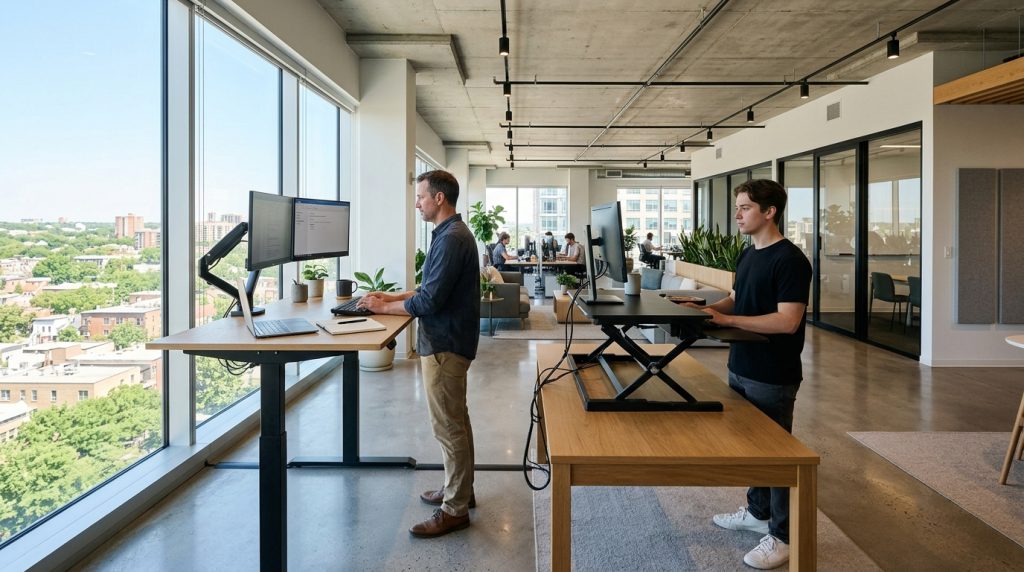
Height-adjustable desks get used far more consistently than standing desk converters — the data on this isn’t close. Converters sound like the smart budget move, but the extra friction of lifting a heavy platform every time you want to stand kills adoption within weeks for most employees. If your goal is actual behavior change, not just a line item on a wellness checklist, a full sit-stand desk wins almost every time.
Why Converters Sound Great on Paper — and Fail in Practice
A standing desk converter costs a third of a full electric desk. Easy sell to a budget-conscious office manager. So why do so many end up permanently parked in the “standing” position, collecting dust, or shoved in a closet by month three?
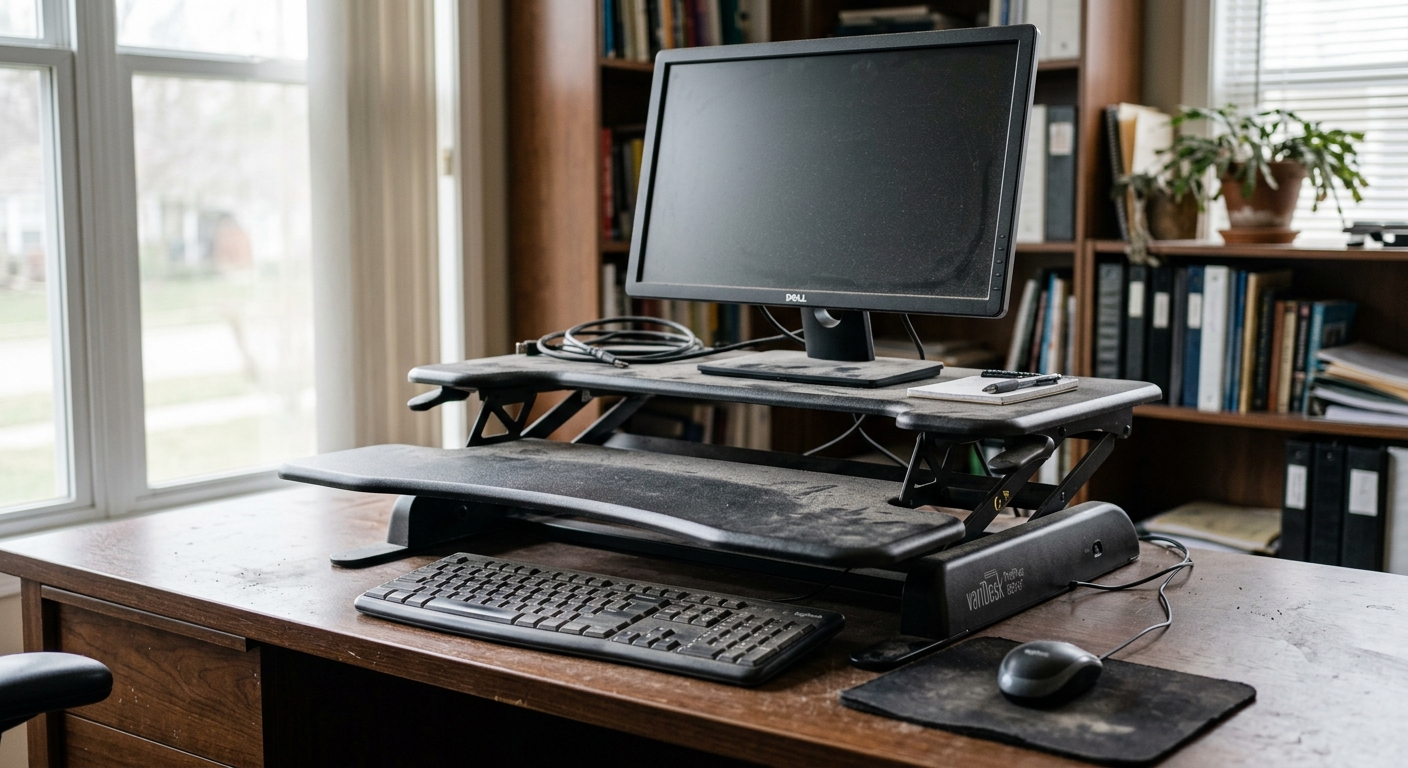
The answer is friction. Converters require a physical action every single time someone wants to change position — lifting a platform loaded with a monitor, keyboard, and mouse. That’s not a big deal once. It’s a big deal 4 times a day, 5 days a week. Most people default to the path of least resistance, which means they pick one position and stay there. Usually sitting, because standing up requires more effort than staying seated.
Pneumatic converters (gas-spring assisted) reduce the physical effort somewhat, but they still take up desk depth, add height that can misalign monitor sightlines, and wobble under repeated adjustment. Manual crank versions are worse — nobody wants to crank a handle 40 times to raise a desk before a 9am call.
The Real Reason Full Height-Adjustable Desks Get Used
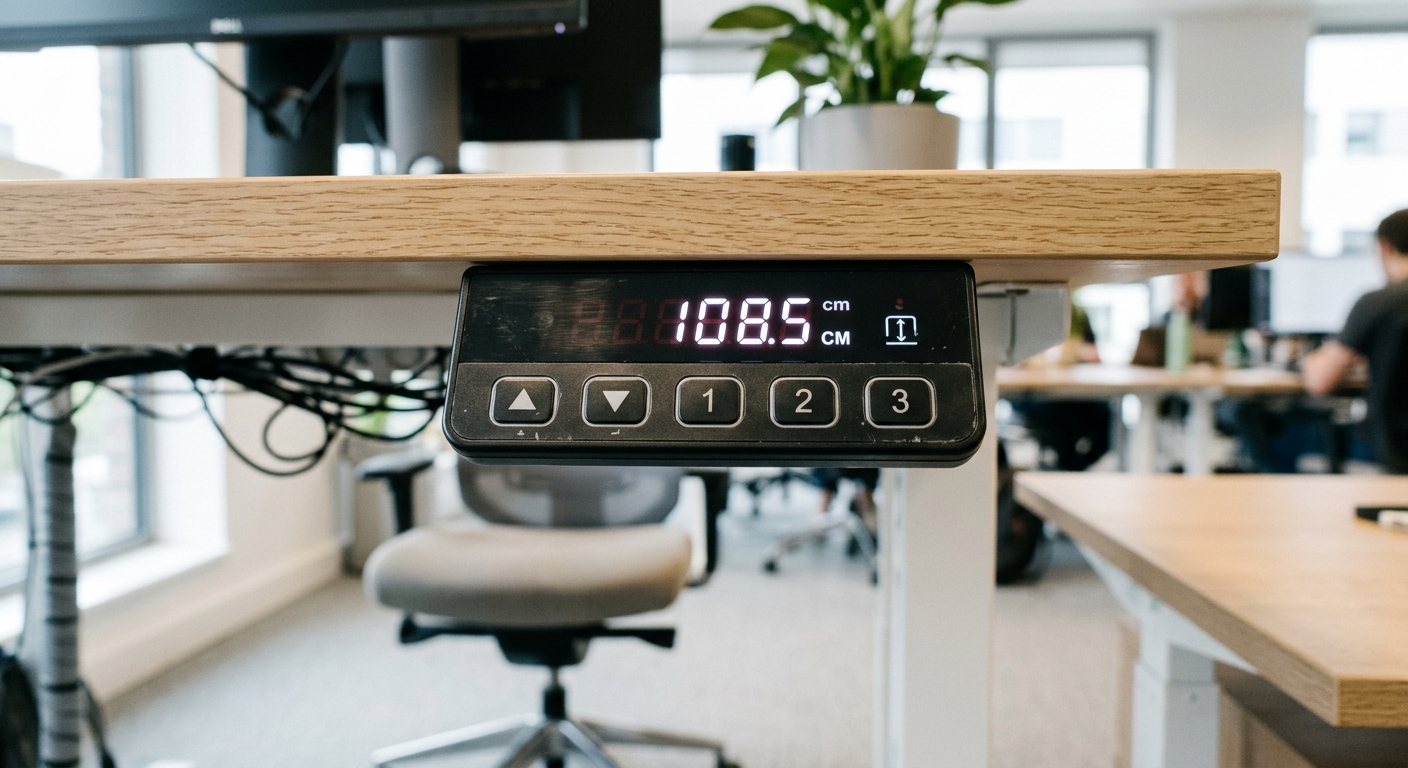
Electric height-adjustable desks remove the friction entirely. One button press, and the whole surface moves — no lifting, no repositioning cables, no wobble. That single design difference is why adoption rates are dramatically higher with full desks versus converters.
There’s also a psychological factor: when the desk itself is the adjustable object, standing becomes the default behavior built into the furniture, not an extra task layered on top of an existing desk. Employees don’t think of it as “doing something special.” It’s just how the desk works. That subtle shift matters more than people expect. For more on how furniture shapes daily behavior, see the impact of standing desks on workplace productivity and health.
Motor Specs That Actually Matter
- Dual-motor frames adjust more evenly under load and handle 80–350 lb capacities — important for dual monitors and heavier setups.
- Single-motor frames are cheaper but slower and can tilt slightly under uneven weight distribution.
- Look for adjustment speed around 1.5 inches per second; anything slower feels sluggish and discourages frequent changes.
A Real-World Comparison: Two Offices, Same Budget
A 40-person coworking space and a 40-person law firm both received the same $16,000 furniture budget last year. The coworking space bought 40 converters at $400 each. The law firm bought 20 electric sit-stand desks at $800 each, covering half the staff, with a plan to phase in the rest.
Six months later, the coworking space reported converter usage under 20% — most members left them in the “down” position permanently, and several converters were removed entirely because they crowded shared desks. The law firm’s 20 electric desks saw over 70% daily usage, according to informal manager observation and standing-time logs from desk sensors. Employees who didn’t yet have an electric desk actively asked when their turn was coming.
The lesson isn’t that converters are useless — it’s that spreading a budget thin across a cheaper, lower-adoption product often produces worse real-world outcomes than fully equipping a smaller group with the tool people will actually use. If you’re planning a rollout like this, the sit-stand desk procurement checklist for office managers walks through exactly this kind of budget-vs-adoption tradeoff.

When a Converter Is Actually the Smarter Choice
Full desks aren’t automatically right for every scenario. Converters make sense in a few specific situations:
- Hot desks and shared workstations — where you can’t dedicate a fixed electric desk to one person, a converter lets multiple users adjust without reconfiguring the whole desk.
- Short-term trials — if you’re testing whether your team even wants sit-stand options before committing budget, converters are a low-risk way to gauge interest.
- Rental or temporary offices — if you don’t own the desks and can’t swap them out, a converter adds functionality without replacing furniture you don’t control.
Outside those cases, converters tend to become a compromise nobody’s fully happy with — not tall enough, not stable enough, and eventually ignored.
The Hidden Costs Nobody Budgets For
The sticker price isn’t the whole story. Converters often require separate monitor arms because their platforms don’t have built-in cable management or mounting points — that’s another $80–$150 per desk. Full height-adjustable desks frequently include integrated cable trays and grommets, and pair well with accessories covered in standing desk mats, monitor arms, and cable trays that actually earn their keep.
Weight Capacity Surprises
Many converters are rated for 20–35 lbs — fine for a single monitor and keyboard, but tight once you add a second monitor, a laptop dock, and a desk lamp. Exceed the rating and the gas spring mechanism wears out fast, sometimes within a year. Electric desks rated at 150+ lbs have far more headroom and rarely fail from overload.
What the Ergonomics Actually Require
Standing correctly matters as much as standing at all. A converter that raises your monitor but not your keyboard tray to the correct relative height can put your wrists at a worse angle than sitting did in the first place. Full-surface height adjustment moves everything together — keyboard, mouse, monitor — maintaining consistent ergonomic alignment at any height.
This ties directly into posture research covered in the science of sitting: how posture, pressure points, and chair design actually interact — the same principles about neutral joint angles apply whether you’re seated or standing, and a mismatched converter setup can quietly undo the benefits you’re trying to gain.

Footprint and Space Planning
Converters sit on top of an existing desk, which sounds space-neutral but usually isn’t. A typical converter reduces usable surface depth by 4–8 inches, and stacking it on a standard 24-inch-deep desk leaves barely enough room for a notepad, let alone a laptop and reference documents.
Full height-adjustable desks replace the surface entirely, so there’s no stacking penalty. If you’re furnishing an open floor plan and space is already tight, it’s worth reviewing how to measure your office before ordering furniture alongside desk selection — the converter’s extra footprint can be the difference between a workable layout and a cramped one.


