
How to Measure Your Office Before Ordering Furniture (Without a Floor Plan)
- 02 Jun, 2026
- Guides
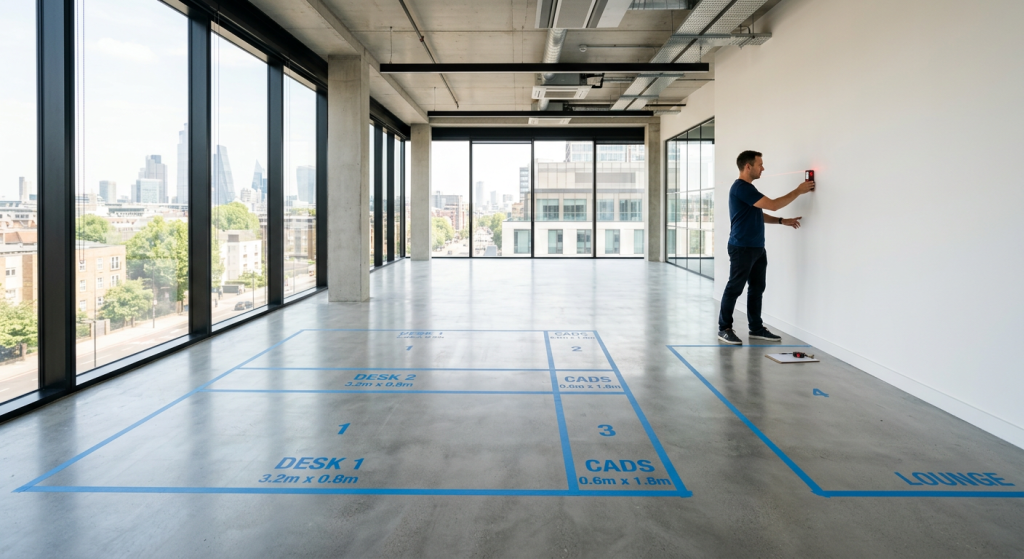
You don’t need a CAD floor plan to order office furniture correctly — you need eight measurements done in the right order: room length and width, ceiling height, doorway and elevator clearances, window and outlet positions, HVAC and column locations, walking-path clearances, and the actual usable wall runs (not the full wall). Get those numbers on paper, sketch them roughly to scale, and you’ll avoid the two mistakes that derail 80% of furniture orders: pieces that don’t fit through the door, and layouts that leave less than 36 inches of clearance behind chairs.
Start With the Tools That Actually Matter
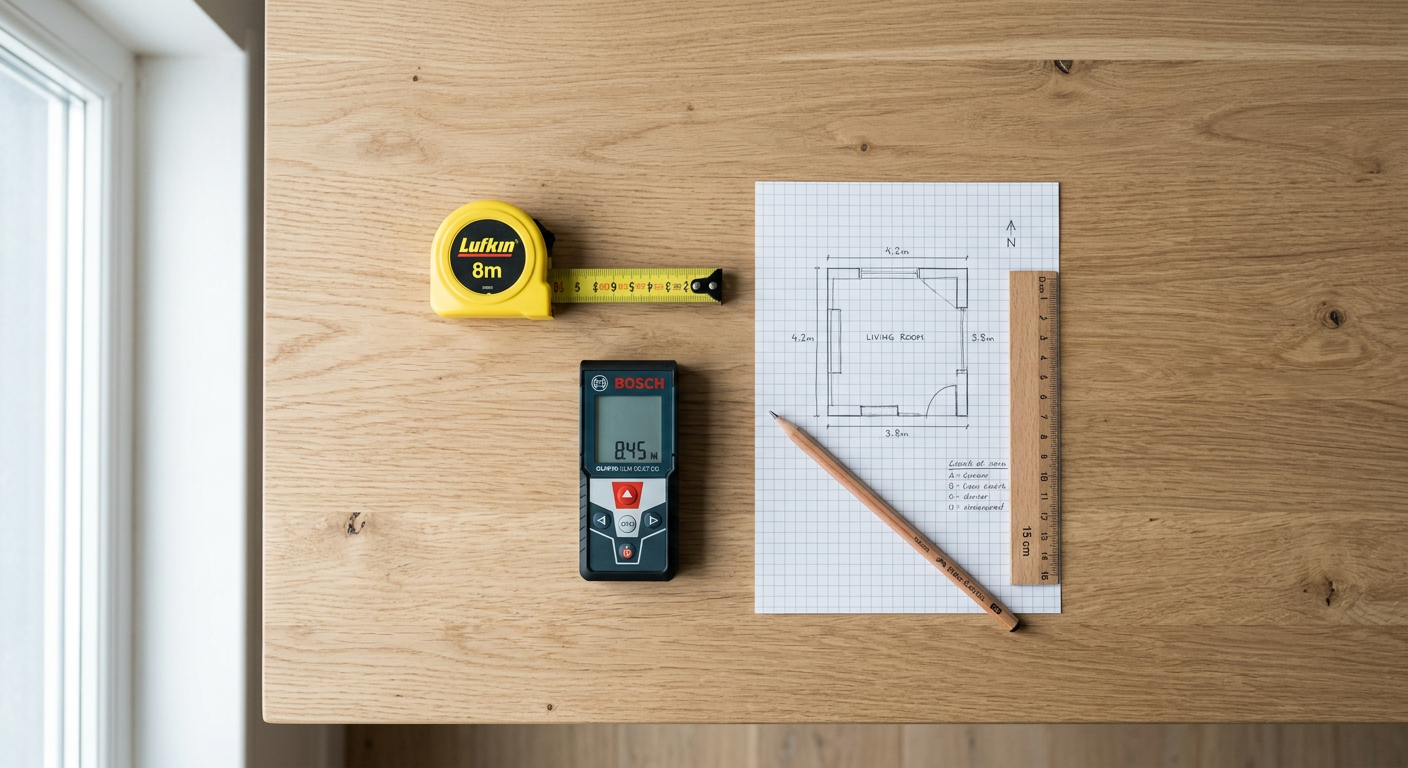
A $40 laser distance meter will save you more headaches than any app. Here’s what to grab before you measure anything:
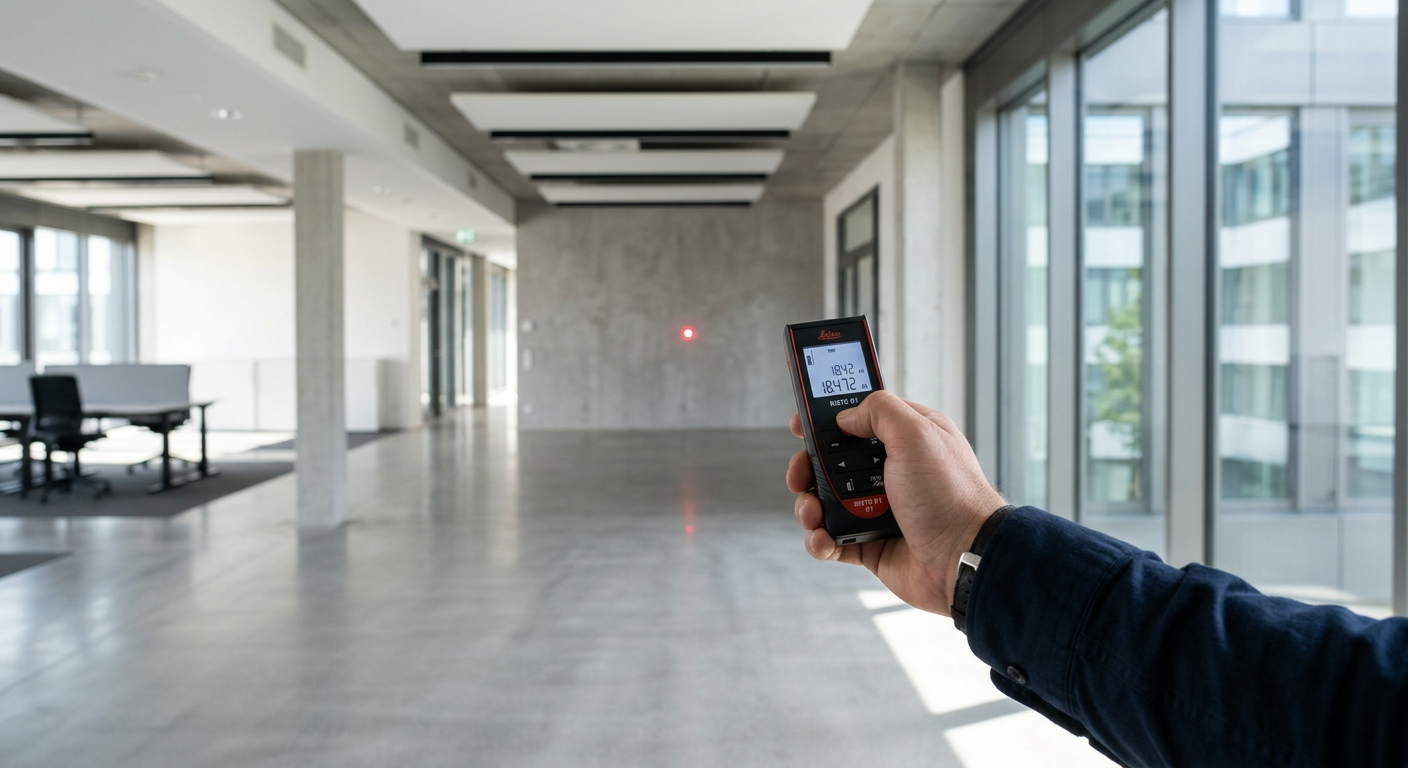
- Laser distance meter — measures up to 100 ft with ±1/16 inch accuracy. Bosch GLM 20 or similar.
- 25-foot tape measure — for doorways, desk depths, and anywhere the laser can’t get a clean shot.
- Graph paper or a tablet — one square equals 6 inches works well for most rooms.
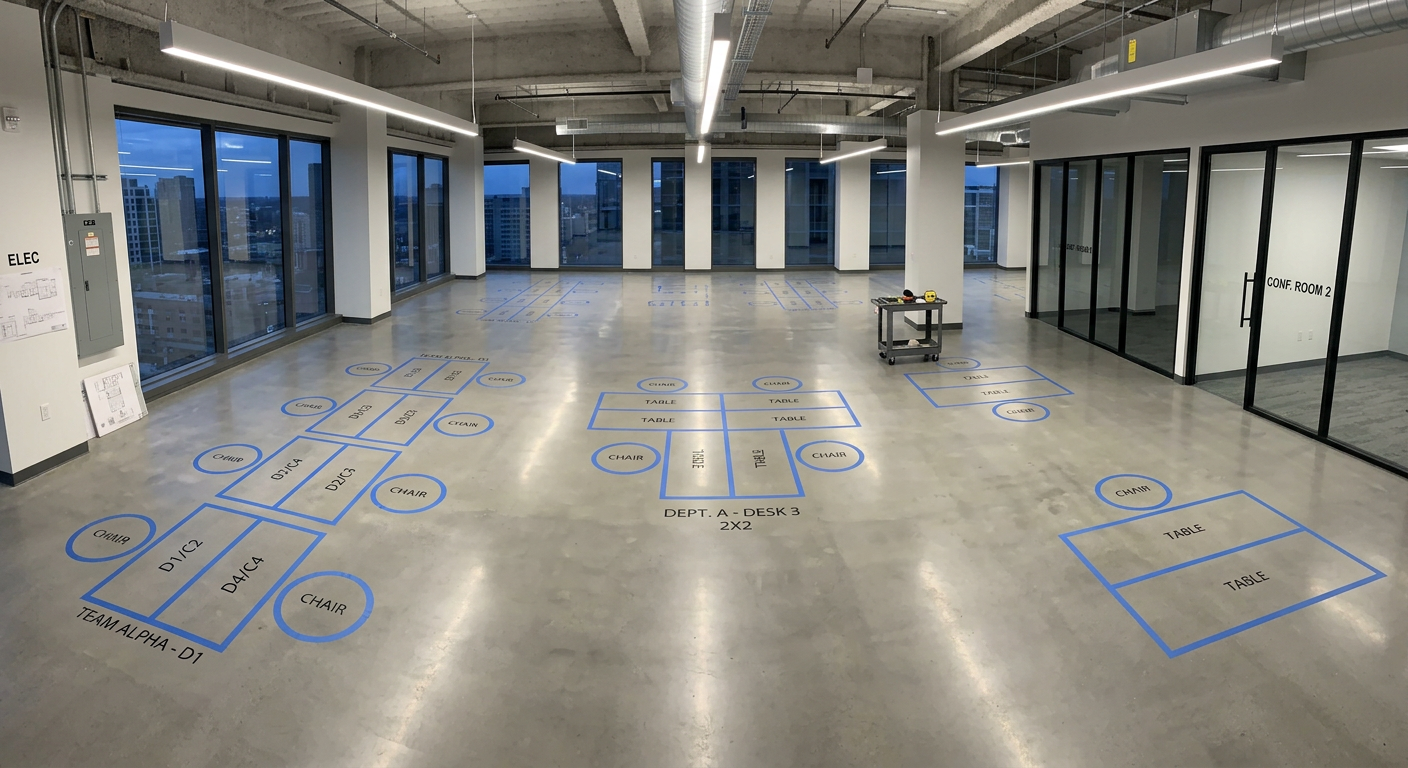
- Painter’s tape — to mock up footprints on the floor before committing.
- Phone camera — photograph every wall, corner, and obstruction. You’ll reference these a dozen times.
Skip the AR measuring apps for anything final. They drift by 1–2 inches over a 15-foot span, which is exactly enough error to make a 96-inch conference table jam against a wall.
Measure the Room in This Exact Order
Random measuring leads to missing numbers. Follow this sequence and you’ll capture everything you need on the first pass.
1. Overall length and width
Measure wall-to-wall at floor level, not at eye height — baseboards and crown molding can throw off readings by an inch. Take the measurement twice along each axis (once near each end of the room). If the numbers differ by more than half an inch, the room isn’t square, and you need to note which corner is tighter.
2. Ceiling height
Standard commercial ceilings run 9–10 feet, but drop ceilings in older buildings can be as low as 7’6”. This matters more than people think — tall bookcases, partition systems, and acoustic privacy pods often need 8 feet of clearance minimum.
3. Wall runs between obstructions
This is the number that actually determines what furniture fits. A wall might be 18 feet long, but if there’s a thermostat at 6 feet and a light switch at 14 feet, your usable run for a credenza is really 8 feet. Mark every interruption: outlets, switches, vents, thermostats, fire alarms, radiators.
Doorways, Elevators, and the ‘Will It Fit Through?’ Problem
Roughly one in four returned office furniture pieces gets sent back because it couldn’t reach the room — not because it didn’t fit once inside. Measure the entire delivery path, not just the destination.
Doorway measurements you need
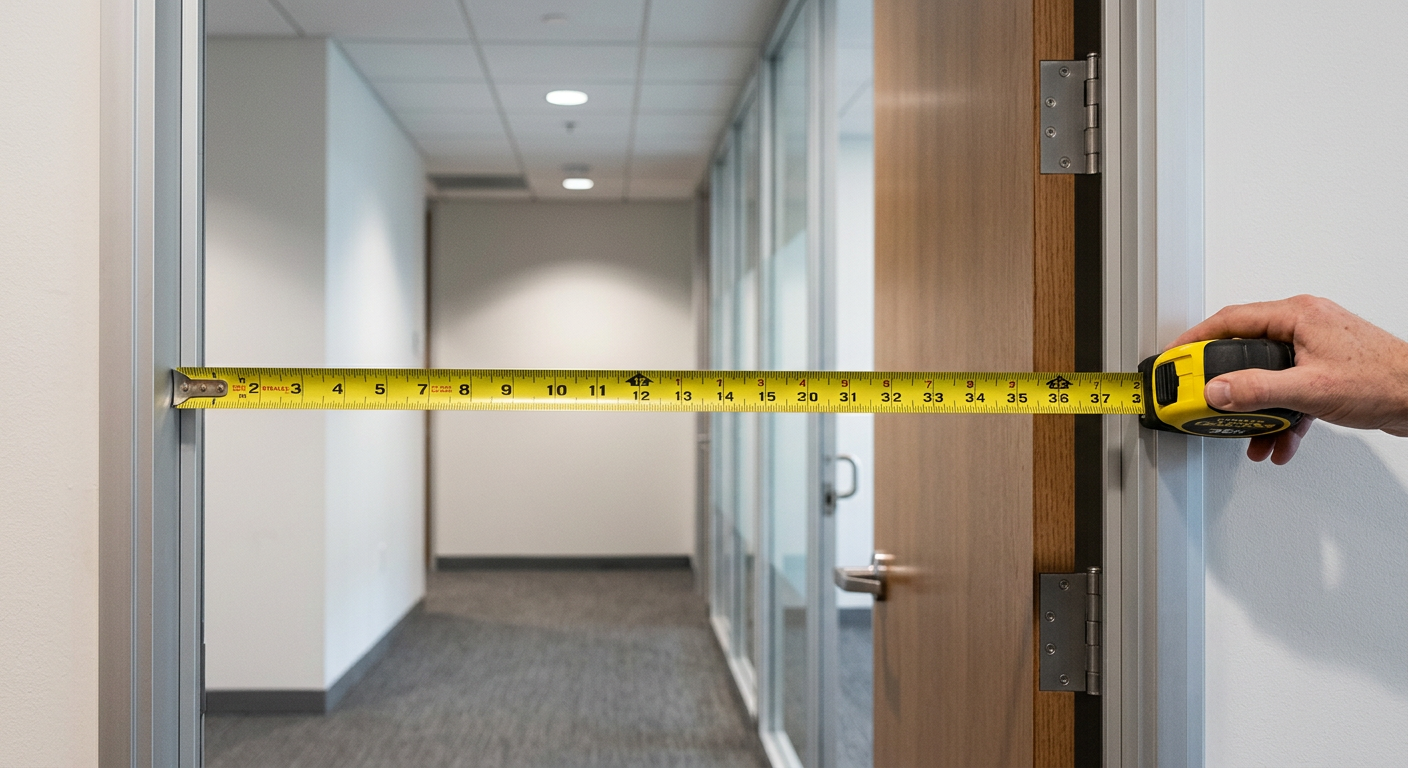
- Clear opening width — door open at 90 degrees, measured between the door face and the jamb. A 36” door usually gives only 33” clear.
- Door height — standard is 80”, but historic buildings often have 78” openings.
- Diagonal clearance — for desks and conference tables, the diagonal of the piece must be less than the diagonal of the doorway plus hallway depth.
The elevator math
Standard commercial elevators are roughly 80” tall, 68” wide, and 51” deep. A 96-inch conference table won’t lay flat — it goes on its end, and it needs to clear that 80-inch ceiling. If it doesn’t, the table either takes the stairs or comes in pieces. Ask your supplier whether the table top splits or arrives as one slab. This single question has saved entire delivery days.
For example, a law firm relocating to the 14th floor of a pre-war Manhattan building discovered their executive desks were 4 inches too long for the freight elevator diagonal. Two pieces had to be hoisted through windows — at $1,800 per piece. A 10-minute measurement would have caught it.
Plot Outlets, Data Ports, and HVAC — Then Build Around Them
Furniture layout is really infrastructure layout in disguise. A perfectly positioned desk is useless if it sits 14 feet from the nearest outlet and you’re running an extension cord across a walkway.
What to map
- Every outlet location, measured from the nearest corner and from the floor.
- Every data/Ethernet port.
- Floor outlets (especially critical in open plans).
- HVAC vents — both supply and return. Never park someone directly under a supply vent.
- Thermostats — these need to stay accessible and unblocked by tall furniture.
For sit-stand desks, the power source matters even more. Most electric height-adjustable desks need a dedicated outlet within 6 feet, and the cable management tray adds another 3–4 inches to the desk depth. Worth checking before you fall in love with a specific model. Our guide to desk types for every office setting breaks down which configurations work best for various wiring constraints.
The Clearance Rules That Make or Break a Layout
Here’s where most DIY layouts fail: people measure the furniture footprint but forget the space the furniture needs around it to actually function. Memorize these numbers.
Minimum clearances
- Behind a desk chair (pushed-out position): 36 inches. Tight but workable. 42 inches is comfortable.
- Between two facing desks: 60 inches if people sit back-to-back, 72 inches if they walk between.
- Main walking path: 44 inches (ADA compliant), 36 inches absolute minimum for secondary paths.
- Conference table to wall: 48 inches minimum to pull chairs out and walk behind them.
- File cabinet drawer extension: 28–30 inches in front for lateral files, 24 inches for vertical.
- Door swing arc: 36 inches clear of any furniture.
Want to test a layout before ordering? Tape the footprints onto your floor with blue painter’s tape and live with it for two days. Walk the paths. Roll a chair through them. You’ll find every pinch point in under an hour. Our piece on open plan vs. private office furniture dives deeper into how clearance changes between layout types.
Sketch It Rough — Don’t Try to Make a Real Floor Plan
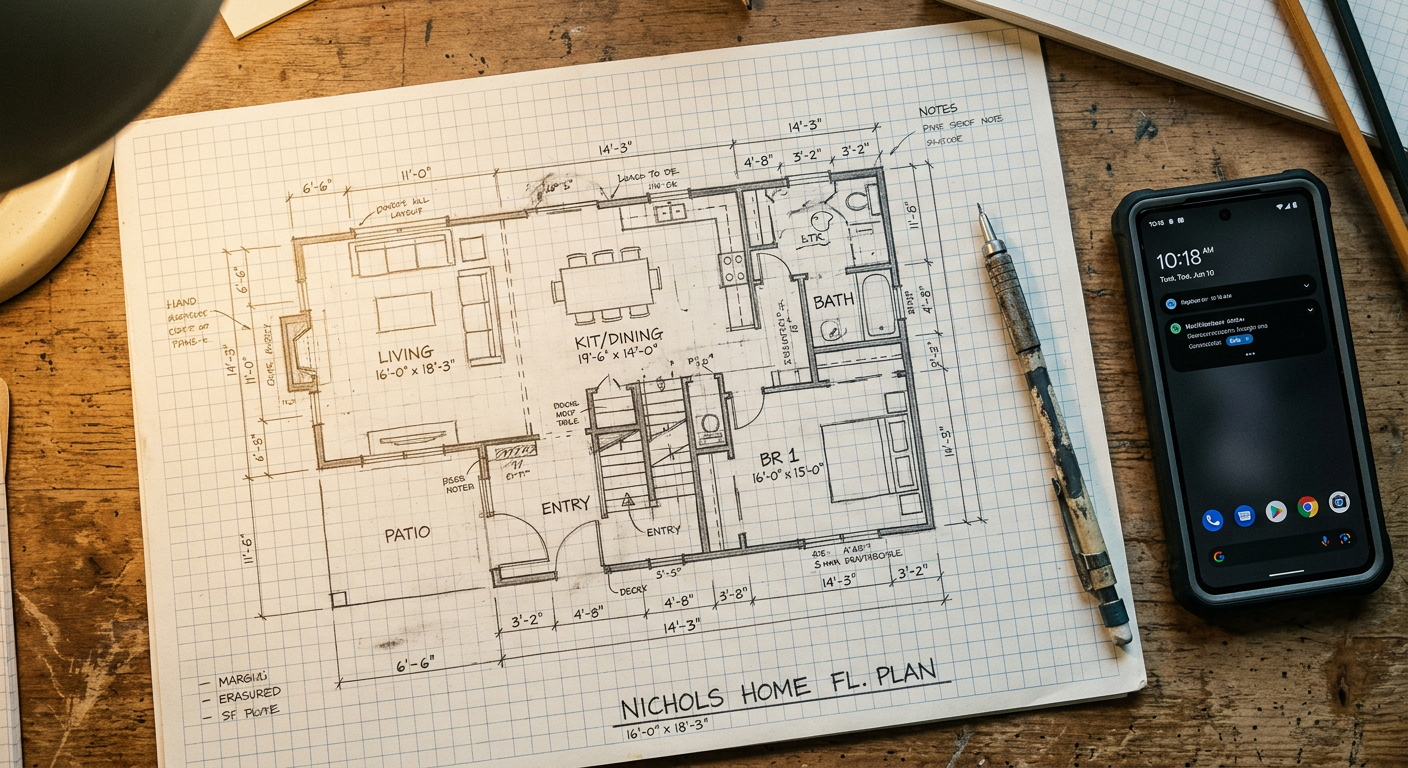
You’re not an architect. You don’t need to be. A rough sketch that captures every number from the previous steps will get you 95% of the way there.
The 15-minute sketch method
- Draw the room outline on graph paper. Don’t worry about scale being perfect — just keep proportions roughly right.
- Label every wall with its length.
- Add doors with an arc showing swing direction.
- Mark windows with double parallel lines and label the sill height.
- Drop dots for every outlet, vent, and switch, with the distance from the nearest corner.
- Add ceiling height in the center of the room.
- Photograph the sketch and email it to your furniture supplier alongside your room photos.
For instance, a 12-person startup moving into a 600-square-foot suite sketched their space on a napkin during a Friday lunch, added 14 measurements, and sent it to us as a phone photo. We laid out workstations, a 6-person meeting table, and a lounge corner without ever stepping into the room. The delivery fit on the first try.
Account for the Things Most People Forget
Even careful measurers miss these. Each one has killed at least one furniture order I’ve seen.
Baseboards and trim
Bookcases, credenzas, and modular wall units sit flush to the wall — except they can’t, because a 3/4-inch baseboard pushes them out. Either factor in the gap or order pieces with a recessed toe kick.
Door hardware and panic bars
That 36” doorway? The panic bar on a commercial fire door eats 3 inches of clear width when the door is held open. Measure with the door in its actual open position.
Window sill depth
If you plan to place a desk under a window, the sill depth determines whether a monitor stand will hit the glass when tilted back.
Column intrusions
Many commercial buildings have structural columns mid-room. Measure their footprint AND how far they project from the nearest wall. A 24” square column eats roughly 6 square feet of usable space and breaks any straight desk run.
Floor flatness
Older buildings can slope as much as 1 inch over 10 feet. For long conference tables and modular systems, this matters. Roll a marble across the floor — if it picks up speed, you’ll need adjustable feet on your furniture.
Translating Measurements Into a Confident Order
Once you have your numbers, the order conversation gets dramatically easier. Here’s what good furniture suppliers will ask for — have these ready.
- Room dimensions (length × width × ceiling height).
- Usable wall runs between obstructions.
- Doorway and elevator clear openings, plus diagonal.
- Outlet and data port positions.
- HVAC vent locations.
- Number of people the space needs to seat, and how they work (focused, collaborative, hybrid).
- Photos of every wall.
With that package, a supplier can spec workstation sizes, recommend whether to go with lateral or vertical file cabinets, suggest whether a modular sofa system makes sense for a lounge zone, and confirm everything will arrive intact. For tighter footprints, our small workspace optimization guide is worth a read before you finalize sizes.
When to Bring in a Pro
DIY measurement works for most small to mid-size offices. But there are three situations where you should stop and call someone:
- You’re laying out more than 20 workstations. The compounding error of small measurement mistakes becomes expensive fast.
- The room is irregular. Angled walls, curved walls, or multiple level changes need real planning.
- You’re combining electrical work with the furniture install. Floor outlets and modular wiring need to be coordinated to the inch.
Most reputable furniture suppliers — including us — will do a free measurement visit for orders above a certain size. It’s faster, more accurate, and you get a layout proposal as part of the deal. If you’d rather hand off the measuring entirely, get in touch and we’ll send someone out.
Measuring your own office isn’t hard. It’s just methodical. Take an hour with a laser meter, follow the order above, and capture the small details people skip — baseboards, panic bars, vent positions. The furniture order that follows will fit, function, and look like it was planned by someone who knew what they were doing. Because it was. When you’re ready to translate those measurements into a workspace that actually performs, explore our full office furniture solutions or send over your sketch — we’ll take it from there.


