
Furnishing a Call Center: Chairs and Workstations That Survive 24/7 Use
- 11 Jun, 2026
- Guides
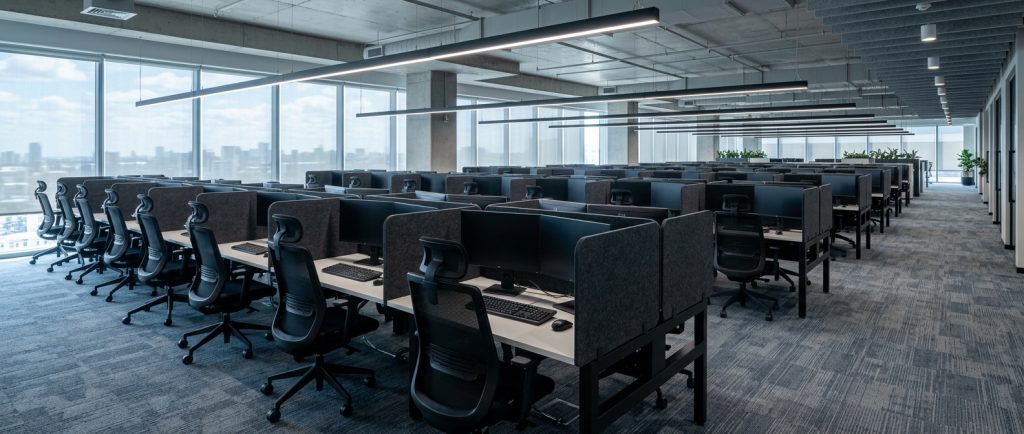
Furnishing a 24/7 call center comes down to one rule: buy chairs and desks rated for multi-shift use, or replace them every 12–18 months. That means task chairs tested to at least 300,000 BIFMA cycles, workstations with reinforced frames and managed cable trays, and acoustic treatment built into the furniture itself — not bolted on as an afterthought. Skimp on any of these three and you’ll pay the difference in turnover, sick days, and replacement orders before the second year ends.
Why Standard Office Furniture Fails in Call Centers
A typical office chair is engineered for one person sitting roughly 2,000 hours a year. A call center seat in a three-shift operation racks up 6,500+ hours annually — more than triple the workload, often shared between two or three different body types per day.
The failure points are predictable. Gas cylinders sink within 8–10 months. Armrest mechanisms loosen. Seat foam compresses to a pancake. Casters seize because they’re rated for carpet, not the polypropylene chair mats most centers install. Cheap mesh stretches and sags.
We’ve seen procurement teams buy 200 mid-range task chairs for $280 each — a $56,000 spend — and replace 60% of them within 14 months. The math gets ugly fast. If you’re curious about the broader replacement-vs-repair calculus, our breakdown on why office chairs squeak, sink, or tilt wrong covers the common failure modes in detail.
The Chair Spec That Actually Matters: 24/7 Rated
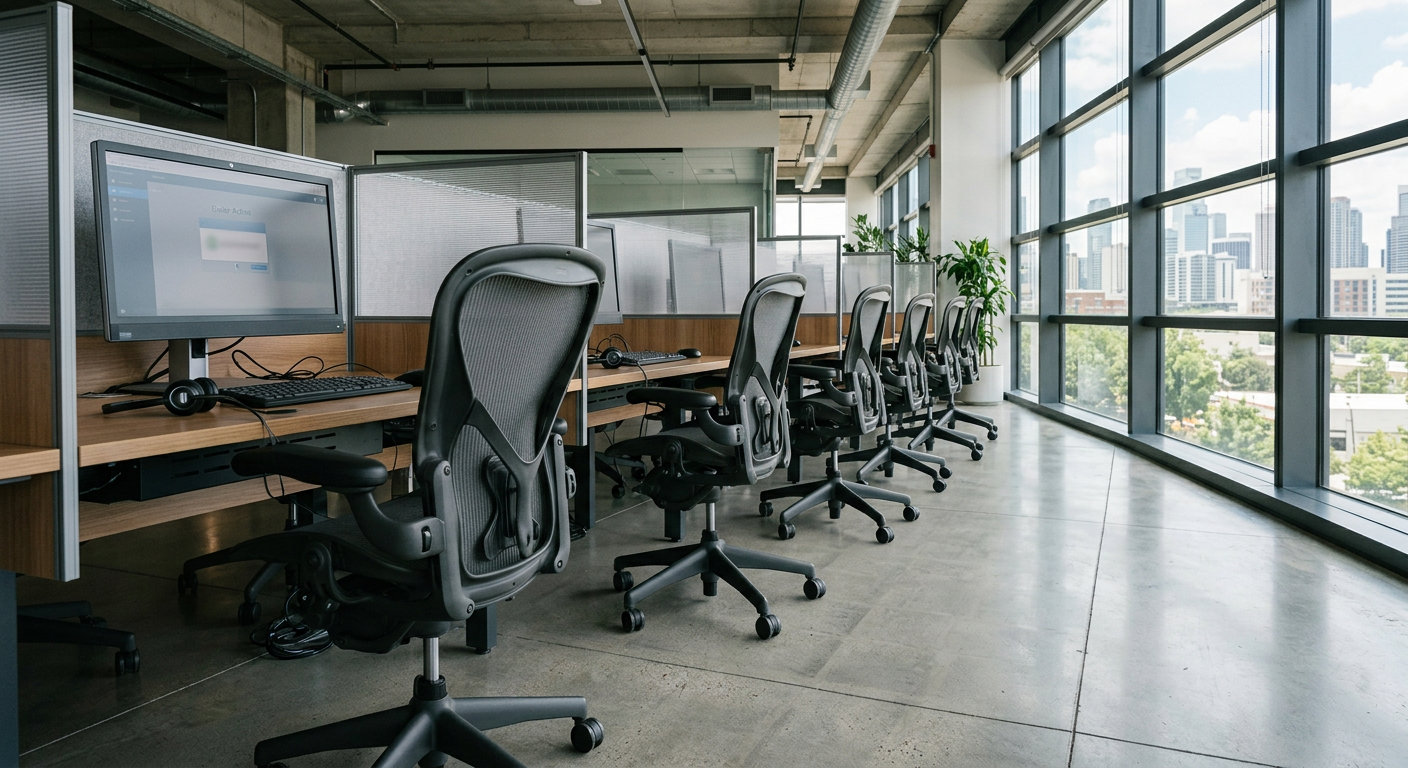
If you take one thing from this article: ask your supplier for the BIFMA cycle test number, in writing. A standard chair is tested to 100,000 seat-load cycles. A true 24/7 chair is tested to 300,000 or higher. That single specification predicts five-year durability better than price, brand, or marketing copy.
What to look for on the spec sheet
- Cycle test: 300,000+ for the seat, backrest, and arms
- Gas cylinder: Class 4 pneumatic, rated for 200kg static load
- Base: Aluminum, not nylon — nylon cracks under continuous stress
- Casters: 65mm dual-wheel, rated for hard floors AND carpet
- Warranty: Minimum 7 years, including the mechanism, on a 24/7 use basis
- Weight capacity: 300 lbs minimum — and check how it’s measured
That last point matters more than you’d think. Our guide on the real weight capacity of office chairs explains why a 300 lb rating doesn’t always mean what manufacturers claim.
Workstation Design: Smaller Footprint, Smarter Layout
Call center desks have shrunk. The old 60-inch L-shape is gone — modern agents need a 48-inch wide work surface, a single or dual monitor setup, and not much else. Paper has left the building.
But smaller doesn’t mean cheaper. The frame still has to support a 32-inch curved monitor, a headset charging dock, and the occasional agent who leans hard on the front edge during escalated calls. Look for steel frames with welded joints, not bolted ones. Bolted frames develop wobble within 18 months of three-shift use.
Power and data should live in the desk
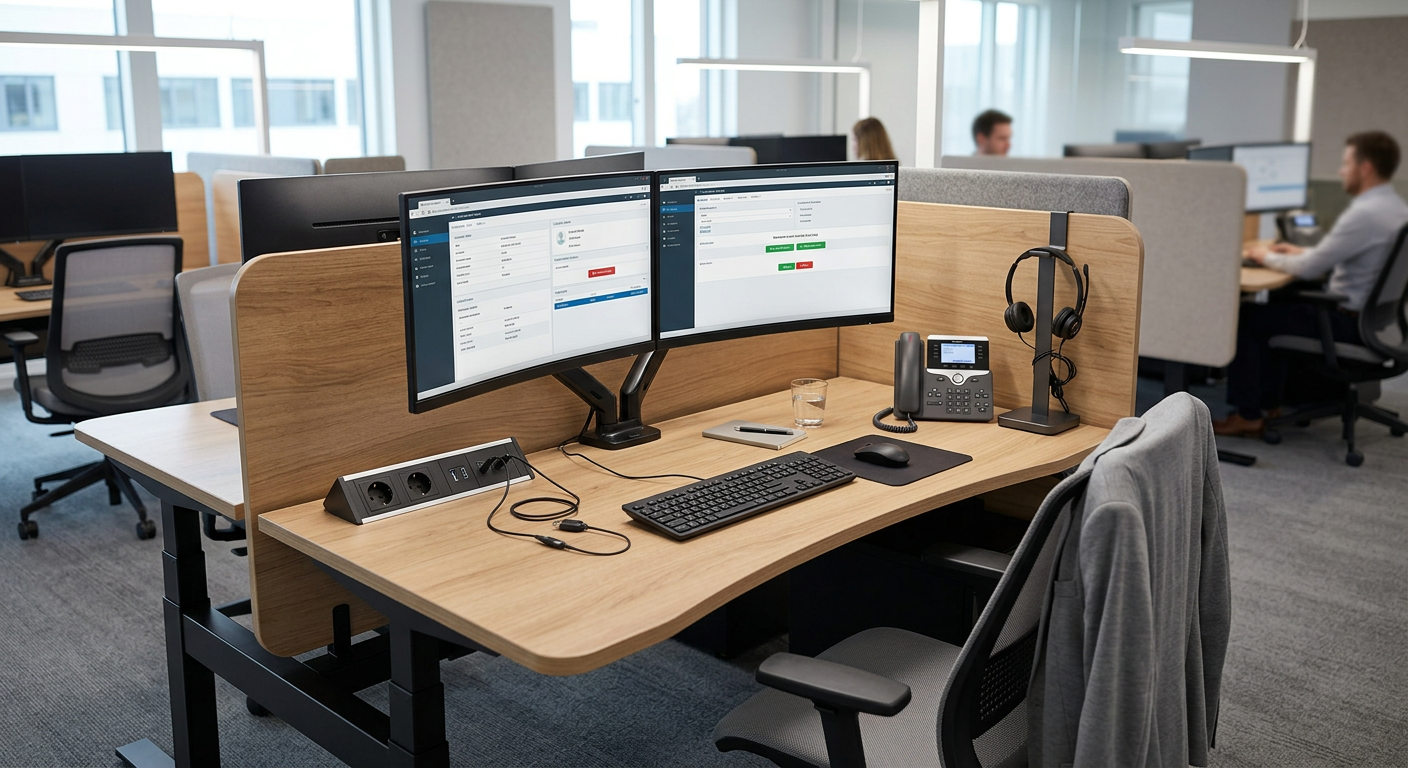
Every workstation needs at minimum two grounded power outlets, two USB-C ports, and an Ethernet pass-through, all integrated into a flip-up grommet or beam-mounted module. Agents hot-swap shifts. They don’t have time to crawl under a desk to find an outlet.
For sizing specifics by role and monitor configuration, our desk sizes and dimensions guide breaks down the math.
Sit-Stand Desks: Worth It for 24/7 Operations?
Short answer: yes, but only for centers running 10+ hour shifts or with high-volume outbound roles. For straight 8-hour inbound shifts with regular breaks, fixed-height desks at 73cm work fine and cost half as much.
When you do go height-adjustable, spec dual-motor electric columns rated for 10,000+ lift cycles. Single-motor and crank-handle desks won’t survive shift handovers where two or three agents adjust the desk each day. Look for a motor warranty of 7 years minimum.
For example, a 180-seat outbound sales floor we worked with switched 40% of its workstations to sit-stand units after agents complained of back fatigue on the 9pm–5am shift. Within six months, missed-shift rates on that team dropped noticeably. The fuller picture on the productivity case is in our piece on standing desks and workplace productivity.
Acoustic Furniture: The Cheapest Productivity Win
Call center noise is the single biggest complaint agents raise in exit interviews. Average ambient noise on an open floor runs 65–72 dB — loud enough that agents unconsciously raise their voices, which raises everyone else’s, which creates the “call center roar.”
The fix isn’t just hanging acoustic panels on the ceiling. It’s building absorption into the furniture itself:
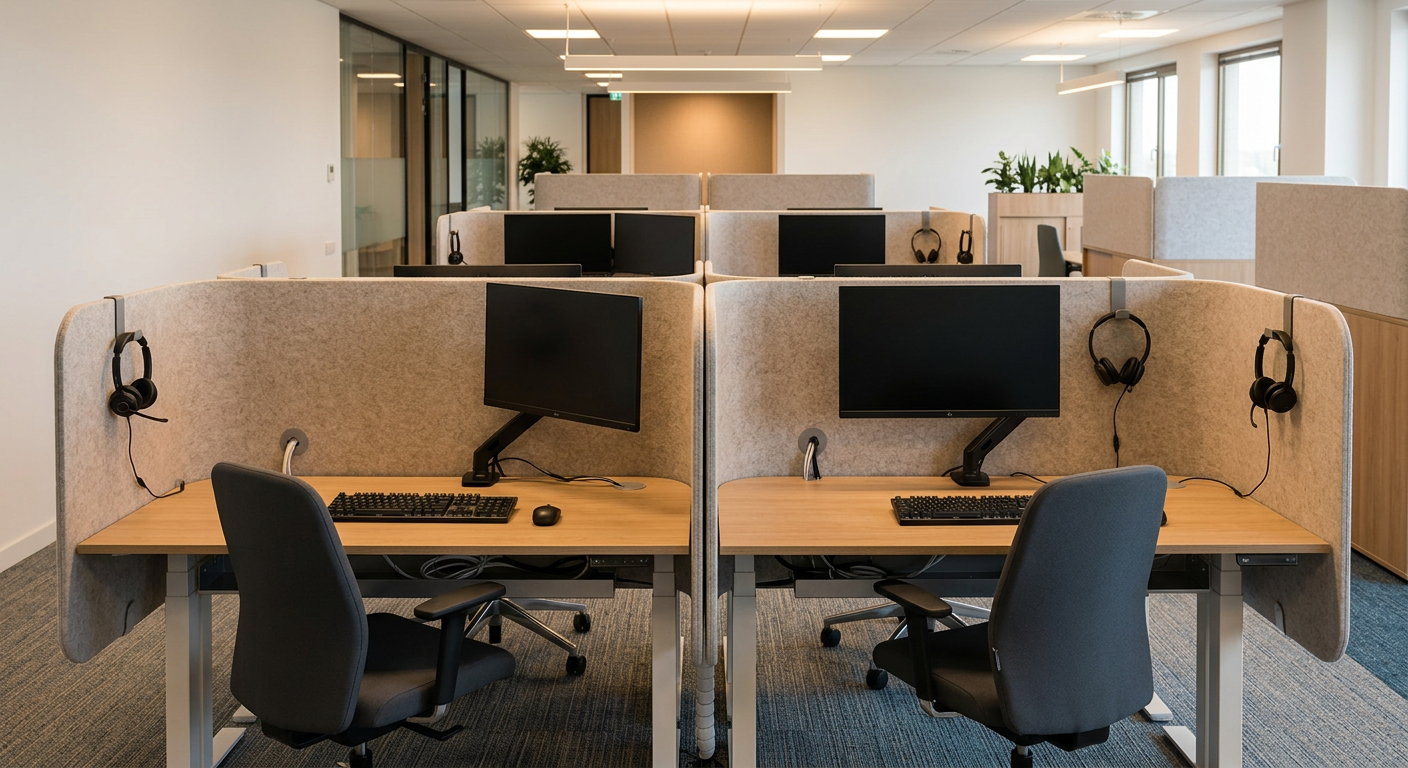
- Desk-mounted screens: 40mm PET felt, minimum 600mm tall above desk surface — blocks direct line-of-sound between adjacent agents
- High-back acoustic pods: for team leads and supervisors who handle escalations
- Felt-wrapped storage units at the end of every 4–6 seat pod
Done right, you can pull ambient noise down to 58–62 dB without adding a single ceiling baffle. Our deeper look at cubicles that protect focus covers the panel-height trade-offs in detail.
Cable Management: The Detail That Quietly Kills Furniture
You’d be surprised how often a $900 chair fails because of a $4 problem. Loose cables under workstations get caught in casters, ripped from ports, and tripped over during shift changes. That stress travels up through the chair base and the desk frame.
Every workstation needs:
- A horizontal cable tray running the full width of the desk
- Vertical cable spines from desk to floor — flexible silicone, not the cheap plastic snap-on type
- A dedicated power brick shelf — never let transformers dangle
This is mundane stuff, but in a 24/7 environment it’s what separates a 7-year furniture lifespan from a 2-year one.
Materials and Hygiene: Three Shifts, One Chair
When three different agents share a chair across 24 hours, hygiene becomes a real procurement question. Fabric upholstery absorbs sweat, perfume, and food residue. By month nine, it smells. By month eighteen, it’s a health complaint.
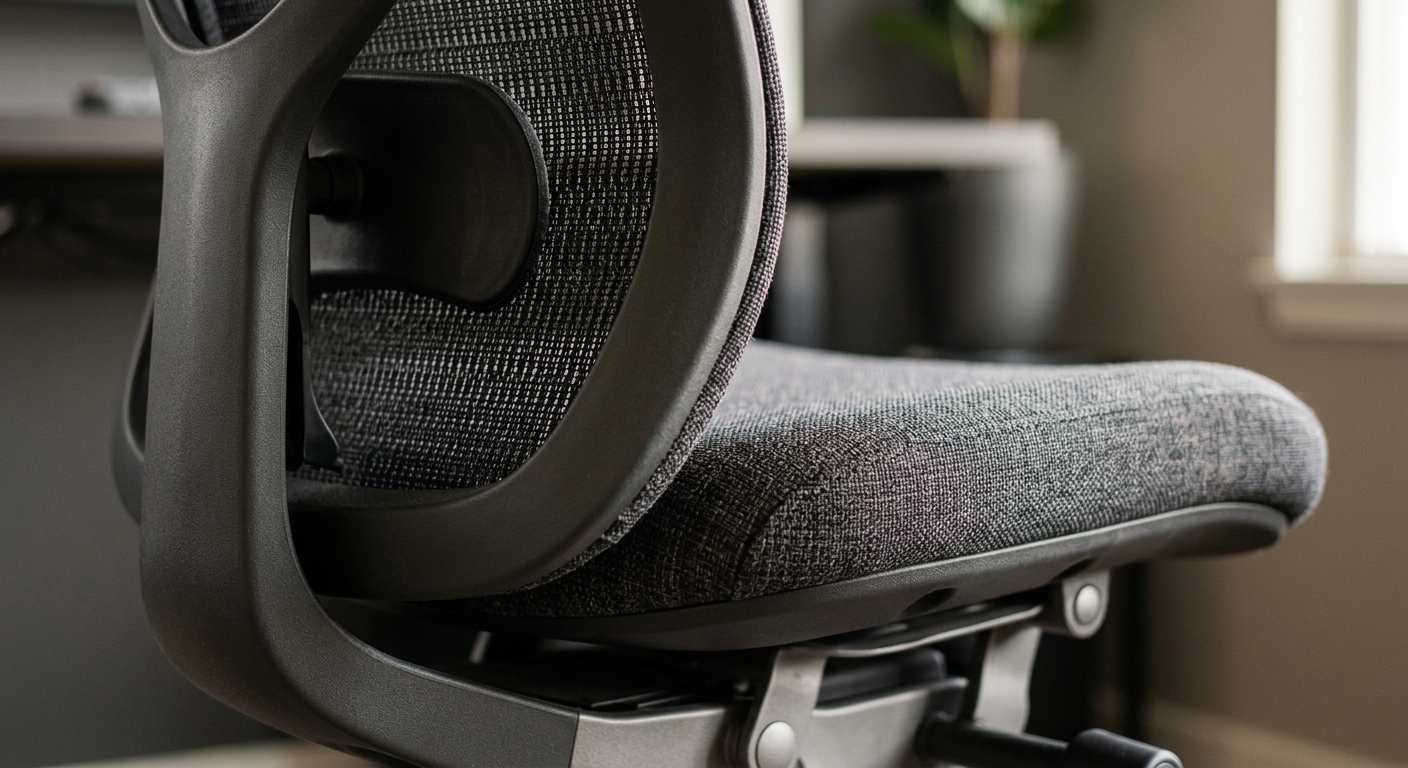
Go with bonded leather or PU-coated mesh on seat pans, and breathable polyester mesh on backrests. Both wipe down with a 70% isopropyl solution without degrading. Avoid open-weave fabrics and untreated foam — they trap moisture and bacteria.
For sensitive environments — healthcare-adjacent call centers, government contracts, or any operation with documented air-quality requirements — push your supplier on certifications. Our overview of non-toxic office furniture walks through what GREENGUARD and similar marks actually guarantee.
Procurement Math: What 100 Seats Should Actually Cost
For a 100-seat 24/7 call center, here’s a realistic budget benchmark in 2026:
- 24/7-rated task chairs: $750–$1,200 each → $75,000–$120,000
- Fixed-height workstations with power/data: $480–$650 each → $48,000–$65,000
- Acoustic dividers and pod walls: $180–$280 per seat → $18,000–$28,000
- Supervisor zones, break areas, training rooms: roughly 15% of base furniture spend
That’s roughly $1,500–$2,200 per seat, all-in. Going below $1,200 per seat is possible — but plan to refurnish at year three. Going above $2,500 per seat is usually paying for finishes that don’t affect agent productivity.
A regional BPO we supplied for a 240-agent expansion ran the five-year TCO math both ways: the “cheap” option came in 38% higher over five years once replacement chairs, repair labor, and one acoustic retrofit were factored in.
Planning the Rollout: Don’t Furnish All at Once
One mistake worth flagging: don’t install all your furniture in a single weekend. Spec one pod of 6–10 workstations first. Run a 30-day pilot with agents from different shifts and body types. Get feedback on chair adjustment range, monitor height, headset cable interference, and noise bleed.
Then order the full rollout. You’ll catch issues — a tilt mechanism that’s too stiff, an armrest that fouls the desk edge — that no spec sheet would reveal. For multi-floor or multi-site projects, this is doubly important. Our guidance on selecting office furniture for larger projects covers the staged-rollout approach in more depth.
Getting It Right the First Time
Call center furniture is one of the few procurement categories where buying the cheap option is genuinely more expensive — not just over a decade, but inside 24 months. The chairs need to be 24/7-rated. The desks need integrated power. The acoustics need to be designed in, not bolted on. And the cable management needs to be obsessive.
If you’re scoping a new floor or refreshing one that’s burning through chairs faster than it should, the team at vision-furniture builds and supplies furniture specifically tested for multi-shift environments. Tell us your shift pattern, seat count, and floor plan — we’ll come back with a spec that lasts the full warranty period, not just the first year.


