
Best Cubicles for Open Offices That Protect Focus and Keep Teams Connected
- 30 Jan, 2026
- Guides
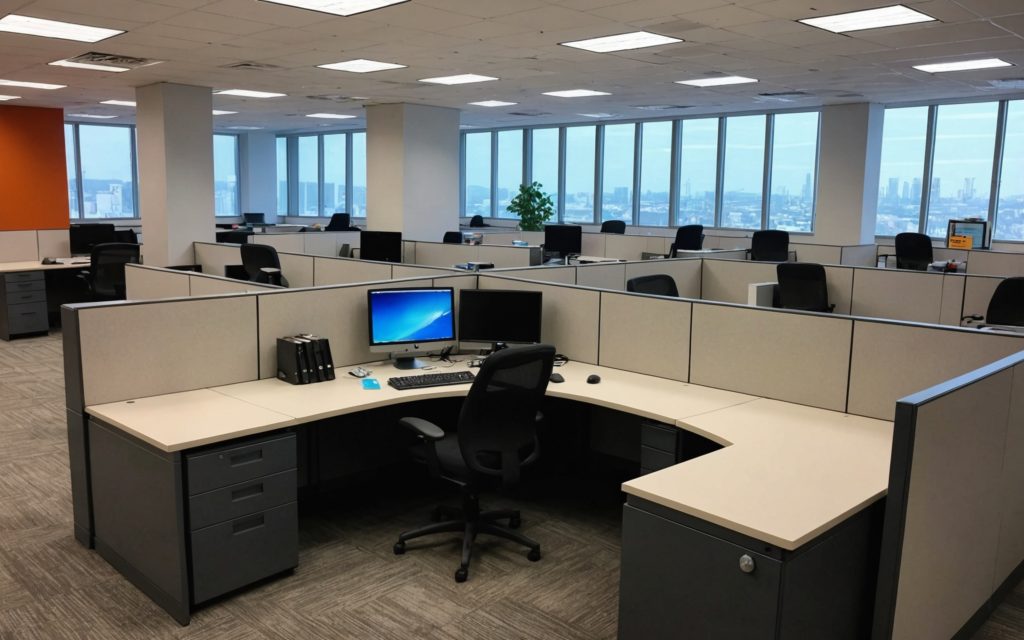
Open offices move fast. They also amplify noise, visual distractions, and the feeling that you are always on display.
The right cubicle setup fixes the real problems without turning your floorplan into closed offices. You get clear personal boundaries, better sound control, and layouts that still support collaboration.
Why Open Offices Still Need Cubicles
Open workbenches alone rarely deliver consistent productivity. Cubicles add structure to an open plan without permanent construction.
Sound control does not mean sealing people off. The right panel strategy reduces speech distraction while keeping teams easy to reach.
Visual boundaries do not mean isolation. They reduce screen exposure and motion distractions while still supporting quick collaboration.
A temporary focus zone is not the same as a permanent partition. Cubicles let you create focus areas that can be rearranged when teams, headcount, and workflows change.
Cubicles help when you need to:
- Reduce speech distraction without building permanent walls
- Create visual privacy for screens and concentrated work
- Organize teams into repeatable pods and neighborhoods
- Improve cable routing, power access, and desk organization
- Reconfigure frequently as headcount and departments change
What Makes a Cubicle Suitable for Open Offices
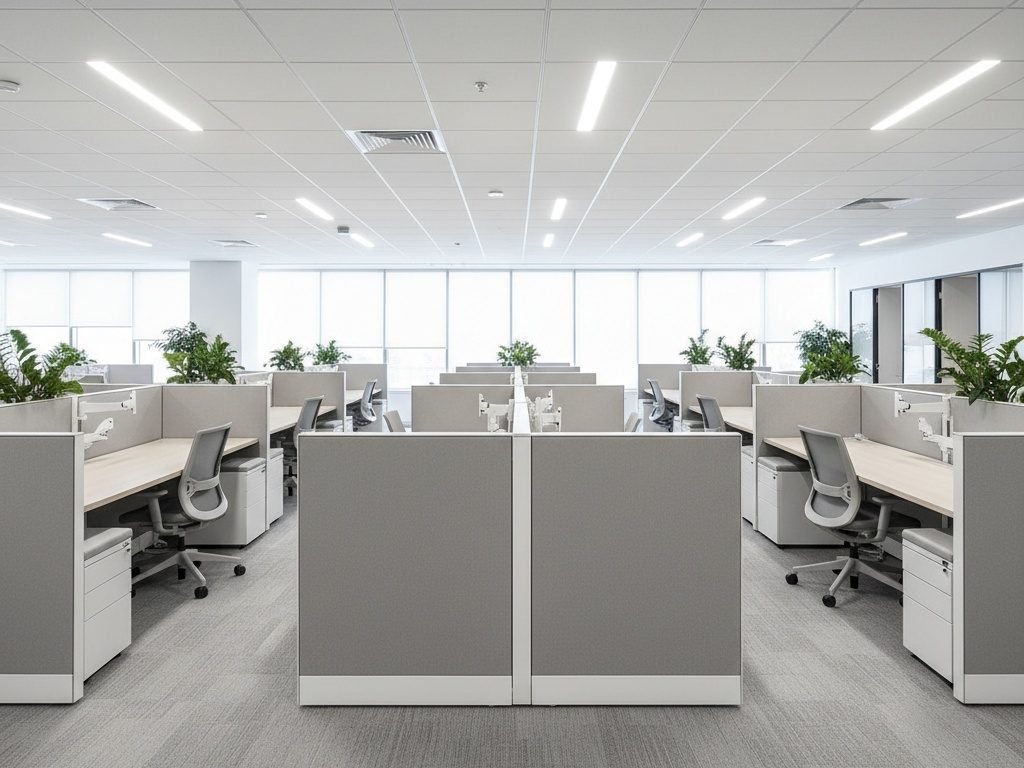
Panel height that controls noise without blocking teams
A cubicle in an open plan should manage noise and sightlines, not isolate people.
Typical panel height roles
- Low panels keep collaboration easy and define territory
- Mid-height panels block peripheral movement and reduce visual distractions
- High privacy panels improve focus where calls and sensitive work are constant
Choose height by task. The best open office plans mix heights by zone instead of forcing one height everywhere.
Modular layouts that scale with headcount changes
Open offices change. Your cubicle plan should change with it.
Modular cubicles work best when you need:
- Adds and moves without construction downtime
- Expansion by adding posts and panels instead of rebuilding
- Simple re-zoning of teams by department
Cable, power, and monitor integration for open plans
A clean open office needs clean routing.
Prioritize:
- Defined cable paths from desk to power
- Shared spine routing for bench-style runs
- Panel or under-desk management that keeps walkways clear
- Practical monitor placement that avoids screen exposure across aisles
Visual privacy without creating isolation
Privacy is not one setting. It is a mix of visual control and interruption control.
A good cubicle plan provides:
- Screen privacy and fewer interruptions
- Easy face-to-face collaboration when needed
- Clear boundaries that reduce unplanned drop-ins
Best Cubicle Types for Open Office Layouts
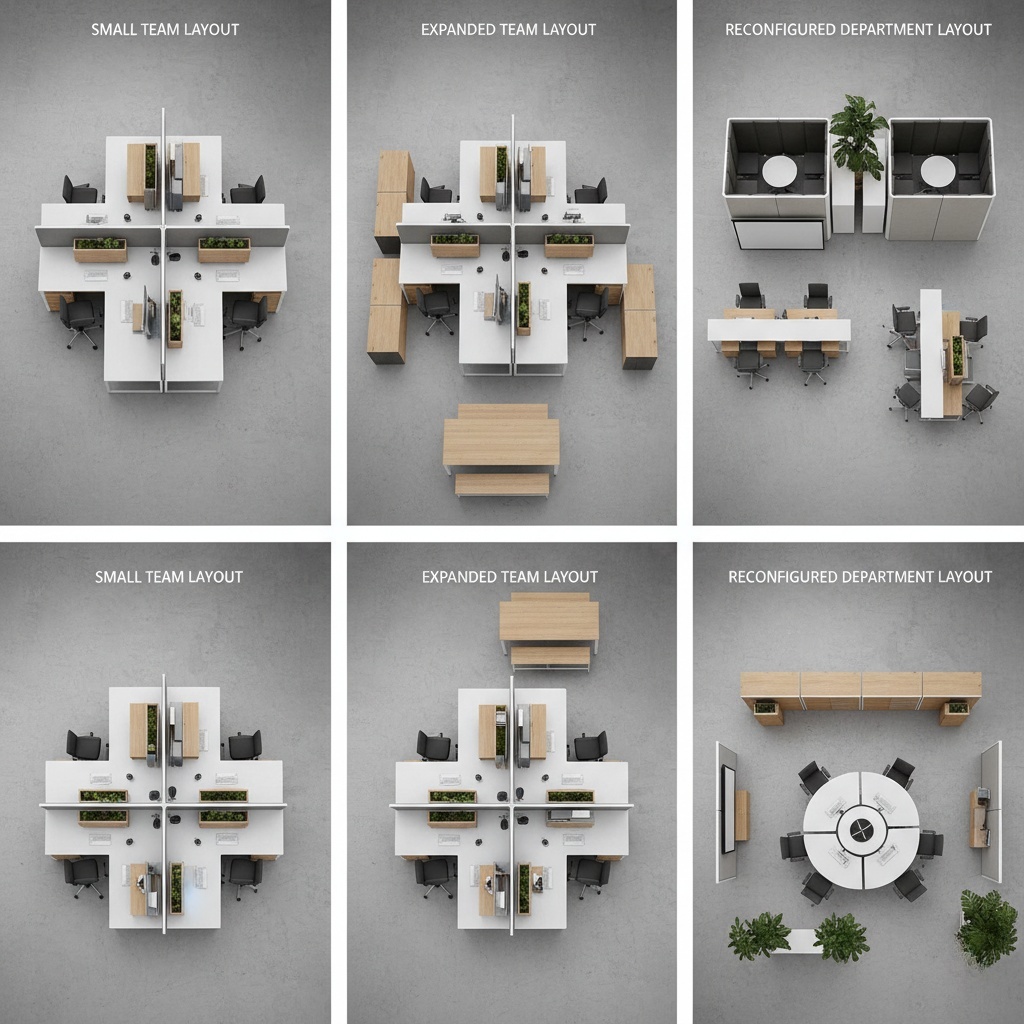
Low-panel cubicles for collaborative teams
Best for product, design, and fast-moving teams that need frequent interaction.
Why it works
- Defines personal space without blocking communication
- Makes the open plan feel organized
- Supports quick check-ins and shared problem solving
Watch-outs
- Not ideal for constant calls or sensitive work
Mid-height cubicles for focus-heavy roles
Best for roles with sustained concentration and frequent screen work.
Why it works
- Reduces peripheral distraction
- Improves focus without feeling closed off
- Supports mixed workdays with both collaboration and solo work
Watch-outs
- Needs nearby meeting rooms and phone spaces so calls do not spill onto the floor
Acoustic cubicles for high-noise open offices
Best for customer support, sales floors, and teams with constant speech.
Why it works
- Cuts perceived loudness and speech distraction
- Creates calmer zones inside a large open plan
- Improves call comfort and reduces fatigue
Watch-outs
- Acoustic performance depends on the whole room, not only the panels.
Bench-style cubicles for dense floorplans
Best for high headcount areas that must stay efficient.
Why it works
- Maximizes seats per square foot
- Creates repeatable rows and pods
- Simplifies power and cable routing along a shared spine
Watch-outs
- Requires thoughtful aisle planning and screen privacy options
Quick selection table for open office cubicles
| Open office goal | Best cubicle type | Panel height direction | Ideal for |
|---|---|---|---|
| Keep collaboration strong | Low-panel | Low | Product teams, project pods |
| Improve focus without isolation | Mid-height | Mid | Engineering, finance, operations |
| Reduce speech noise | Acoustic | Mid to high | Support teams, sales floors |
| Fit more seats cleanly | Bench-style | Low to mid | Large departments, growth teams |
| Protect screens and data | Privacy-focused | Mid to high | HR, admin, regulated workflows |
Cubicle Layout Examples for Open Offices
Team pod layout for 6 to 8 people
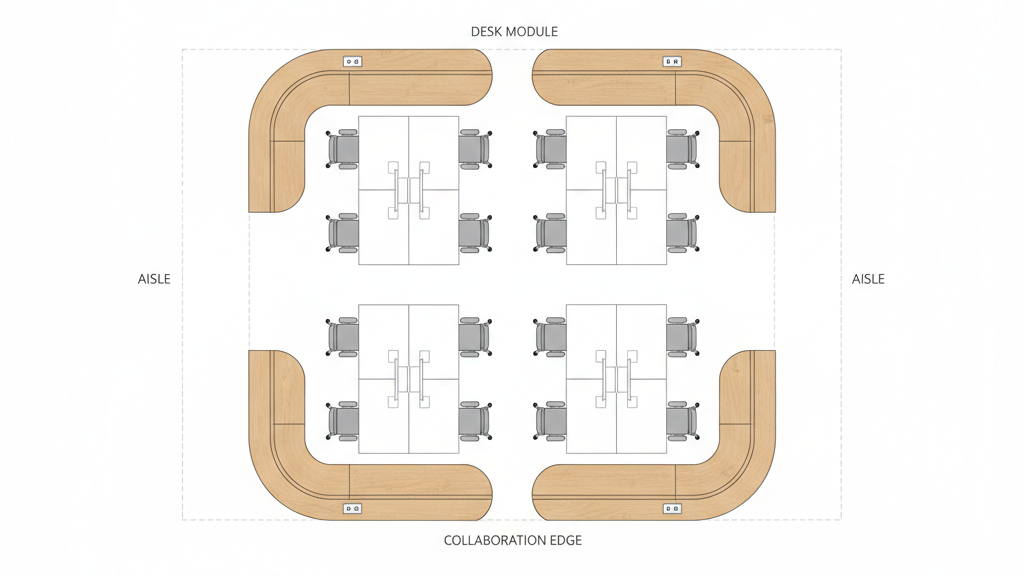
Use a pod with shared circulation and a clear collaboration edge.
Works best when
- The team collaborates daily
- You want fast alignment without constant interruptions
Include
- A shared standing touchdown point at the pod edge
- A clear aisle that avoids cutting through the pod center
Department neighborhood layout for 12 to 20 people
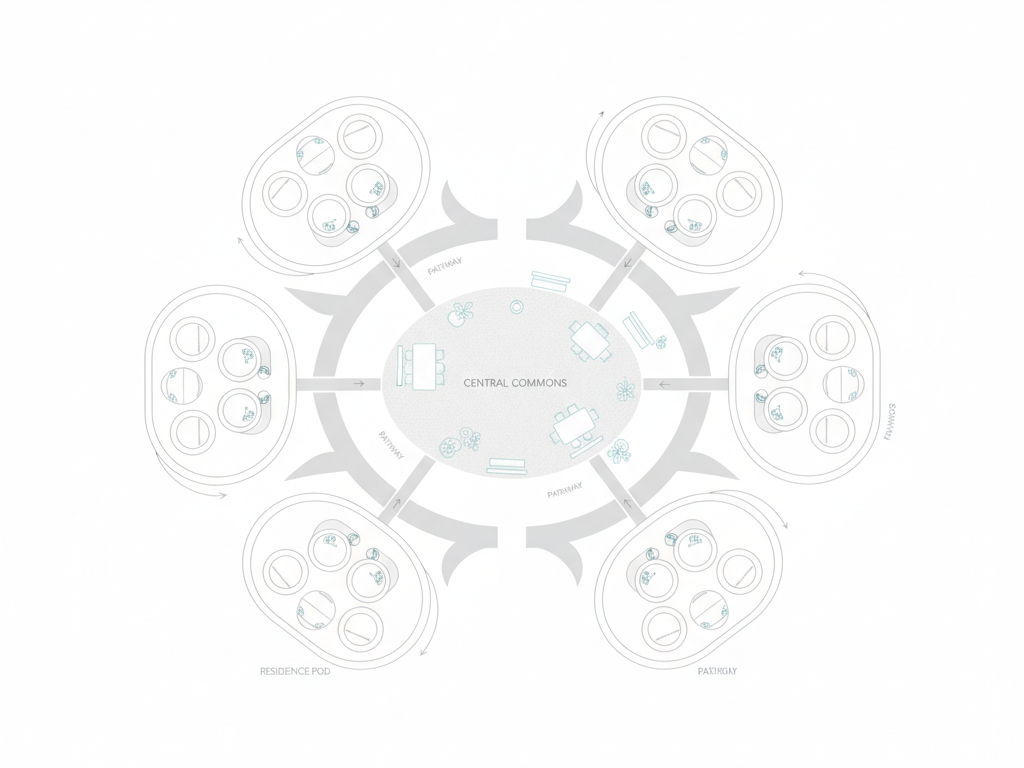
Use repeated pods grouped into one neighborhood with a clear focus side and a collaboration side.
Works best when
- The department needs structure by function
- You want noise control without building permanent walls
Include
- A defined collaboration zone outside the focus rows
- A buffer between high-call zones and deep-work zones
Mixed mode layout for focus and meetings
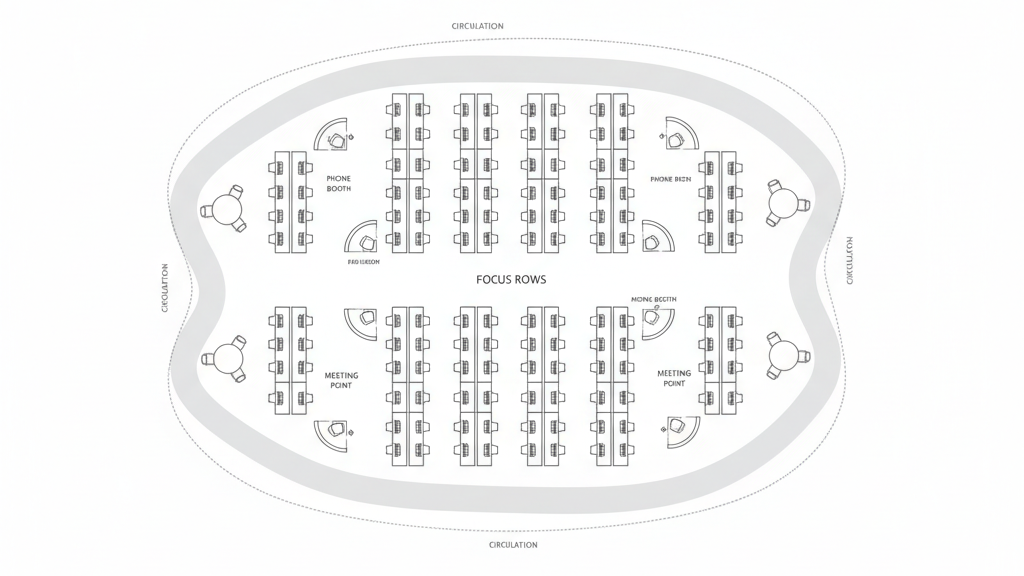
Pair cubicle zones with quick meeting points and phone spaces.
Works best when
- Your open plan suffers from meeting spillover
- Calls happen throughout the day
Include
- Phone spaces near, but not inside, focus rows
- Small meeting points positioned at circulation edges
How to Choose the Right Cubicle for Your Open Office
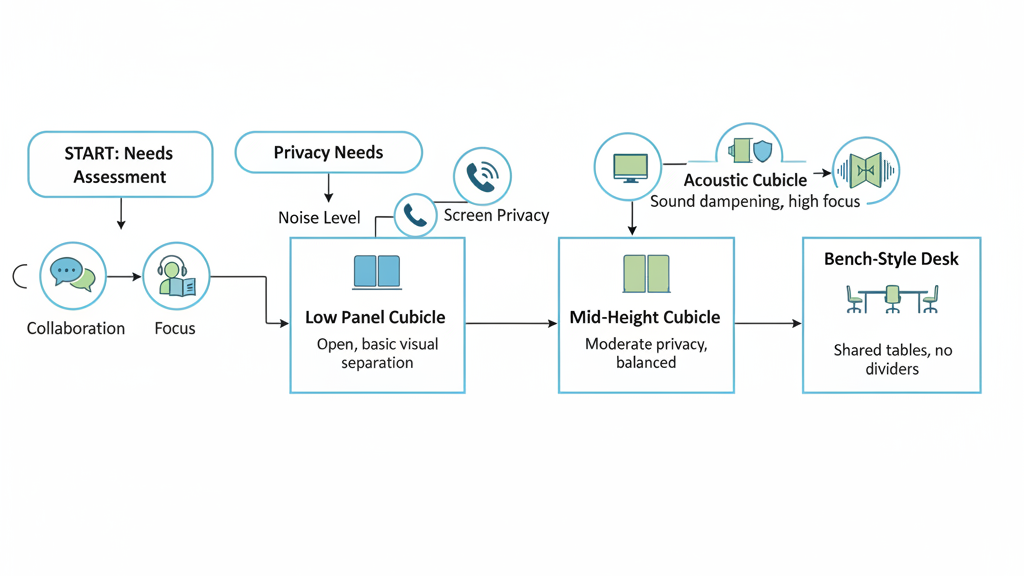
Use this checklist so you choose by real constraints, not by style.
- Noise level
Identify where speech is constant and where deep work is expected. Use higher focus options only where the noise problem actually exists. - Space per person
Confirm usable area per seat after aisles and circulation. Dense plans usually need bench-style runs and disciplined aisle planning. - Reconfiguration frequency
If teams shift quarterly or headcount changes often, prioritize modular systems that support adds, moves, and re-zoning with minimal downtime. - IT and power needs
Plan cable paths, shared power spines, monitor placement, and any network routing early so the open office stays clean and safe.
Why Modular Cubicles Work Better Than Fixed Partitions
Fixed partitions create expensive commitments in a space that keeps changing.
Modular cubicles win because they:
- Install faster with less disruption
- Let you add seats without rebuilding the room
- Support reconfiguration as teams evolve
- Preserve an open-plan feel while improving focus
Common questions about cubicles in open offices
Are cubicles outdated for modern offices
No. Modern cubicles are modular and designed to support flexible layouts. In open offices, they solve the focus and privacy gaps that benches cannot.
What panel height is best for an open office
It depends on your noise and privacy needs. Use low panels for collaboration-heavy teams, mid-height for focus work, and higher privacy where calls and sensitive work are constant.
Can cubicles still feel open
Yes. The best open office cubicle plans use the minimum privacy needed, keep clear sightlines across aisles, and place collaboration zones at the edges of focus areas.
How many people can fit with cubicles
It depends on desk size, panel thickness, aisle planning, and room constraints. A good plan balances seat count with circulation and acoustic comfort.


