
What Happens to Old Office Furniture? A Practical Guide to Disposal, Donation, and Recycling
- 16 Jul, 2026
- Guides
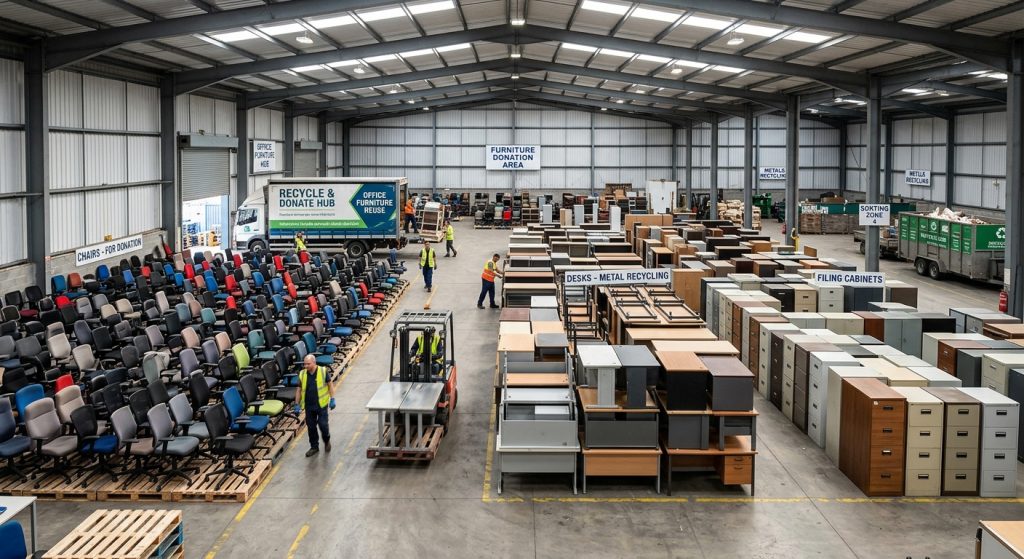
Old office furniture almost never has to go straight to a landfill — most of it gets donated, resold, broken down for scrap metal and foam, or handed back to the manufacturer through a take-back program. Which path makes sense depends on the item’s condition, your timeline, and whether you’re clearing out five chairs or five hundred. Get this wrong and you’re either paying $300 a truckload in dumping fees or missing out on a legitimate tax deduction.
The Four Real Destinations for Retired Office Furniture
Most people assume old furniture has two fates: get reused or get trashed. In practice there are four distinct routes, and they rarely overlap.
- Donation — nonprofits, schools, and startups take gently used desks, chairs, and filing cabinets, often for free pickup.
- Resale/liquidation — dealers buy used systems furniture and name-brand chairs in bulk, then resell to budget-conscious buyers.
- Material recycling — steel frames, aluminum, and some plastics get shredded and reclaimed; foam and fabric usually don’t.
- Landfill — the last resort, and increasingly the most expensive one as disposal fees climb in most metro areas.
A well-run office clear-out usually splits across all four. If you’re planning a full furniture refresh, it’s worth reading our practical guide to selecting new office furniture alongside your disposal plan — the two decisions affect each other more than people expect, especially on timing.
Donation: The Fastest Way to Get Furniture Out the Door
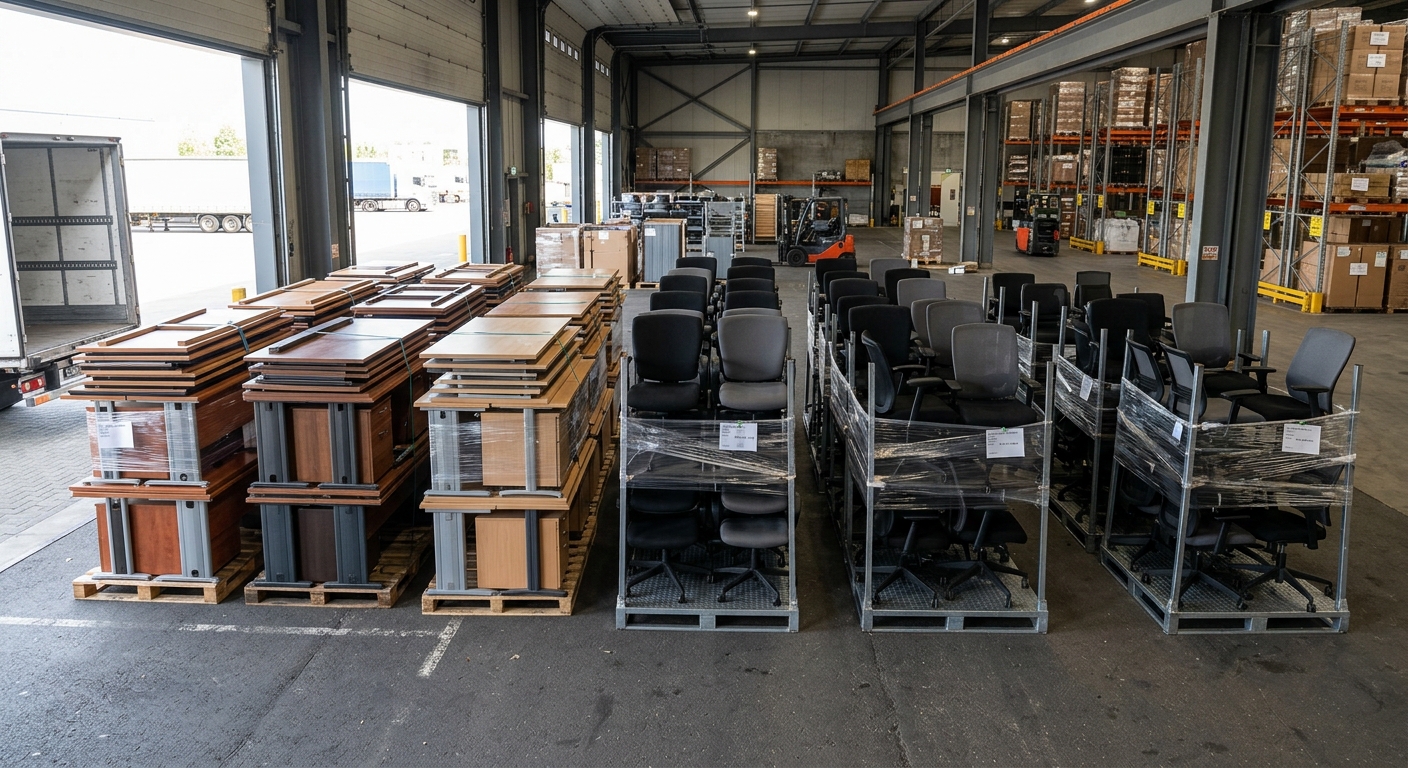
Donation works best when furniture is under 10 years old, structurally sound, and free of major stains or odors — most nonprofits won’t take anything they can’t place immediately. Habitat for Humanity ReStores, local schools, community centers, and workforce training programs are the usual takers, and many will schedule free pickup for 10+ pieces.
What actually gets accepted
Task chairs, desks, filing cabinets, and conference tables move fast. Heavily worn task chairs, torn panel fabric, or anything with a broken mechanism usually gets declined — nonprofits don’t have repair budgets either.
For instance, a 40-person marketing agency relocating offices donated 32 task chairs and 12 desks to a local community college’s new career center. The college got usable furniture at zero cost, the agency got a tax receipt and skipped $1,200 in projected disposal fees, and the whole handoff took under three weeks.

Resale and Liquidation: When Furniture Still Has Market Value
If your furniture is a recognizable brand less than 8 years old, resale often beats donation financially — dealers pay for inventory they can flip, and some deals net you 10-20% of original purchase price back. Systems furniture (cubicles, panel workstations) and ergonomic chairs from established manufacturers hold value best.
Where the money actually comes from
Liquidators buy in bulk, refurbish minor wear (new casters, cleaned upholstery), and resell to smaller companies or coworking operators furnishing space on a budget. This is exactly the segment covered in our guide to furnishing a coworking space — a lot of that furniture started life in someone else’s headquarters.
Don’t expect resale value on anything with broken tilt mechanisms, worn-through mesh, or mismatched pieces from discontinued lines. Liquidators are selective; they’re running a business, not a charity.
Material Recycling: What Actually Gets Reclaimed
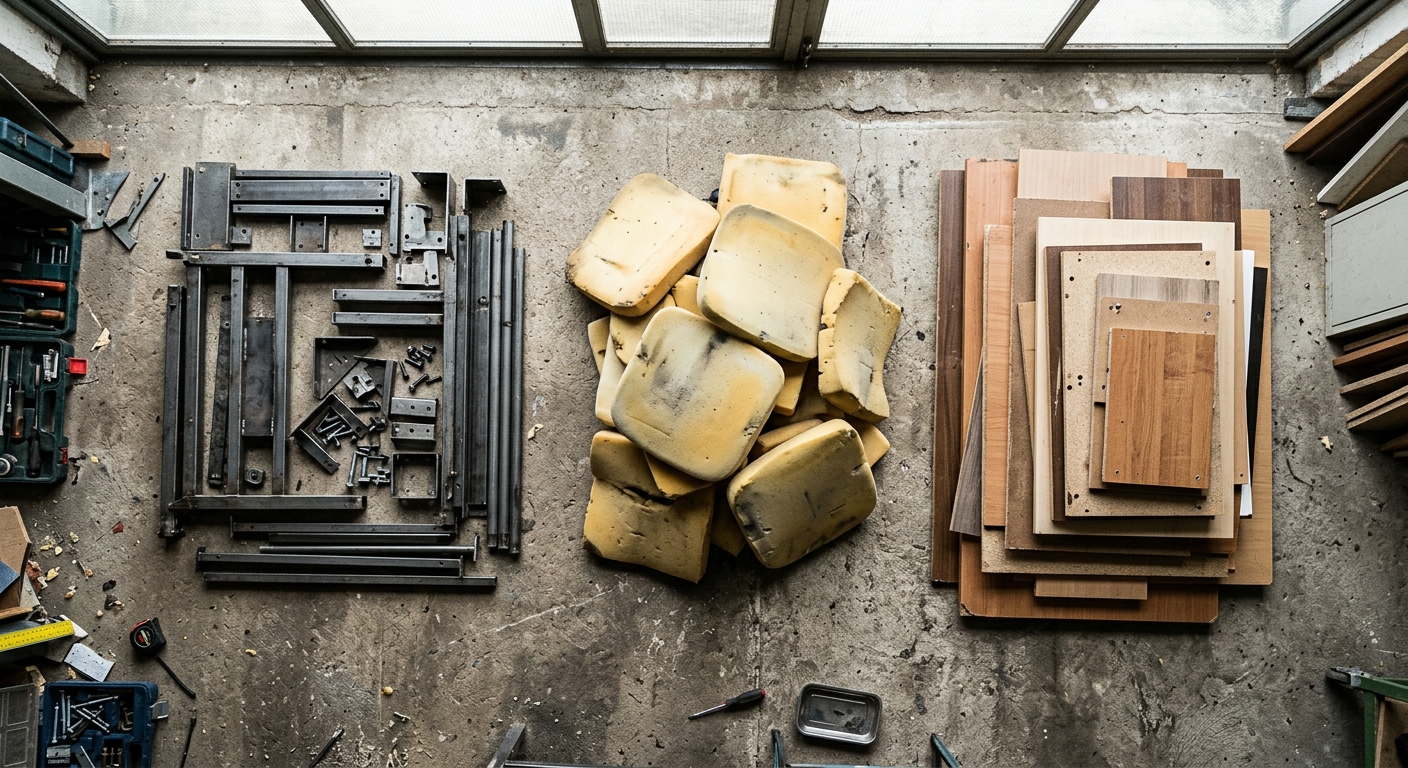
Steel and aluminum frames are the real prize in furniture recycling — they’re melted down and reused with almost no quality loss, which is why recyclers will often take broken chairs and desks for a lower fee than straight landfill disposal. Foam, laminate, and most fabrics have far fewer recycling options and often still end up in a landfill even when the item is labeled ‘recycled.’
Breaking an item down by material
- Steel/aluminum frames — highly recyclable, often has scrap value
- Particleboard/laminate desktops — rarely recyclable, usually landfill or incineration
- Foam cushioning — almost never recycled; some specialty recyclers exist regionally
- Fabric upholstery — recyclable only through specific textile recycling programs, not standard waste haulers
This is why a genuinely ‘green’ disposal plan separates materials before pickup rather than sending everything as mixed waste — mixed loads almost always default to landfill because sorting facilities won’t do it for you.
Manufacturer Take-Back Programs: The Option Most People Skip
Many commercial furniture manufacturers now run take-back or trade-in programs, especially when you’re ordering replacement furniture — check this before assuming you need a separate disposal vendor. Some will credit a percentage of the old furniture’s value toward your new order, others simply handle removal and recycling logistics as part of the delivery contract.
This matters most for larger rollouts. If you’re phasing in new furniture across multiple floors, coordinating take-back with delivery avoids the awkward gap where old and new furniture pile up in the same space. It’s worth asking your furniture supplier’s service team directly whether this is included — it’s rarely advertised upfront but frequently negotiable.
When Landfill Is Genuinely the Right Call
Not everything is worth saving. Furniture with mold, structural cracks in load-bearing parts, or contamination from water damage should go straight to disposal — trying to donate or recycle it just delays the inevitable and can create liability for whoever takes it. Chairs with broken gas cylinders are a specific hazard; they shouldn’t be resold or donated under any circumstances because of pressurized-cylinder risk.
If you’re dealing with items like this alongside general wear-related failures, it’s worth understanding the difference first — see our breakdown of chair repair vs. replace decisions before assuming everything needs to be thrown out. Sometimes a $40 gas cylinder swap saves an otherwise good chair from the dumpster entirely.

Budgeting and Timing a Furniture Clear-Out
A mid-sized office clear-out (50-100 workstations) typically runs $2,000-$8,000 in disposal-related costs if you’re not offsetting through donation or resale — and that gap is almost entirely closed by planning routes in advance rather than calling a hauler at the last minute. Build in at least 3-4 weeks before your move-out date to arrange donation pickups and liquidator quotes; last-minute timelines force everything toward the expensive, low-effort landfill option.
A simple sequencing approach
Sort furniture into four piles first: donate, sell, recycle, dispose. Get quotes and scheduling confirmed for each before moving day, not during it. Offices going through a phased rollout — note: this is a draft reference, remove if not live — actually have it easier here, since old furniture leaves in stages rather than all at once.


