
Caster Wheels and Flooring: The Overlooked Compatibility Problem Wrecking Your Chairs
- 11 Aug, 2026
- Guides
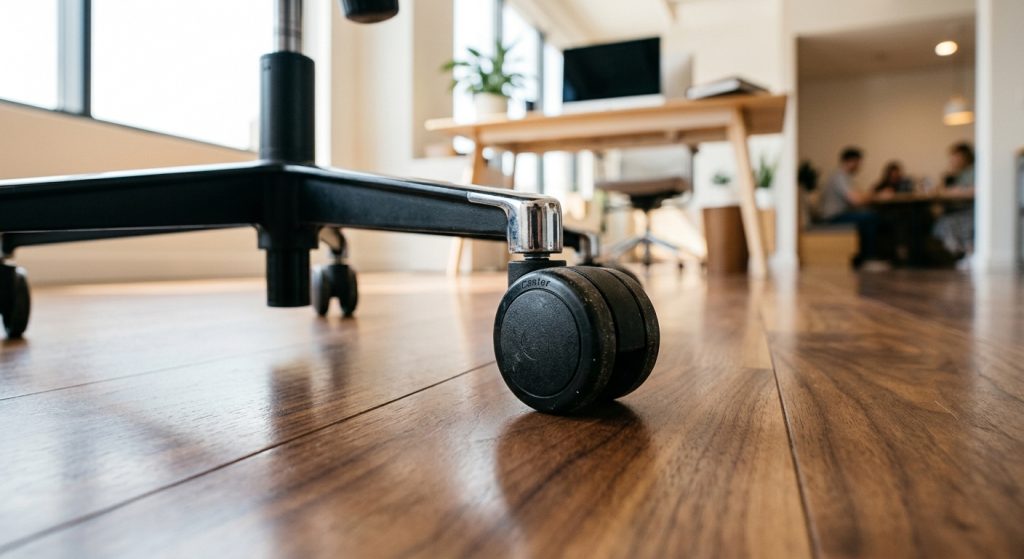
Most chairs that ‘wear out fast’ or ‘scratch up the floor’ aren’t defective — they’ve got the wrong caster wheels for the flooring underneath them. Hard plastic casters (the factory default on most office chairs) are built for carpet; roll them across hardwood, tile, or vinyl and you get grinding noise, gouged finishes, and wheels that seize up with grit in a matter of months. Swap in the correct soft or dual-surface caster, and the same chair rolls smoother, lasts longer, and stops leaving a trail of scuff marks across your showroom-quality floor.
Why This Mismatch Happens in the First Place
Here’s the mistake nearly every office makes: they buy chairs, then furnish the floor around them, then wonder why everything sounds like a shopping cart with a bad wheel. Most task chairs ship with hard nylon casters as the standard configuration — because carpet is the most common commercial flooring and nylon casters are cheap to manufacture. Nobody tells the buyer that those same wheels turn into tiny floor sanders the moment they hit hardwood or LVT.
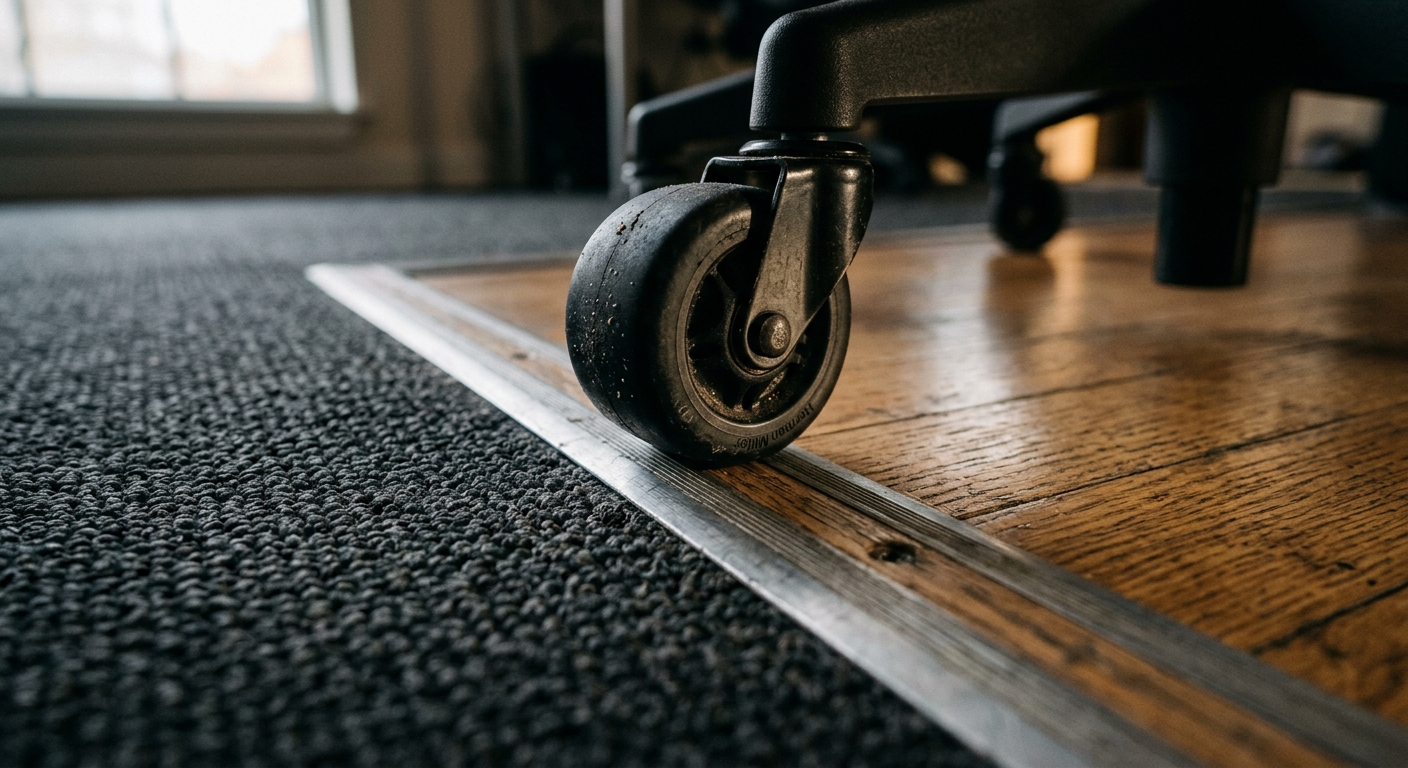
It gets worse in mixed environments. Picture an open-plan office with carpet tile at the desks but polished concrete in the walkway to the printer. Every trip across that transition zone is dragging hard wheels over an unforgiving surface — dozens of times a day, per chair. Multiply that by 40 employees and five years, and you’ve got a floor covered in fine scratch patterns that no amount of buffing fixes.
If you’re specifying furniture for a new layout, this is exactly the kind of detail worth nailing down before delivery — something we cover in our guide on how to measure your office before ordering furniture, since flooring type should factor into your order just as much as square footage.
The Physics of Wheel-on-Floor Damage
A hard caster wheel on a hard floor concentrates a person’s entire body weight — often 150-250 lbs — onto a contact patch smaller than a fingernail. That pressure, combined with rolling friction, is enough to leave micro-scratches on sealed hardwood and dull the finish on vinyl plank within a year of daily use. Grit trapped in the wheel groove acts like sandpaper on every pass.
What Actually Happens at the Wheel-Floor Interface
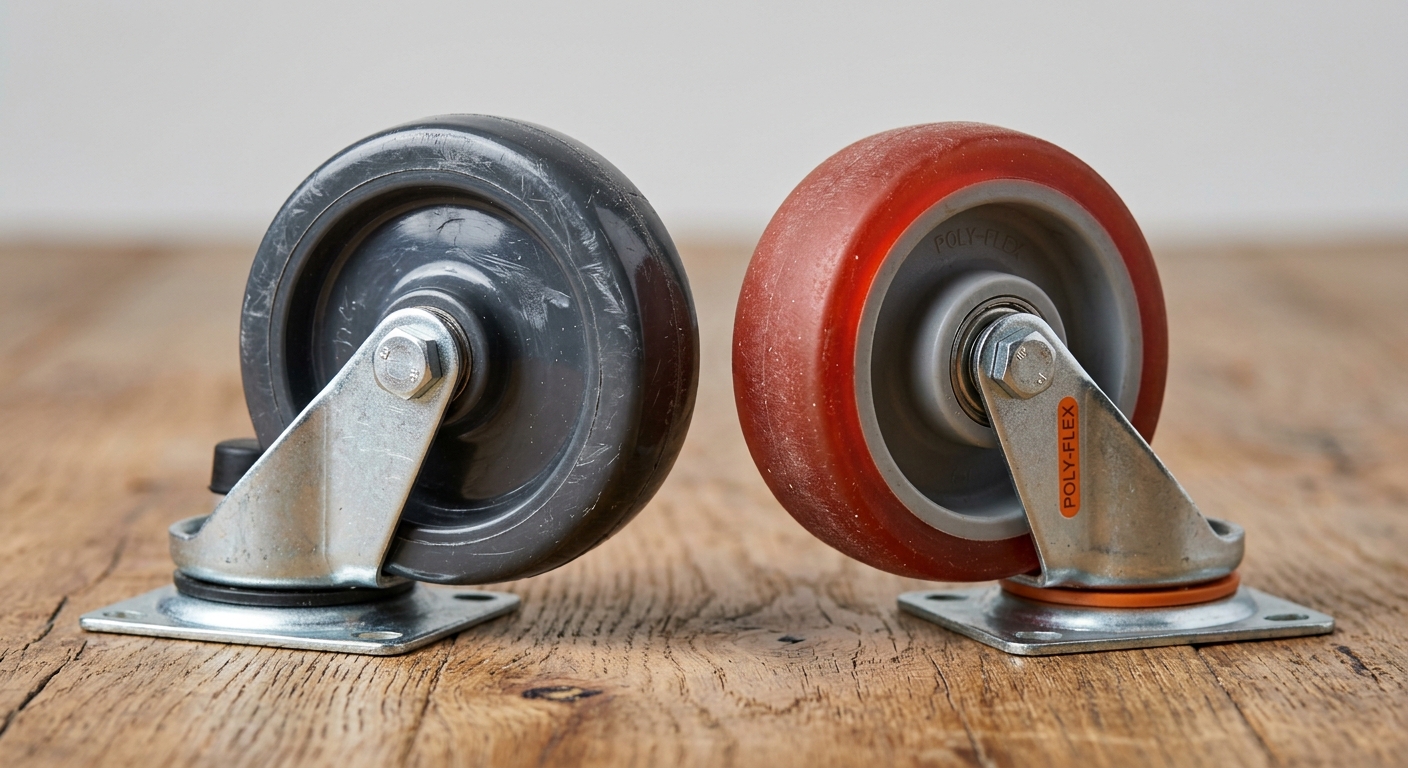
Nylon casters have a small, rigid diameter — usually 2 inches — which means they roll less and drag more. Every time someone pivots or scoots the chair sideways (which happens constantly at a desk), the wheel skids rather than rotates cleanly. That skidding is what creates the arc-shaped scuff marks you see under desks after a few months.
Soft polyurethane casters flex slightly under load, spreading the contact pressure over a wider area and rolling true instead of skidding. That’s the entire difference in a nutshell — one wheel type grips and drags, the other rolls and glides.
It’s Not Just the Floor — Your Chair Pays the Price Too
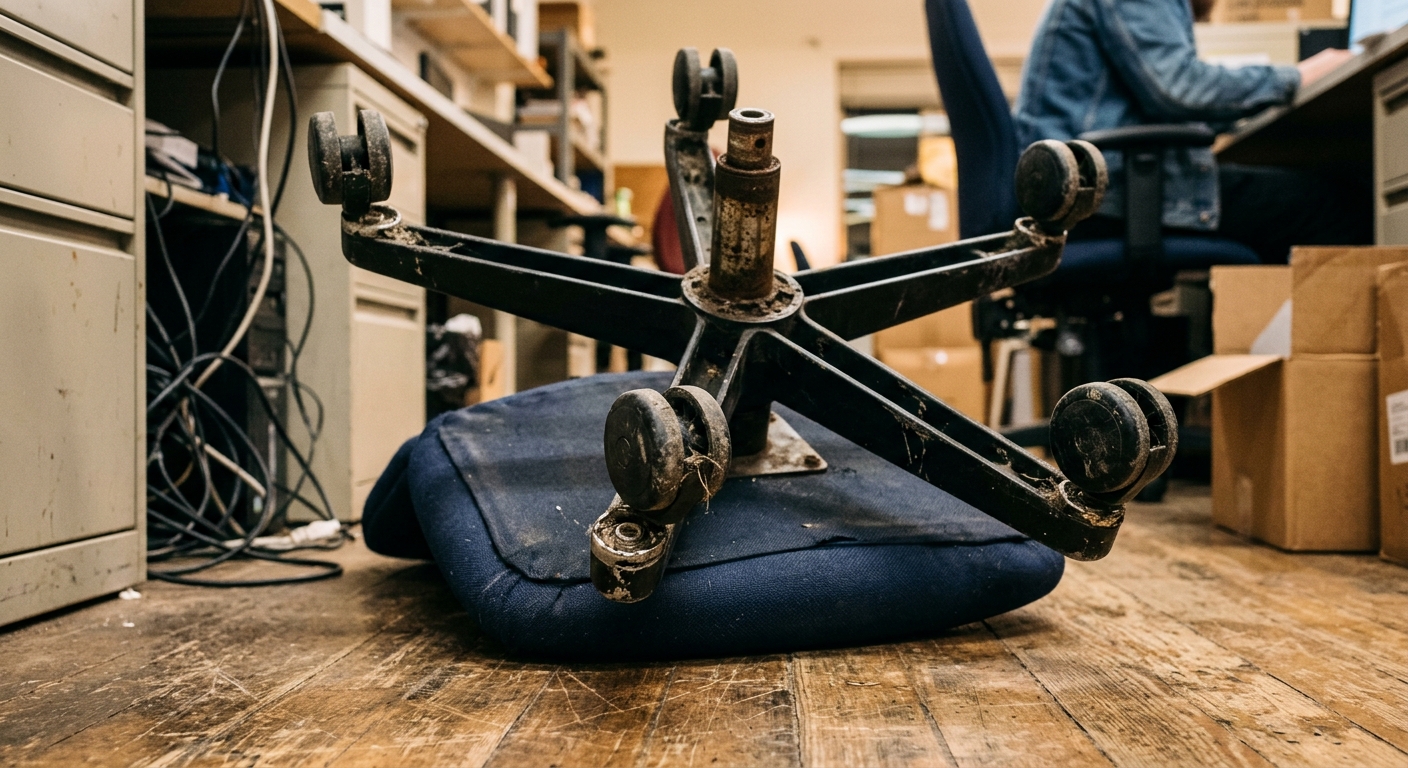
Damaged flooring gets the attention, but the chair itself is quietly degrading too. When a hard caster drags instead of rolling, the extra resistance transfers stress up through the caster stem and into the chair’s base mounting sockets. Over time, that stress loosens the socket fit, and you end up with a wheel that wobbles or pops out entirely — a failure mode people usually blame on ‘cheap manufacturing’ when it’s really a flooring mismatch.
There’s a compounding effect too: employees instinctively push harder to move a chair that’s dragging, which puts more lateral force through the base and can accelerate wear on the gas cylinder and tilt mechanism. If you’re already troubleshooting a chair that squeaks, sinks, or tilts wrong, check the casters before you assume the mechanism itself is failing — bad wheels are a surprisingly common root cause.
A Real Scenario: The Showroom Floor That Kept Getting Scratched
A design studio we worked with had just installed a beautiful matte-finish engineered hardwood floor throughout their open office. Within four months, facility staff noticed faint arc-shaped scratches spreading under every workstation. The initial theory was that the flooring installer had used the wrong finish. It hadn’t — the studio’s 60 task chairs, ordered separately, all came with the standard hard nylon casters meant for carpet.
The fix was straightforward once diagnosed: swap every wheel for soft-tread polyurethane casters rated for hard flooring, at a cost of roughly $8-12 per chair. Compare that to refinishing 3,000 square feet of hardwood, and the math isn’t close. The lesson: caster type should be part of the furniture spec sheet, not an afterthought decided by whatever ships in the box.
How to Match Caster Type to Your Actual Floor
The rule of thumb flooring manufacturers use is deceptively simple: soft wheel for hard floor, hard wheel for soft floor. It works because the goal is always to have one surface give a little — either the wheel or the flooring — and you always want it to be the wheel.
Quick Reference by Floor Type
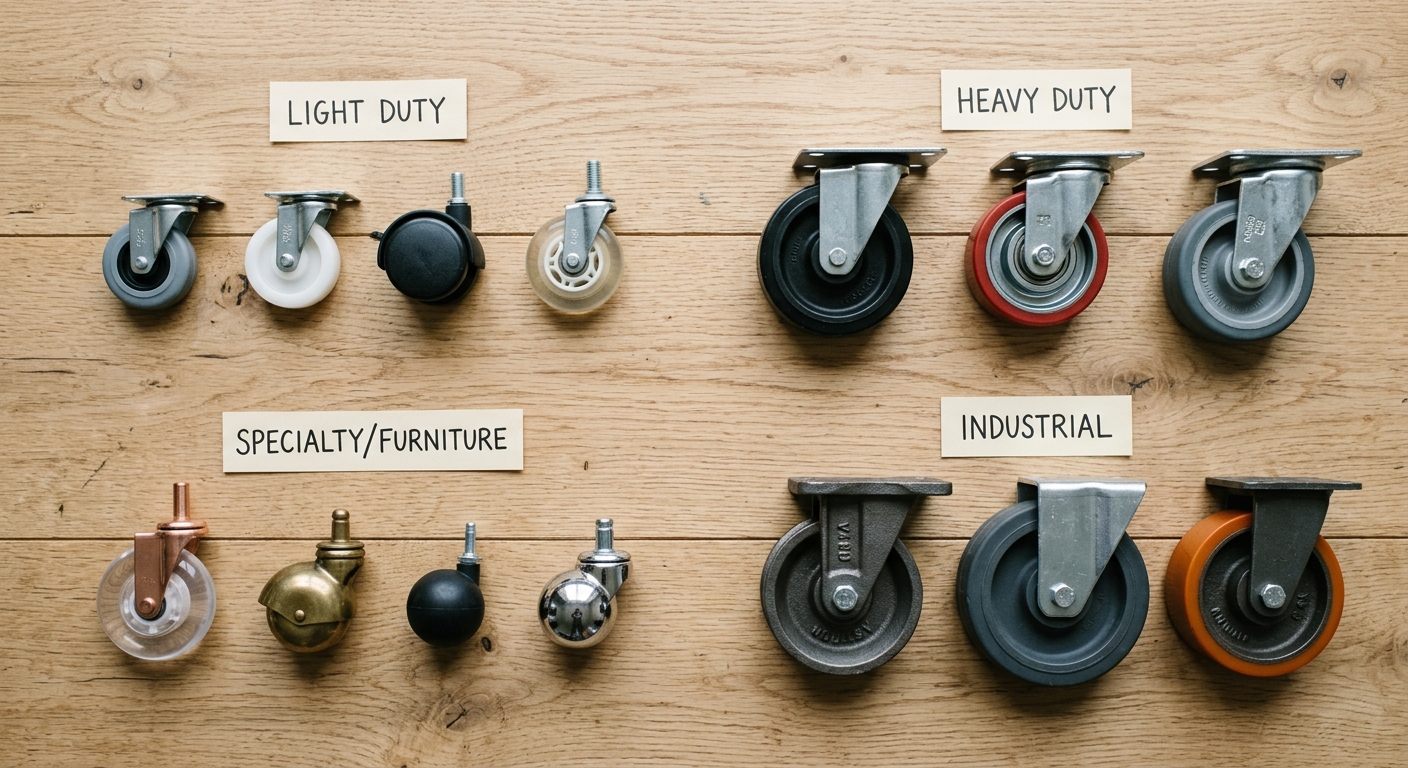
- Hardwood, laminate, LVT, tile: Use soft polyurethane or rubber-coated casters. They roll quietly and won’t scratch sealed finishes.
- Low-pile commercial carpet: Standard hard nylon casters work fine and roll more easily than soft wheels, which can bog down in fiber.
- High-pile or plush carpet: Consider wider casters or glide-style bases — even hard casters struggle here, and chairs can feel like they’re stuck in mud.
- Mixed flooring (transition zones): Dual-surface hybrid casters are worth the premium; they perform acceptably on both without excelling at either.
- Concrete or polished stone: Always soft casters — bare concrete is abrasive enough to visibly flatten hard wheels within a year.
Weight Capacity Changes the Equation Too
Caster diameter and load rating matter as much as material. A standard 2-inch caster is rated for lighter-duty use; heavier users or executive chairs with more mass concentrate more force per wheel, accelerating wear on both floor and caster regardless of material. Upgrading to a 2.5-inch or 3-inch caster spreads that load over a larger rolling surface and reduces the pressure that causes floor marking in the first place.
This ties directly into a broader issue we’ve covered before — manufacturer weight ratings for the chair frame often don’t reflect how casters perform under real-world loads. If you’re furnishing for a heavier-use environment, it’s worth reading the real weight capacity of office chairs before assuming any standard caster will hold up long-term.
Signs Your Casters Are Already the Wrong Type
You don’t need a flooring inspector to catch this early — the symptoms are obvious once you know what to look for.
- Arc-shaped scuffs or scratches radiating out from under desks, especially near frequently-used chairs.
- A grinding or crunching sound when rolling, which usually means grit is embedded in a hard wheel’s groove.
- Wheels that feel ‘sticky’ or resist rolling on carpet — often a sign of oversized soft casters mismatched to fiber flooring.
- Visible flat spots on the wheel itself after a year or two of use — a strong indicator the caster material is too soft for the abrasive surface it’s been rolling on.
Catching these early saves both your floor and your chair. Left unaddressed, a mismatched caster problem compounds — you’ll end up needing floor refinishing and chair base replacement at the same time.
Retrofitting vs. Buying Chairs With the Right Casters Pre-Installed
Most standard casters use a universal stem size (7/16 inch or 11mm grip-ring, in most commercial chairs), which means swapping them is usually a five-minute job with no tools required — just pull and press. That makes retrofitting an easy fix for existing furniture.
But if you’re placing a new order, it’s smarter to specify the correct caster at purchase. This matters most for larger rollouts — if you’re phasing in new furniture across a building with mixed flooring, get the flooring plan finalized first, then order casters to match zone by zone rather than defaulting to whatever the chair ships with.


