
Furnishing a Tech Startup’s War Room: Whiteboards, Huddle Furniture, and Fast Iteration Spaces
- 04 Aug, 2026
- Guides

A startup war room needs three things to actually work: writable surfaces that outnumber chairs, furniture light enough for one person to move alone, and zero fixed anchors like a bolted table in the middle of the floor. Skip any one of those and you get a room that looks like a war room but functions like a stuffy conference room nobody wants to book. The whole point is speed — capturing a half-formed idea before it evaporates, then rearranging the space for the next conversation without waiting on facilities.
Why a Standard Conference Room Kills Iteration Speed
Here’s the mistake almost every founder makes: they furnish the war room like a shrunken boardroom. Big table, fixed chairs, one whiteboard bolted to a wall. That setup is optimized for meetings that follow an agenda — not for a team throwing sticky notes at a problem for three hours straight.
The problem is friction. Every time someone has to shove a heavy table aside to make room for a breakout huddle, momentum dies. Teams that iterate fast — the ones shipping product weekly — treat the room itself as a tool, not a container. If you’ve read our piece on office design and productivity, you already know layout directly shapes output. War rooms are the most extreme version of that principle.
The 5-Minute Reconfigure Test
A good test: can two people clear the center of the room and set up for a completely different activity in under five minutes? If the answer is no, the furniture is wrong — not the team.
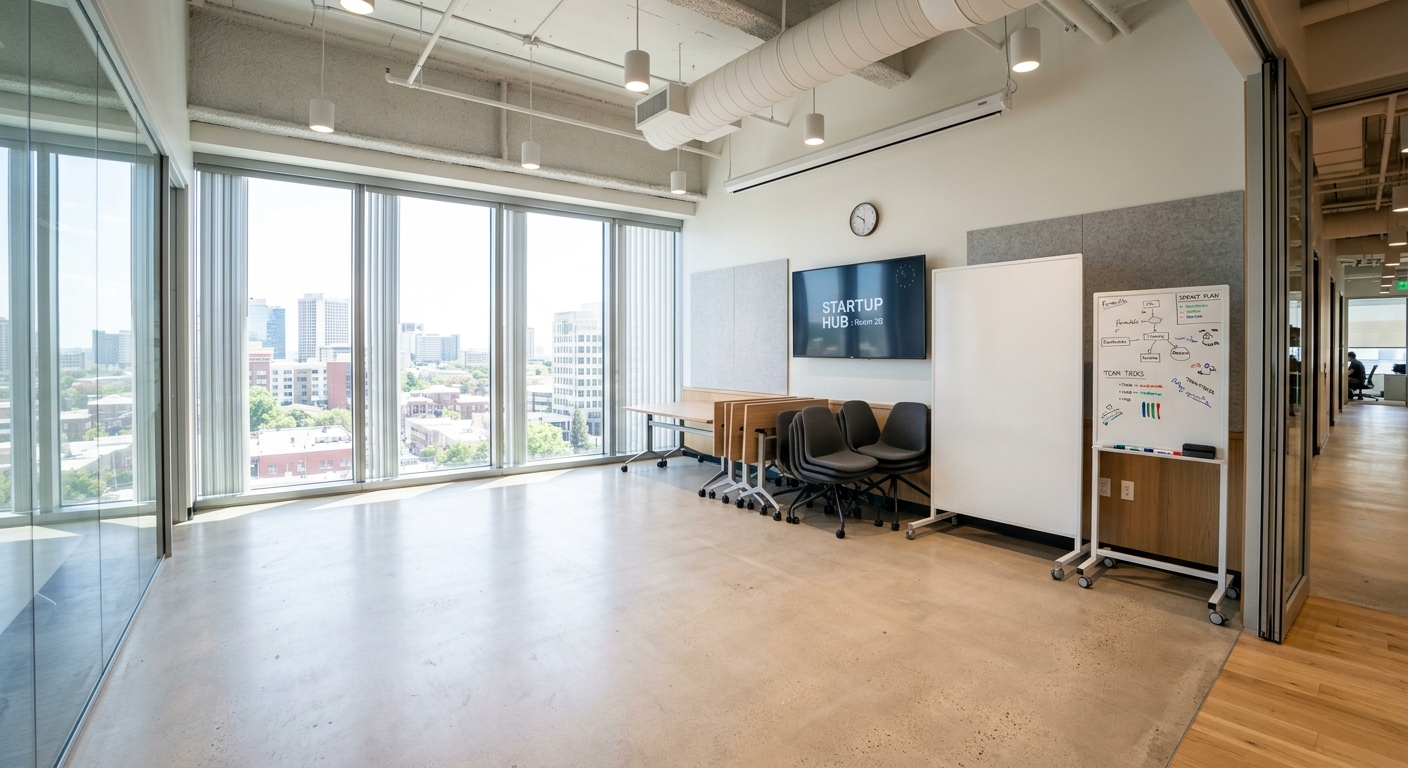
Whiteboard Coverage: More Surface Than You Think You Need
Most startups under-buy whiteboard surface by half. A war room that supports real iteration needs writable area on at least two walls, plus one or two mobile boards that can roll into breakout zones. Why so much? Because teams don’t erase — they archive. A roadmap sketched on Monday shouldn’t get wiped Wednesday just because someone needs space for a new diagram.
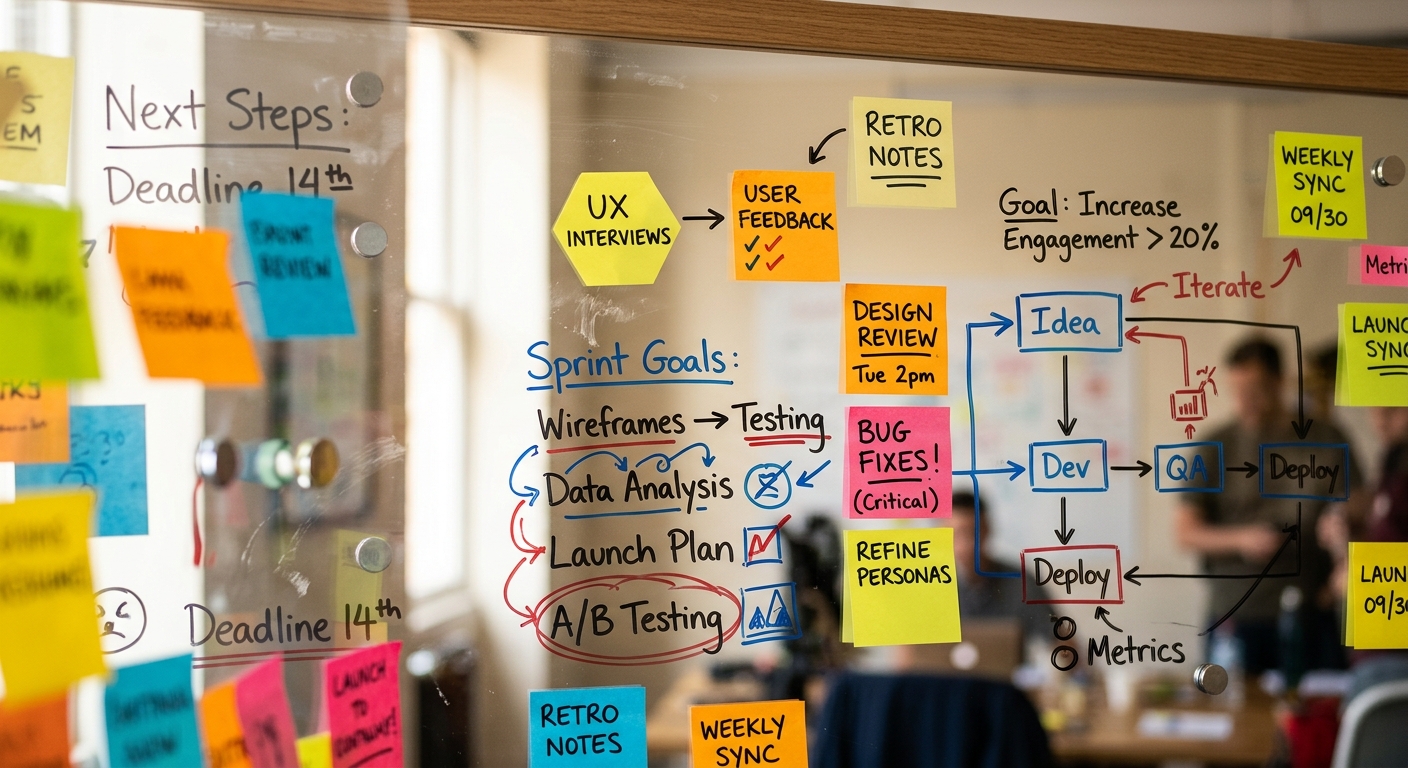
Magnetic glassboards work better than porcelain steel in fast-moving rooms because they double as pin surfaces for printouts and sticky notes without leaving ghosting. For teams running parallel workstreams, mobile double-sided boards let two groups work back-to-back in the same footprint — a trick coworking operators have used for years, which we cover in furnishing a coworking space.
Vertical Real Estate Nobody Uses
Rolling boards can be raised to lean against windows or glass partitions, turning otherwise dead wall space into usable surface during a sprint. It’s a small trick, but it adds capacity without adding footprint.
Huddle-Height Furniture: The Real Difference Maker
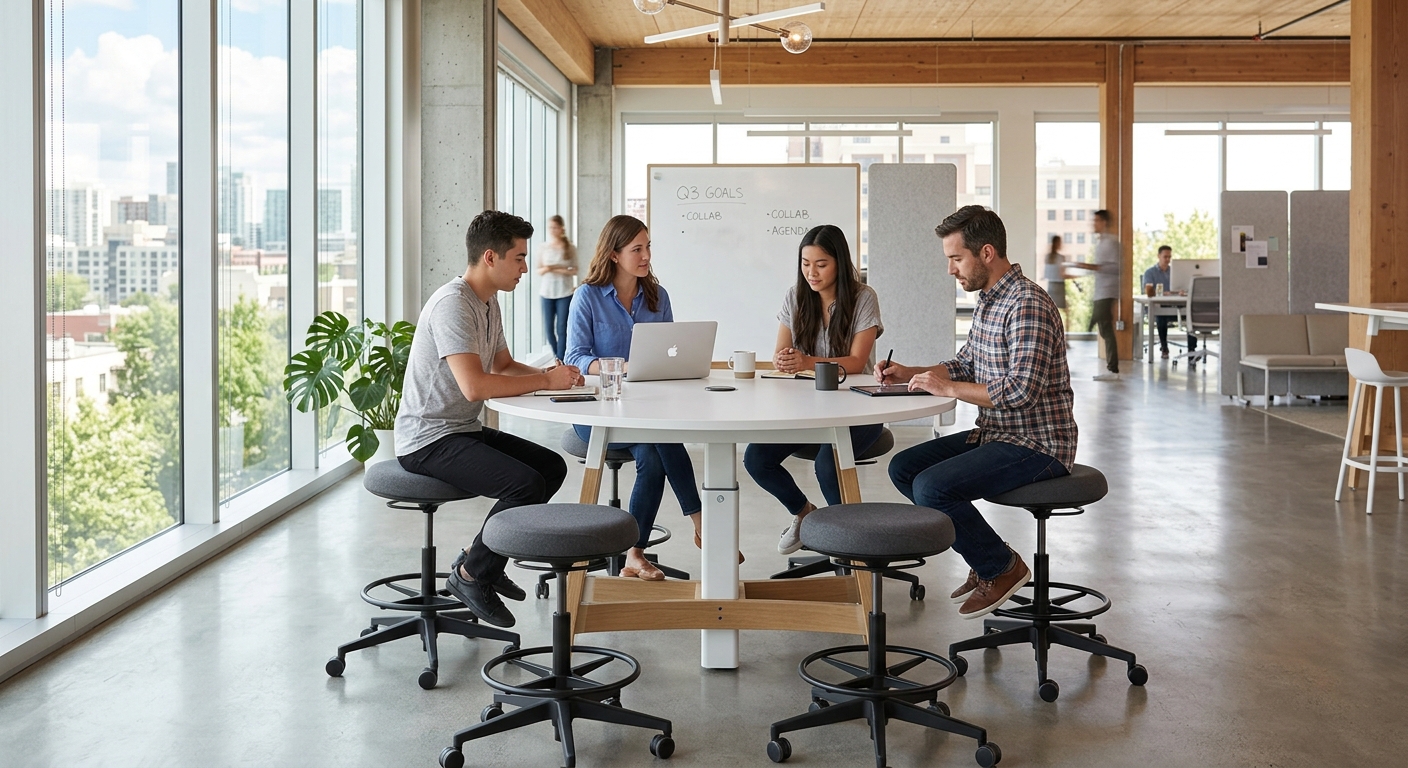
Standard 29-30 inch table height forces people to sit, and sitting slows a room down. Huddle-height furniture — typically 36-42 inches — is built for people standing or perched on stools, which changes the entire energy of a session. Standing meetings run 34% shorter on average than seated ones, according to widely cited workplace studies, and anyone who’s run a daily stand-up already knows this intuitively.
The furniture mix that works best: a couple of adjustable-height tables that can flex between sit and stand mode, four to six stackable stools, and zero permanent seating assignments. Nobody owns a spot in a war room. That’s the point.
Real-World Example
A 40-person fintech startup we worked with converted a former storage room into their war room using three mobile huddle tables and two rolling whiteboards instead of a single fixed conference table. Their product team started running twice-daily sync sessions instead of one long weekly meeting — because the room no longer required a calendar hold to use.
Mobility Over Mass: Choosing Furniture That Moves Itself
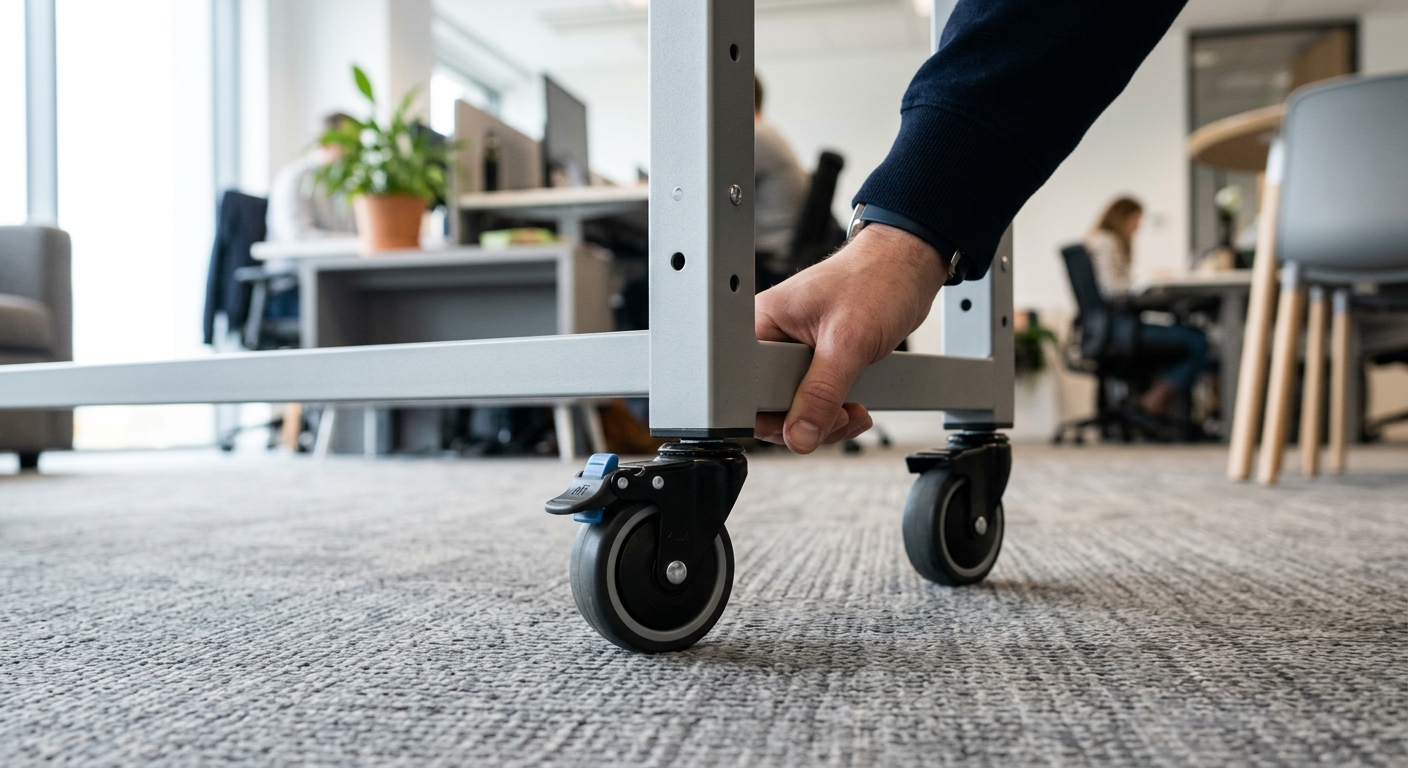
Weight is the enemy of a fast iteration space. If a table needs two people and a dolly to relocate, it’s not war room furniture — it’s just furniture that happens to be in the war room. Look for locking casters on everything: tables, boards, even storage units. Locking matters as much as rolling; nobody wants a table drifting mid-sketch.
Material choice matters here too. Powder-coated steel frames with laminate or lightweight composite tops hit the sweet spot between durability and portability. Solid wood looks great in an executive suite — see our guide on executive workspace design — but it’s dead weight in a room meant to be rearranged daily.
Seating That Doesn’t Fight the Room
Task chairs are the wrong call for a war room, and here’s why: they’re built for eight-hour comfort, not for quick pull-up-and-lean sessions. What you actually want is a mix of stackable stools, a couple of low-slung soft seats for informal debate corners, and maybe one bench along a wall for overflow bodies during an all-hands sprint review.
If your war room doubles as a casual lounge between sprints, the sofa-versus-couch debate actually applies — check sofa vs couch in the office for guidance on picking soft seating that survives heavy daily use without looking like a dorm room.
Stacking Matters More Than Style
Every seat in the room should stack or nest. A war room with 12 chairs scattered on the floor when unused isn’t agile — it’s cluttered. Stackability is a functional requirement, not a nice-to-have.
Storage and Cable Management Nobody Plans For
Fast iteration rooms accumulate junk fast: dead markers, leftover snack wrappers, tangled HDMI cables, prototype parts. Without dedicated rolling storage, that clutter eats into usable floor space within a month. A single mobile cart with bins for markers, sticky notes, and cables solves most of this — and it rolls out of the way when not needed.
Power access is the other overlooked piece. If your war room hosts laptop-heavy sprints, floor-mounted power poles or a mobile power cart beat crawling under a table for an outlet. It sounds minor until someone’s laptop dies mid-brainstorm.
Budgeting the War Room Without Overspending
A functional war room for a 15-20 person team typically costs far less than a traditional conference room fit-out, because you’re buying mobility and surface area, not polish. Skip the premium finishes and the oversized fixed table — that’s money better spent on more whiteboard surface and better casters. Our guide on furnishing a startup office on a tight budget covers exactly where to splurge and where to cut corners, and the same logic applies directly here: splurge on writable surface and mobility, skip fixed furniture and decorative finishes.


