
Mesh vs. Foam vs. Hybrid Seat Cushions: What the Specs Actually Mean
- 27 May, 2026
- Guides
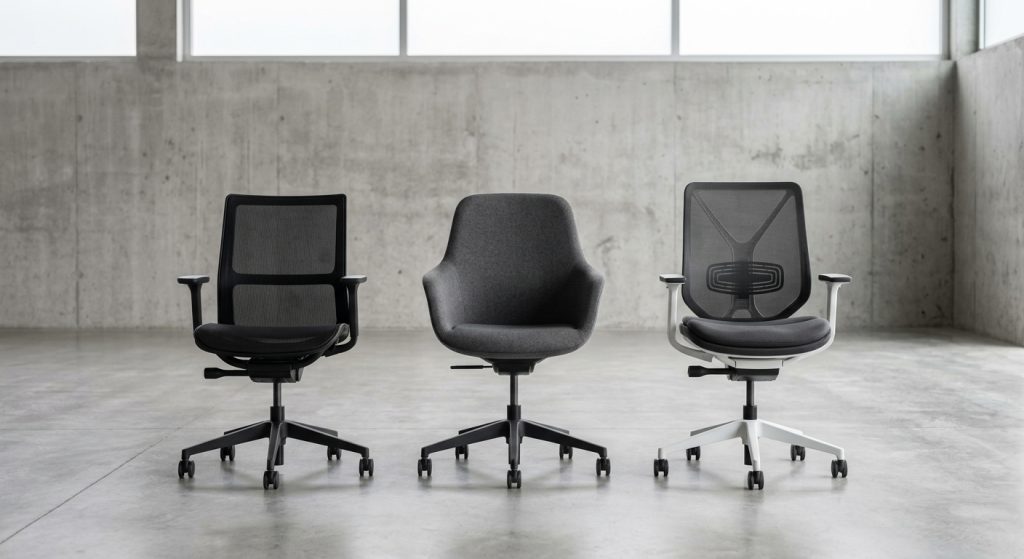
Mesh seats breathe but can feel hard on bony hips; foam seats feel plush on day one but compress and bottom out over 2–3 years; hybrids combine a foam core with a stretch or gel top layer to split the difference. The spec that actually matters isn't the marketing label — it's foam density (kg/m³), ILD (indentation load deflection), and mesh tension. Nail those three numbers and you'll know whether a chair lasts 8 months or 8 years.
The Three Numbers That Actually Matter
Ignore the glossy brochure for a second. A seat cushion's long-term comfort comes down to three measurable specs, and most buyers never ask about any of them.
Foam density measures how much material is packed into a cubic meter. Higher density = more polymer, longer lifespan. Budget office chairs ship with 28–32 kg/m³ foam. Premium task chairs sit at 50–65 kg/m³. Below 40 kg/m³, expect visible compression within 18 months of 40-hour weeks.
ILD (indentation load deflection) tells you firmness — specifically, how many pounds of pressure it takes to compress a 4-inch foam sample by 25%. An ILD of 28–36 is the sweet spot for all-day seating. Under 25 feels mushy. Over 40 feels like a park bench by hour four.
Mesh tension is trickier because there's no universal number. Good manufacturers publish elongation percentages (how much the mesh stretches under load) and yarn composition. Polyester-elastomer blends hold tension for 7+ years. Cheap nylon meshes bag out in 2.
Mesh Seats: When the Weave Is the Whole Product
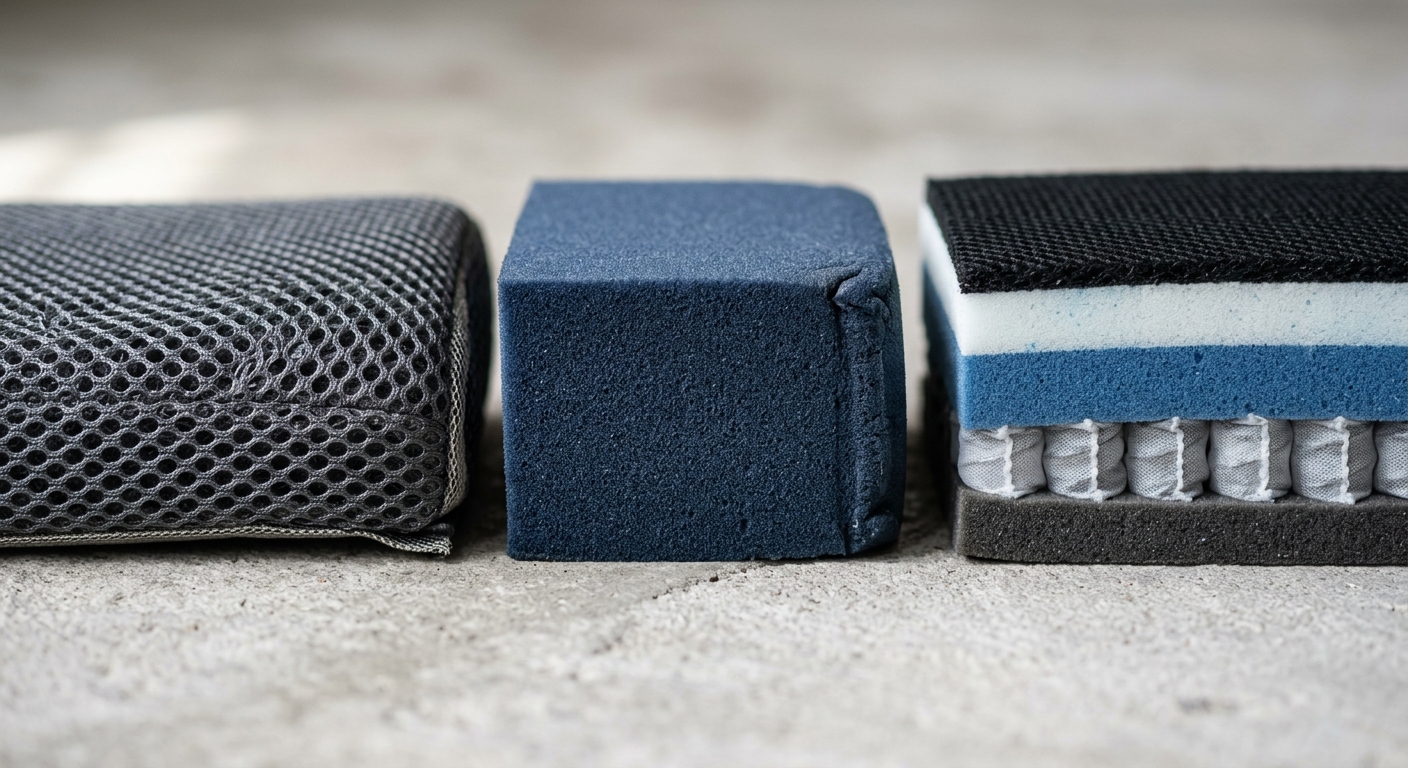
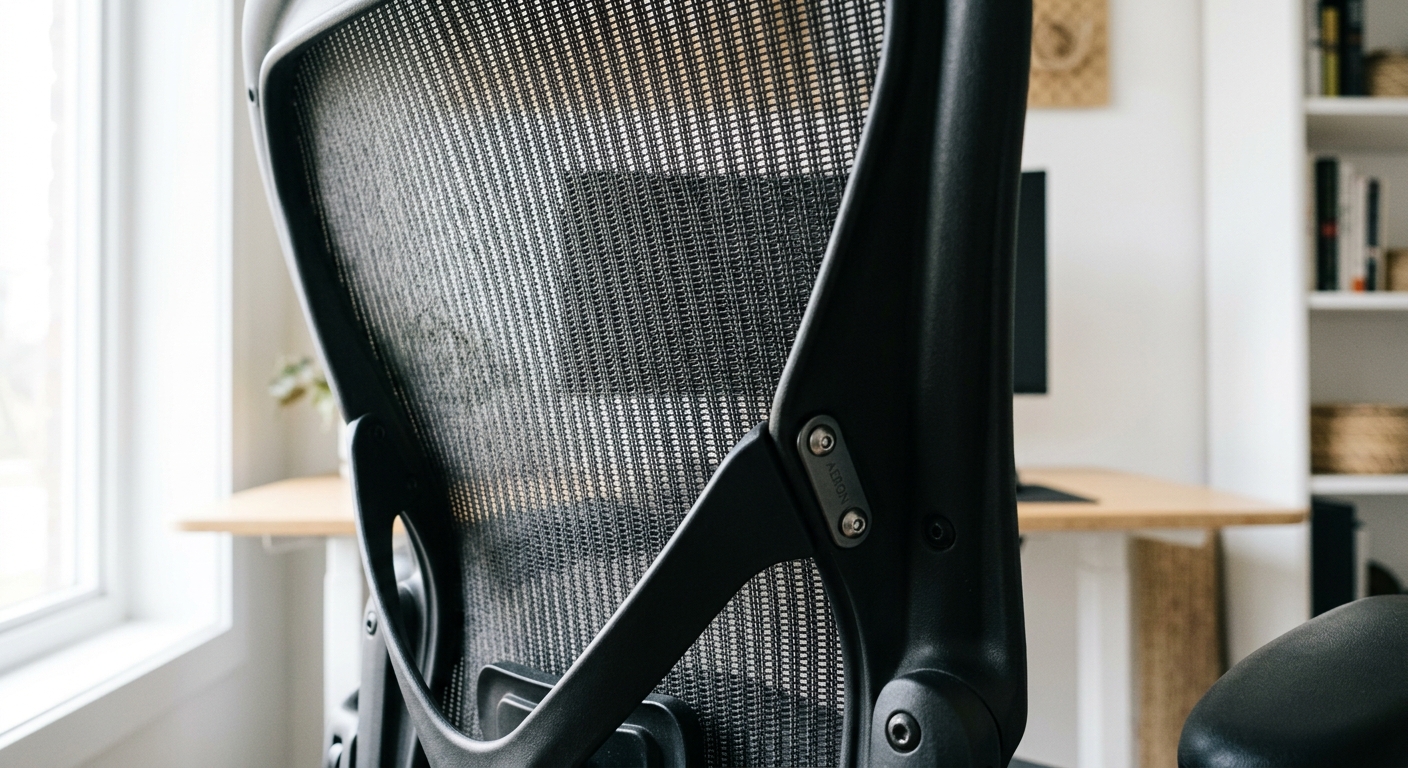
Mesh seats live and die by the suspension system. A premium mesh isn't fabric stretched over a frame — it's an engineered elastomer weave with zoned tension, firmer under the sit bones and softer at the thigh taper. Herman Miller's Aeron uses 8Z Pellicle with eight tension zones. Most knockoffs use a single-tension mesh, which is why they feel fine in a showroom and miserable by 3 PM.
The biggest spec trap: “breathable mesh” as a marketing phrase. All mesh breathes. What matters is whether the weave retains tension after 100,000 compression cycles (the ANSI/BIFMA X5.1 standard). Ask for the cycle test data. If the vendor can't provide it, move on.
Mesh works best in two scenarios: hot and humid climates where foam traps sweat, and hot-desking environments where the chair sees six different body types a day. A tensioned mesh adapts; a foam cushion molds to whoever sat in it longest.
Foam Seats: Why Density Beats Thickness Every Time
A 3-inch cushion of 50 kg/m³ foam will outlast a 5-inch cushion of 30 kg/m³ foam — every time. Thickness feels good in the showroom. Density determines whether you're still comfortable in year four.
There are three foam grades you'll see in office seating:
- Standard polyurethane (25–35 kg/m³): Entry-level. Compresses 15–20% within a year. Fine for reception chairs, poor for daily use.
- High-resilience (HR) foam (40–55 kg/m³): The workhorse. Bounces back after pressure, handles 8-hour days, typical lifespan 5–7 years.
- Molded cold-cure foam (55–70 kg/m³): Premium. Injection-molded for consistent density throughout. Found in chairs rated for 24/7 use like 911 dispatch and trading floors.
Here's a real scenario: a 40-seat call center swapped their $180 task chairs (standard foam, 32 kg/m³) for $420 chairs with HR foam (48 kg/m³). Six years later, 37 of the 40 newer chairs were still in service. The old chairs had all been replaced twice. Total cost per seat-year actually favored the premium chair by 34%.
Hybrid Cushions: What's Actually Inside Them
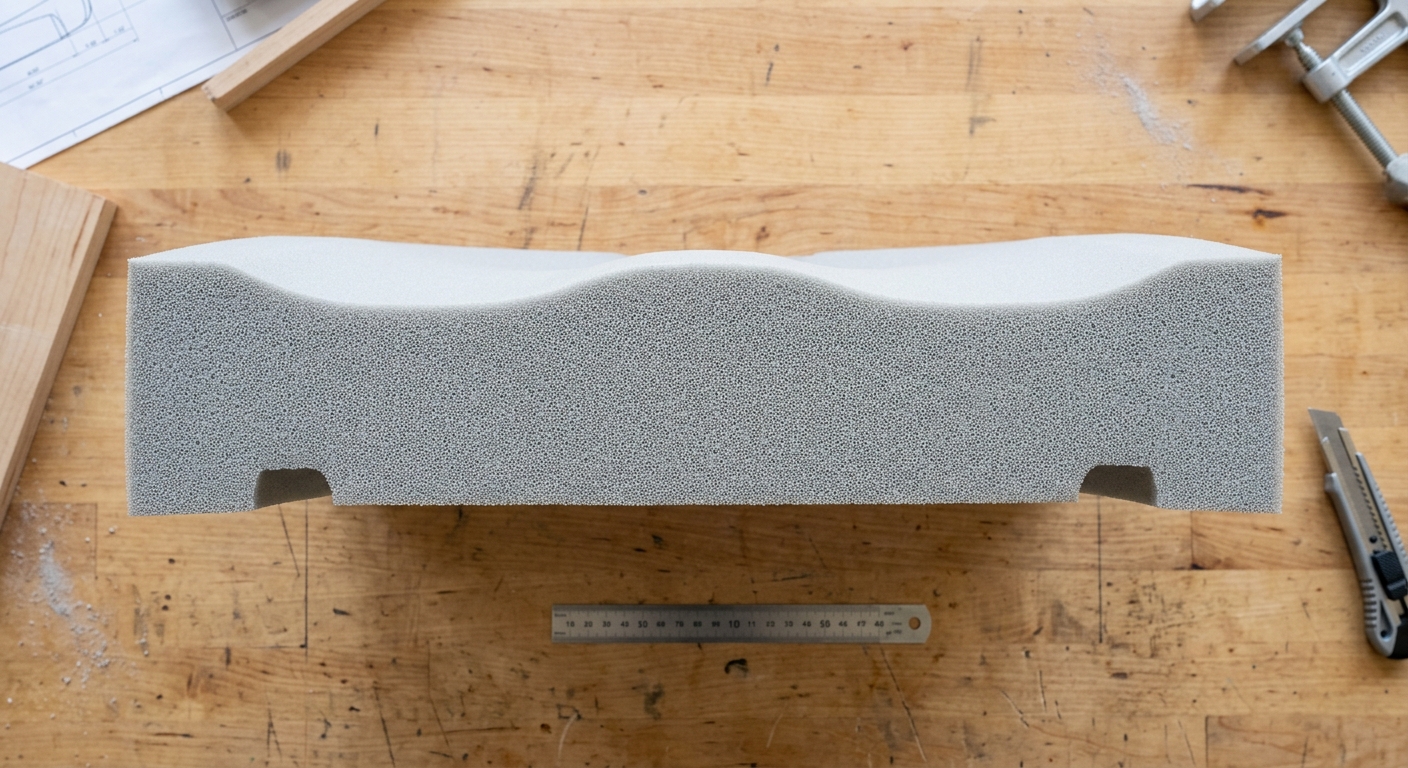
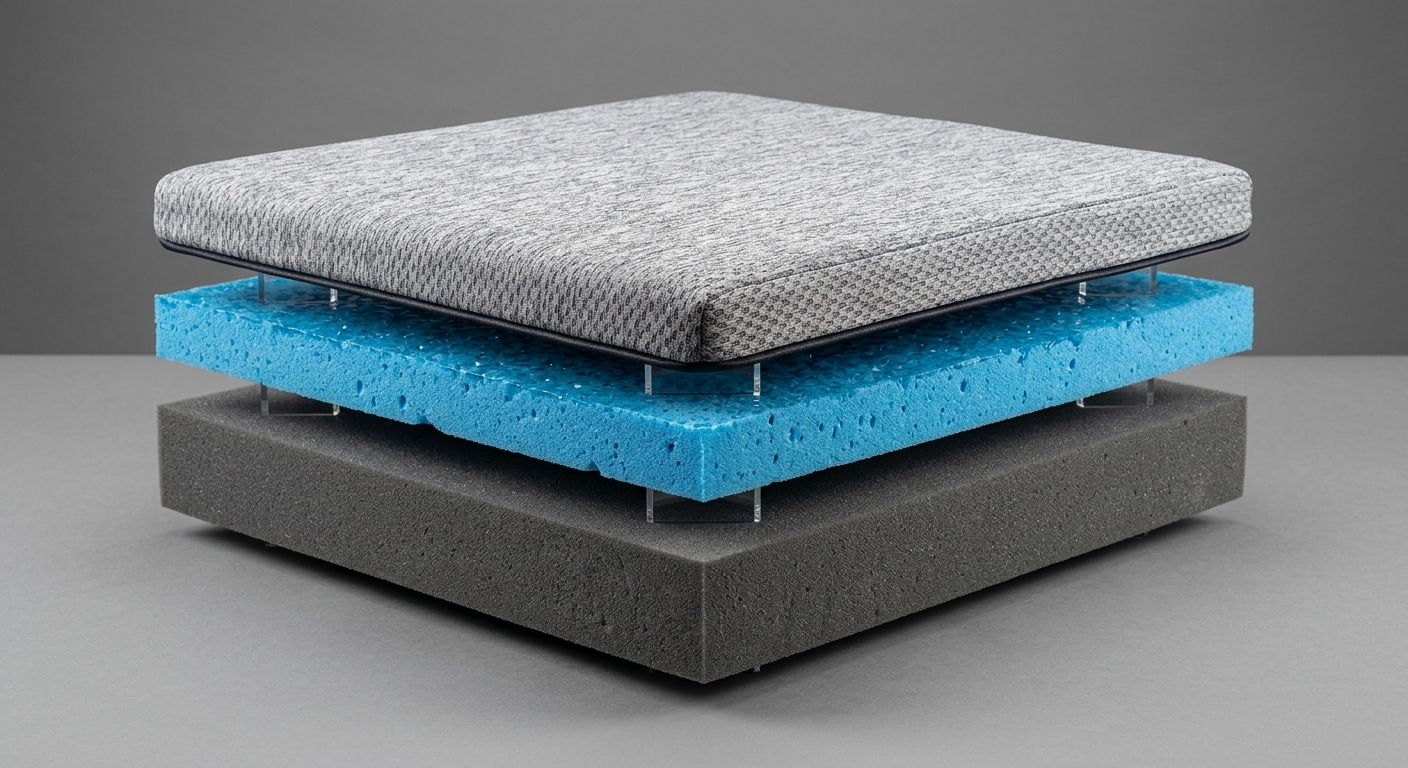
“Hybrid” is the fuzziest label in office furniture. It can mean anything from a foam seat with a mesh back (not really a hybrid cushion) to a genuinely layered construction. The hybrids worth paying for have three layers:
- A support base of 50+ kg/m³ HR foam, 1.5–2 inches thick, providing structure.
- A comfort layer of memory foam or gel-infused foam, 0.5–1 inch, distributing pressure points.
- A top surface of stretch knit or perforated fabric for airflow and friction reduction.
The engineering question: does the top layer breathe enough to offset the heat retention of the memory foam underneath? Gel-infused foam with a 3D-knit cover does. Plain memory foam with a vinyl cover does not — that's a sweat trap marketed as a hybrid.
Look for chairs that publish the foam stack on the spec sheet. If the description just says “premium multi-layer cushioning,” assume the worst.
Side-by-Side: The Spec Comparison
Here's how the three constructions compare on the criteria that matter for a procurement decision:
| Criteria | Mesh Seat | Molded Foam Seat | Hybrid (Foam + Mesh/Gel) |
|---|---|---|---|
| Breathability | Excellent | Poor to fair | Good |
| Initial comfort | Firm, can feel edgy | Plush, conforming | Balanced |
| 8-hour comfort | Good if tensioned right | Drops as foam compresses | Most consistent |
| Key spec to check | Weave tension / yarn type | Density + ILD | Foam density + top layer |
| Typical lifespan | 7–10 years | 3–7 years | 5–9 years |
| Weight capacity | 250–350 lb | 250–400 lb | 275–400 lb |
| Price tier | $$–$$$$ | $–$$$ | $$$–$$$$ |
| Best for | Hot climates, hot-desking | Short sessions, reception | Full-day knowledge workers |
The short version: if your team sits 6+ hours daily and your budget allows it, hybrid wins. If airflow is non-negotiable (warehouse offices without AC, humid coastal locations), mesh wins. Pure foam wins on initial cost and on roles where people sit for under three hours at a stretch.
Body Type, Climate, and the Spec That Changes
The “best” cushion depends on who's sitting in it. A 130 lb designer and a 240 lb engineer need different ILD ratings, not different chairs. Most quality manufacturers offer two foam firmness options on the same chair frame — but only if you ask.
Rules of thumb:
- Under 160 lb: ILD 26–30 (softer). Firmer foam won't compress enough to engage the chair's contour.
- 160–220 lb: ILD 30–36 (standard).
- Over 220 lb: ILD 36–42 + density above 50 kg/m³. Lower density will bottom out within a year.
Climate matters too. A Shenzhen office in July hits 85% humidity indoors if HVAC is weak — memory foam becomes a sponge. A Calgary office in January has 15% indoor humidity — mesh can feel cold against bare skin. Match the cushion to the environment, not the trend. For more on how these environmental and psychological factors shape productivity, see our guide on how office furniture affects workplace productivity.
Where Each Type Fits in a Real Office
Don't buy one chair for the whole building. A smart furniture plan assigns cushion types to roles:
Engineering and design teams: Hybrid, full-day use, 48+ kg/m³ foam with gel top. These users will notice a mushy seat within a week.
Sales floor / call center: Mesh or hybrid. High chair-hour turnover means heat buildup is real. Mesh also handles varied body types better when seats rotate.
Executive offices: High-density molded foam with leather or bonded-leather cover. Lower daily hours, higher aesthetic requirement.
Conference rooms: Medium-density foam (38–42 kg/m³). Meetings average 45–90 minutes — no one needs 65 kg/m³ cold-cure foam for a standup. See our breakdown of conference room chair selection for the full spec list.
Reception and visitor seating: Standard foam is fine. Prioritize cover durability and cleanability over cushion density.
A fintech client we worked with split their 180-person floor across three cushion tiers this way. Three years in, chair replacement rate dropped 62% compared to their previous “one chair for everyone” policy, and comfort survey scores rose 27 points.

How to Read a Spec Sheet Without Getting Fooled
Vendors know most buyers don't understand foam specs, so marketing language fills the gap. Here's what to ignore and what to demand.
Ignore: “premium,” “luxury,” “ergonomic-grade,” “cloud comfort,” “memory cushioning.” None of these mean anything measurable.
Demand, in writing:
- Foam density in kg/m³ (not just thickness in inches or cm)
- ILD or firmness rating at 25% compression
- BIFMA X5.1 cycle test certification
- Warranty terms specifically covering seat cushion compression (many warranties exclude “normal wear,” which is how they duck foam failure claims)
- For mesh: yarn material and tension retention test results
A reputable manufacturer will have these specs on a datasheet. If sales has to “check with the factory,” you're probably dealing with a reseller who doesn't control the spec — and the spec can change between batches. For deeper material context, our guide to office furniture materials covers what to look for across frames, upholstery, and mechanisms too.
Picking the Right Cushion for Your Team
Start with hours of daily use, then climate, then body-type distribution, then budget — in that order. Teams logging 7+ hours daily in a controlled climate should default to hybrid with 48+ kg/m³ HR foam and a breathable top layer. Teams in hot or humid environments should default to tensioned mesh with published BIFMA cycle data. Everything else — reception, conference, occasional-use seating — can run pure foam at moderate density.
The decision isn't really mesh vs. foam vs. hybrid. It's whether you're willing to ask for the three numbers — density, ILD, tension retention — that separate a chair lasting 8 months from one lasting 8 years. Buyers who ask get the good stuff. Buyers who don't get whatever clears the warehouse.
If you're planning a refresh and want spec sheets that actually tell you something, browse our seating range or get in touch through our office furniture solutions team — we'll send density ratings, ILD values, and cycle test data up front, not after you've signed a PO.


