
Why Office Furniture Off-Gasses — And What to Do About That New Chair Smell
- 02 Jun, 2026
- Guides

That sharp chemical smell from a new office chair isn’t just “newness” — it’s volatile organic compounds (VOCs) evaporating from adhesives, polyurethane foam, engineered wood, and surface finishes. Off-gassing is a normal, predictable chemistry event that typically peaks in the first 72 hours and fades over 2–12 weeks, but the duration and intensity depend almost entirely on how the furniture was manufactured. The fix is a combination of ventilation, time, temperature control, and — most importantly — buying furniture that was designed to emit less in the first place.
What’s Actually Evaporating From Your New Chair
When you unbox a new task chair and catch that sweet, slightly pungent smell, you’re inhaling a cocktail of compounds. The usual suspects: formaldehyde from particleboard and MDF binders, toluene and xylene from solvent-based adhesives, styrene from plastic components, and residual isocyanates from polyurethane foam production.
Each material contributes its own signature. Laminated desk surfaces release formaldehyde from urea-formaldehyde resins. Foam cushions emit amines and residual blowing agents. Powder-coated steel frames are usually the cleanest contributor — the curing process burns off most volatiles at the factory. Fabric upholstery can release compounds from flame retardants, stain-repellent coatings, and dye carriers.
The concentration matters. A single chair in a 3,000-square-foot open office is barely detectable. Forty chairs, twenty desks, and eight credenzas delivered the same Monday morning? That’s when occupants notice headaches, throat irritation, and complaints start hitting facilities managers’ inboxes.
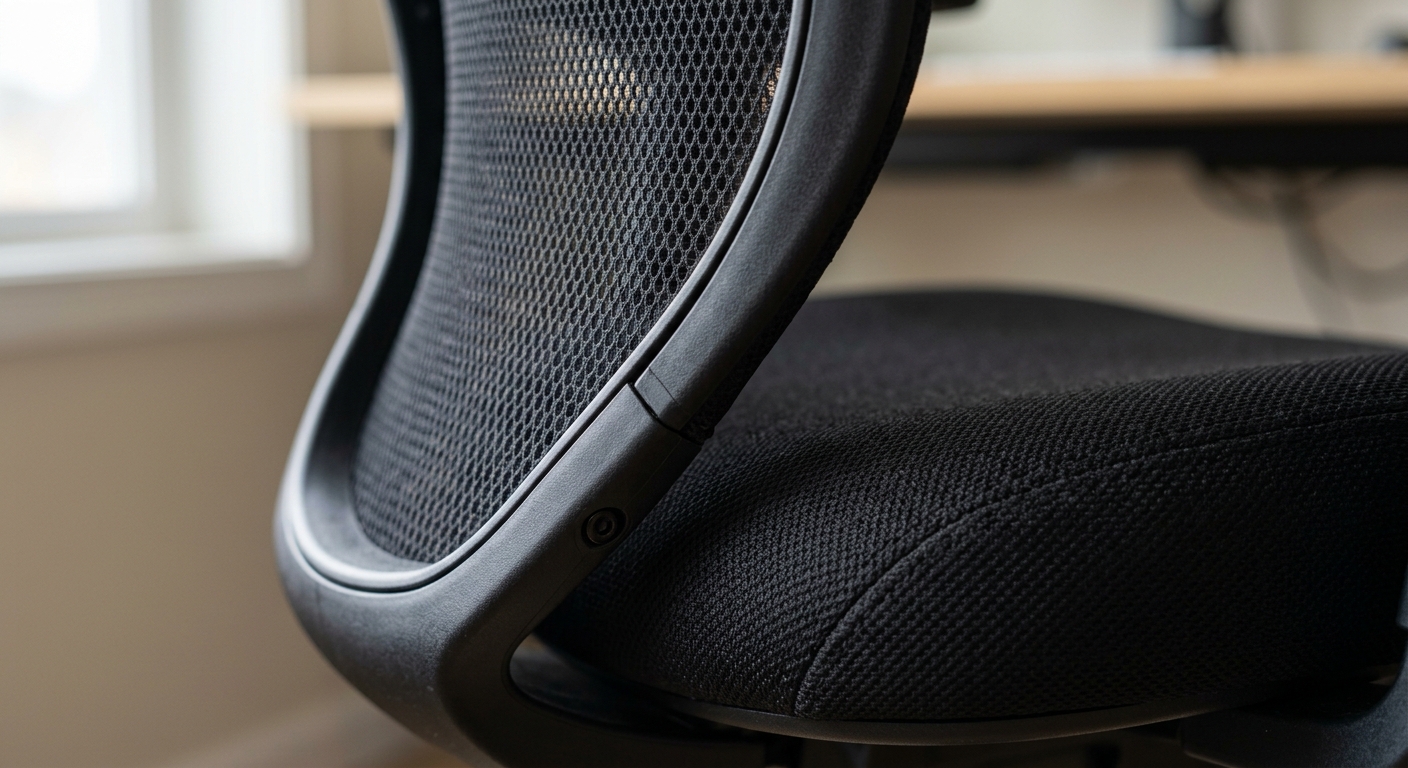
Why Off-Gassing Happens: The Chemistry Behind the Smell
Off-gassing is simply evaporation. Manufacturing processes trap small molecules inside materials — plasticizers in vinyl, unreacted monomers in resins, solvents in adhesives. Once the product is exposed to room temperature and air, those molecules slowly migrate to the surface and volatilize.
Two variables accelerate the process dramatically: heat and airflow. Every 10°C (18°F) rise roughly doubles the rate of evaporation for most VOCs. That’s why a freshly delivered chair that sat in a hot shipping container for three weeks smells stronger on arrival — the molecules have had time to migrate to surfaces but couldn’t escape through sealed packaging.
The three phases of off-gassing
- Initial burst (0–72 hours): 40–60% of total VOC emissions release here. Plastic wrap removal triggers a visible spike.
- Decay curve (3 days–6 weeks): Emissions drop exponentially. Most smells become unnoticeable within 2–4 weeks.
- Long tail (6 weeks–2 years): Low-level formaldehyde release from engineered wood can continue for years, though usually below detection thresholds.
Which Materials Off-Gas the Most (and the Least)
Not all office furniture is chemically equal. If you’re sensitive to smells or specifying for a school, clinic, or executive suite where air quality is non-negotiable, the material list matters more than the brand name.
Highest emitters
- Particleboard and MDF with urea-formaldehyde binders — common in budget desks and storage
- Polyurethane foam cushions, especially high-density foam less than 30 days old
- Vinyl upholstery with phthalate plasticizers
- Solvent-based lacquers on veneered executive furniture
Lower emitters
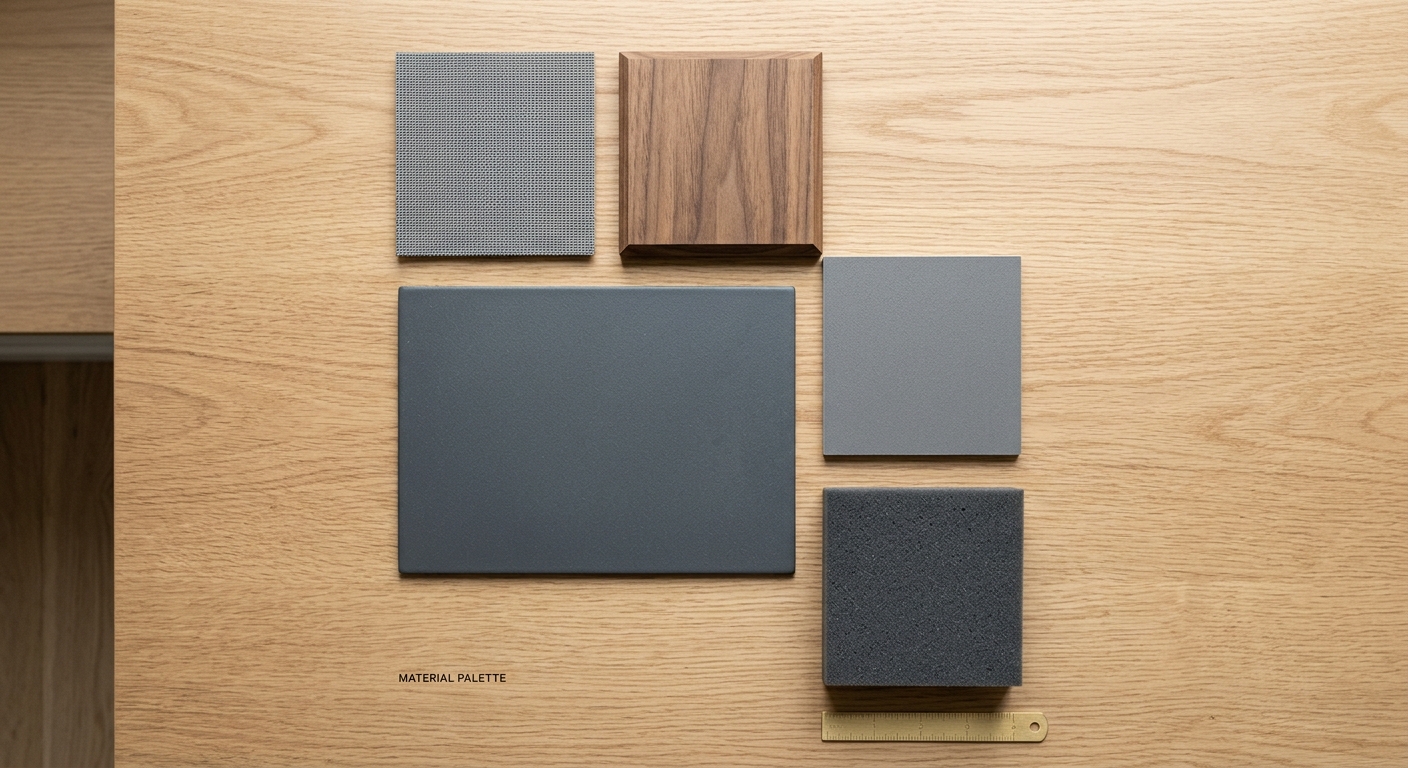
- Solid hardwood with water-based finishes
- Powder-coated steel and aluminum
- Molded polypropylene shells (most task chair backs)
- Wool and polyester fabrics without stain-resist treatments
For a deeper breakdown of material trade-offs, our guide to office furniture materials covers structural performance alongside emissions.
How Long Does the Smell Actually Last?
Honest answer: between 48 hours and 6 months, depending on what you bought and where you put it. A GREENGUARD Gold certified mesh chair in a well-ventilated office will be odor-free in under a week. A bulk shipment of budget laminate workstations in a sealed, air-conditioned conference room can linger for two months.
Here’s a realistic timeline for a typical commercial-grade ergonomic chair delivered to a moderate-climate office:
- Day 1–3: Strong smell, noticeable from 2 meters away
- Week 1: Smell localized to the chair, detectable when seated
- Week 2–3: Faint residual smell on foam and fabric
- Week 4+: Effectively odor-free to most occupants
Budget imports routinely double these timelines. And if the furniture was wrapped in plastic for 60+ days of ocean freight, add another 1–2 weeks to let the concentrated volatiles dissipate.
Is Off-Gassing Actually Harmful?
For most healthy adults, short-term exposure to typical office furniture VOCs causes nothing worse than a headache, scratchy throat, or mild eye irritation. The bigger concern is cumulative load — combining new furniture with new carpet, fresh paint, and sealed HVAC in a recently renovated office.
Formaldehyde is the compound regulators worry about most. The WHO guideline is 0.1 mg/m³ for 30-minute exposure; California’s CARB Phase 2 standard limits emissions from composite wood panels to 0.05 ppm. Reputable commercial furniture manufacturers meet or exceed these standards.
Who should be cautious:
- People with asthma, chemical sensitivity, or respiratory conditions
- Pregnant employees during the first trimester
- Pediatric or healthcare environments
- Offices that have been fully closed for 48+ hours after delivery
For a healthcare client we worked with, the specification explicitly excluded any product without GREENGUARD Gold certification — they staged deliveries over three weekends rather than hit the building with 80 workstations at once. Smart move.

Seven Ways to Clear the Smell Fast
If the furniture is already in the building and occupants are complaining, here’s the practical playbook. In order of effectiveness:
- Unwrap everything immediately. Plastic packaging concentrates VOCs. Get it off within an hour of delivery.
- Bake and air. Raise the room temperature to 26–28°C (80–82°F) with HVAC on full exhaust for 48 hours before occupancy. Heat accelerates evaporation; ventilation removes it.
- Maximize fresh-air intake. Override the building HVAC economizer to 100% outside air for the first week. This is the single biggest lever.
- Wipe hard surfaces with a 50/50 white vinegar and water solution. Removes surface-deposited VOCs from laminates and finishes.
- Activated carbon bags placed under desks and inside credenzas absorb residuals for 30–60 days. Cheap and effective.
- Skip the air fresheners. They mask, not remove, and add their own VOC load.
- Stagger deliveries if you’re furnishing a large project — don’t unbox 50 chairs in one zone on the same day.
How to Buy Furniture That Off-Gasses Less From Day One
The easiest way to solve an off-gassing problem is to never have one. That means specifying certified low-emission furniture at the procurement stage, not troubleshooting it after installation.
Certifications that actually mean something
- GREENGUARD Gold — Tests for 360+ VOCs, including formaldehyde. The strictest common standard.
- BIFMA LEVEL 3 — Multi-attribute sustainability certification; includes emissions criteria.
- CARB Phase 2 / TSCA Title VI — Mandatory for composite wood sold in the US. A baseline, not a premium.
- OEKO-TEX Standard 100 — Fabric-specific; confirms textile safety.
Questions to ask your supplier
- What adhesive system is used for the veneer or laminate lamination?
- Is the foam CertiPUR-US certified?
- How long does product typically sit in warehouse before shipping?
- Can you provide third-party emission test reports?
A coworking operator we supplied in Singapore insisted on GREENGUARD Gold across all 180 workstations because members were signing same-day contracts — they couldn’t afford a two-week off-gassing window. The 18% price premium paid back in weeks through uninterrupted occupancy. See our sustainable office furniture overview for more on certification economics.

When Off-Gassing Indicates a Bigger Problem
Sometimes the smell isn’t just normal VOCs evaporating — it’s a warning sign. If after four weeks of aggressive ventilation the smell hasn’t meaningfully faded, you’re likely dealing with one of three issues:
- Defective batch: Foam that wasn’t cured long enough at the factory will smell like burnt plastic or ammonia for months. This is warranty territory.
- Contaminated storage: Furniture stored near diesel generators, pesticides, or solvents absorbs those compounds into porous materials. Ask where your shipment was warehoused.
- Counterfeit or substituted materials: “CARB Phase 2” stickers on uncertified particleboard are a real problem in low-cost imports. Test reports or don’t buy.
Persistent sweet chemical smells, eye watering that doesn’t subside, or symptoms among multiple occupants warrant an independent indoor air quality test — roughly $400–$1,200 for a commercial-grade VOC panel. Document everything before disposing of anything; you’ll need it for warranty claims.
Designing a Rollout That Protects Air Quality
For larger installations — say, 50+ workstations or a full floor refresh — off-gassing management belongs in the project plan, not the post-move complaint pile. The best-run projects we see follow a pattern:
- Pre-delivery unboxing: Have the supplier unwrap and air the furniture in their warehouse for 5–7 days before final delivery. Some will do this for free on orders above a threshold.
- Weekend staging: Deliver Friday, ventilate Saturday and Sunday, occupy Monday. Simple, free, and effective.
- Zone-based rollout: Refresh one department at a time rather than the entire floor at once. Dilutes the total VOC load.
- Monitor and document: A $200 consumer-grade VOC meter gives you a baseline reading trend that reassures occupants and surfaces real problems early.
Our office furniture solution team builds these considerations into project timelines by default for larger procurements, and the broader shift toward well-being-centered furniture design has made emission-conscious specifications the norm rather than a premium extra.
The Takeaway: Smell Less, Breathe Better
New furniture will always smell a little — that’s physics, not failure. But a week of mild newness is very different from two months of headaches and complaints. The difference comes down to three decisions: what you specify, how it’s shipped and stored, and how you handle the first 72 hours on-site.
Buy from manufacturers who publish third-party emission data. Demand GREENGUARD Gold or equivalent for any space occupied by children, patients, or sensitive employees. Unwrap early, ventilate aggressively, and stagger deliveries on bigger projects. The extra planning costs less than a single week of lost productivity from an unusable conference room.
If you’re specifying for a new build, expansion, or refresh and want to get the air-quality piece right from the start, browse our low-emission product range or talk to our team about certified options for your project. Good furniture shouldn’t announce itself with a smell.


