
Why New Office Chairs Feel Great in the Showroom but Fail in the Real World
- 01 Sep, 2026
- Guides
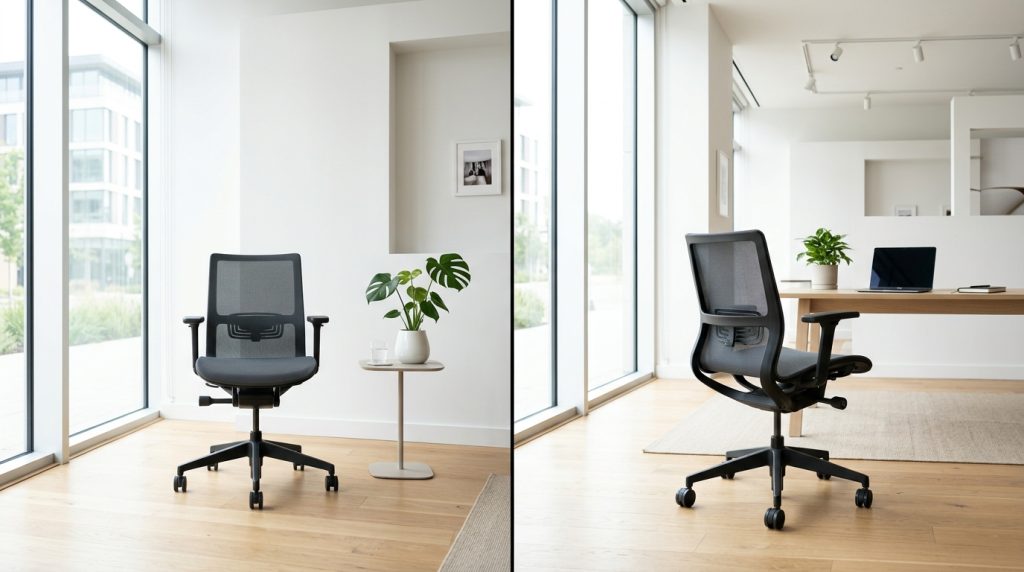
Office chairs feel great in the showroom because you’re only sitting in them for two to five minutes, in an ideal posture, on a perfect floor, with zero real work happening. The moment that same chair sits under a body for six straight hours of typing, phone calls, and slouching, different pressure points, muscles, and adjustment habits come into play — and the chair that felt like a cloud in the store starts to feel like a punishment by 2pm. This isn’t a defect in the chair. It’s a mismatch between how chairs get tested and how they actually get used.
The Showroom Test Only Measures the First Five Minutes
Here’s an uncomfortable truth: almost nobody sits in a showroom chair for longer than five minutes before deciding they love it. That’s just long enough to notice the initial cushioning, the smell of new foam, and maybe the way the armrests feel under your elbows. It’s nowhere near long enough to notice how the seat pan edge digs into the back of your thighs after hour three, or how the lumbar curve that felt supportive at first starts pushing your spine into an unnatural arch.
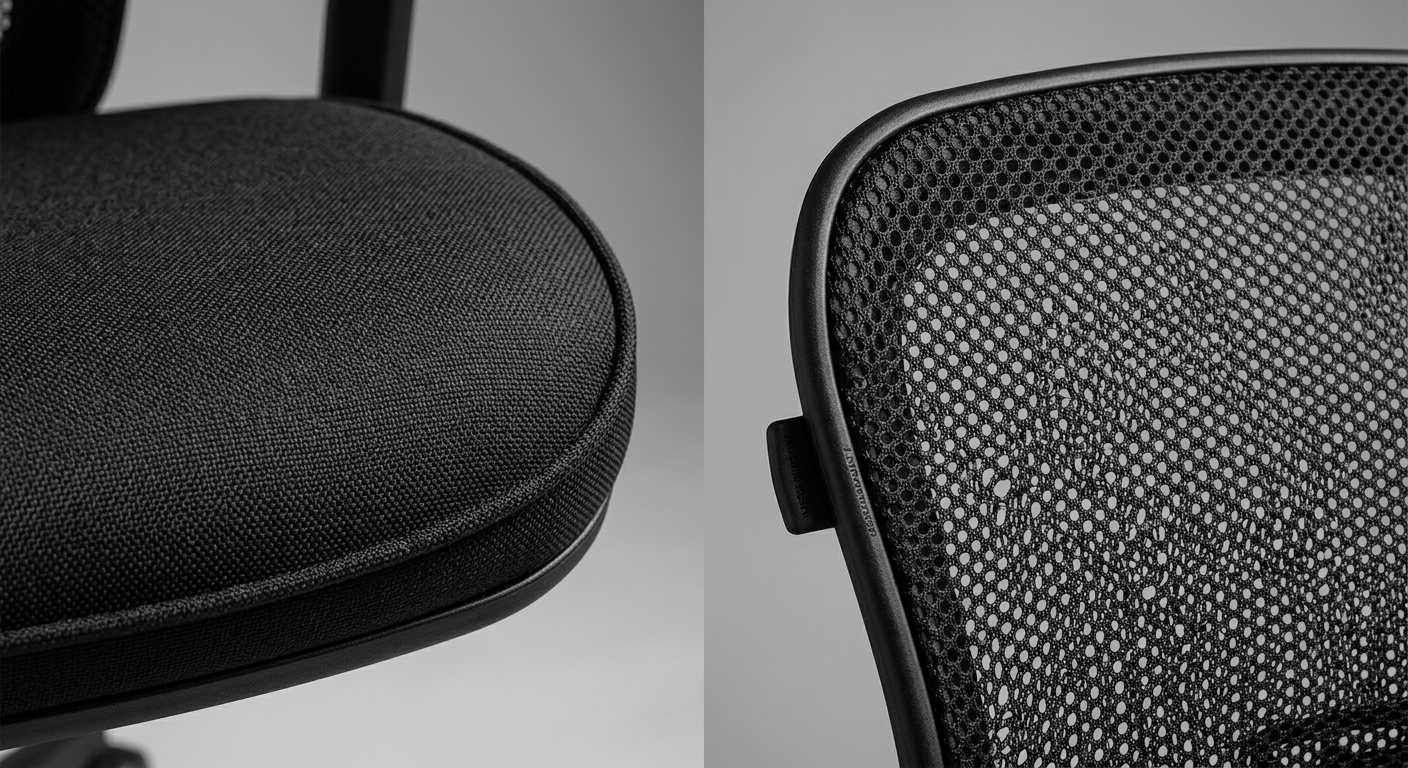
Foam compresses differently under sustained load. A dense foam that feels firm and supportive for a five-minute sit can feel like sitting on a park bench after four hours, because it hasn’t had time to break in — or worse, it breaks down faster than expected and bottoms out. Compare that to a chair with a well-engineered mesh back, which distributes weight and heat differently over long stretches. If you want a deeper breakdown of what those spec sheets actually mean, mesh vs. foam vs. hybrid seat cushions is worth reading before you sign a PO.
You Weren’t Wearing Your Real Work Clothes
Sounds trivial, but it isn’t. The tailored suit jacket, the thick winter coat, the jeans with a stiff waistband — all of these change how a seat pan and backrest interact with your body. A chair tested in casual clothes at a showroom in July will feel completely different in December when someone’s wearing three layers and a blazer that changes their shoulder width by two inches.
This matters most for armrest width and backrest recline tension. Executives who wear structured jackets often find that armrests set correctly for a t-shirt fit are suddenly too narrow or too wide once real office attire enters the picture. If your buying process involves executive seating specifically, our CEO office design guide covers how seating decisions shift once you factor in daily attire and meeting schedules.
Showroom Floors Aren’t Your Office Floors
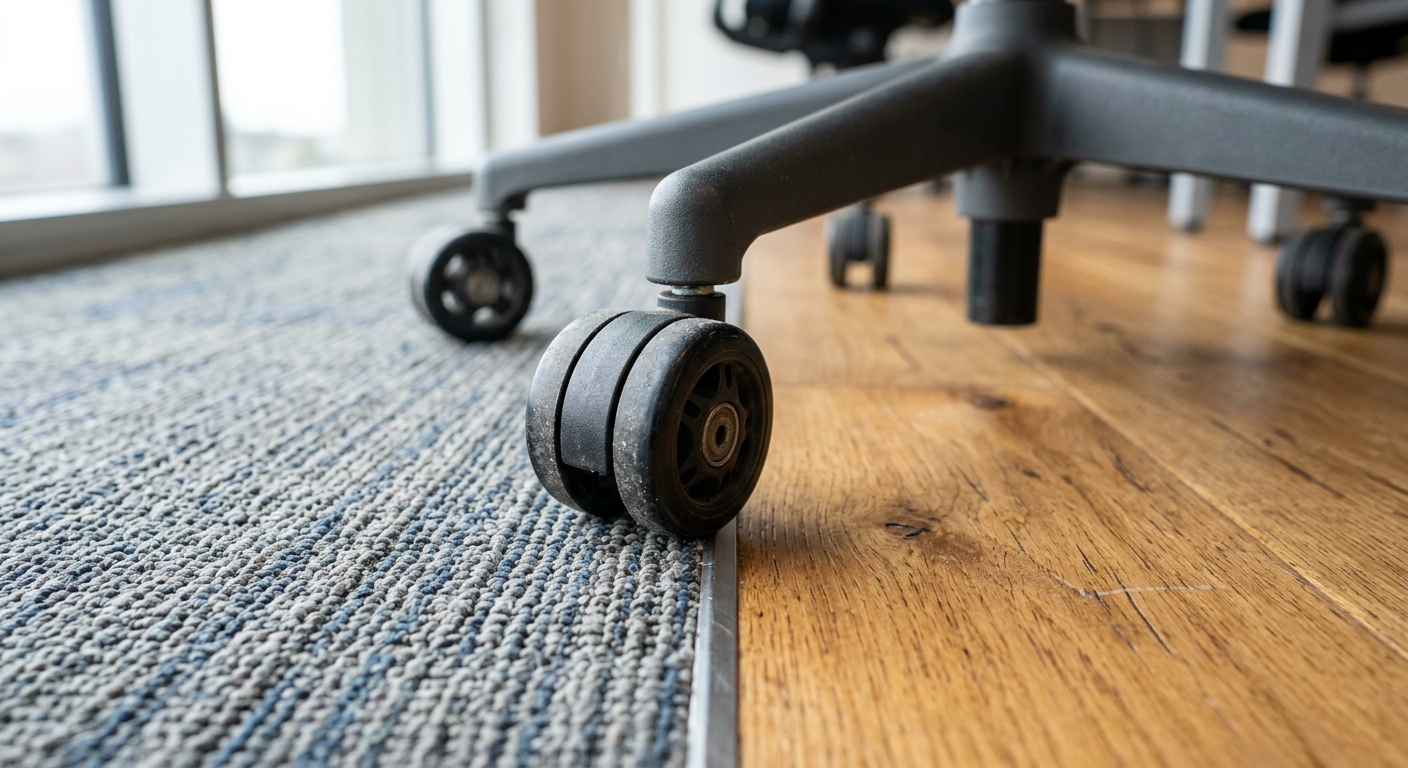
Most showrooms have polished concrete or hardwood, and the casters glide effortlessly. Your office probably has carpet tile, or a transition strip between carpet and hard flooring near the desk. That single difference changes how a chair rolls, how it swivels, and how much effort it takes to scoot toward the desk fifty times a day.
A chair that felt smooth and responsive in the store can feel sluggish and jerky on carpet with the wrong caster type. Hard casters designed for carpet dig in and create resistance on hardwood; soft casters meant for hard floors can feel unstable or noisy on carpet. This is a genuinely overlooked compatibility issue — one we cover in more depth in why your office chair squeaks, sinks, or tilts wrong.
For example, a law firm that furnished its new office based on showroom testing on hardwood discovered three weeks later that half their conference room chairs wouldn’t roll properly on the carpeted floor of the actual office — a $12,000 mistake that could’ve been avoided with a five-minute floor check.
Your Desk Height Wasn’t the Same Desk Height
Showrooms typically pair chairs with one demo desk set at a generic height — usually around 29 inches. Your actual desk might be a standing desk set to sitting mode, a vintage desk that’s two inches shorter, or a keyboard tray that sits lower than the desktop. Every one of those variables changes the ideal seat height and, more importantly, the angle at your elbows and knees.
If the chair’s seat height range doesn’t overlap correctly with your real desk height, no amount of lumbar adjustment will fix the resulting shoulder and wrist strain. This is exactly why procurement teams rolling out sit-stand setups need a proper process — see our sit-stand desk procurement checklist for how to match chair and desk specs before ordering in bulk.
Nobody Adjusts Showroom Chairs Correctly — Including You
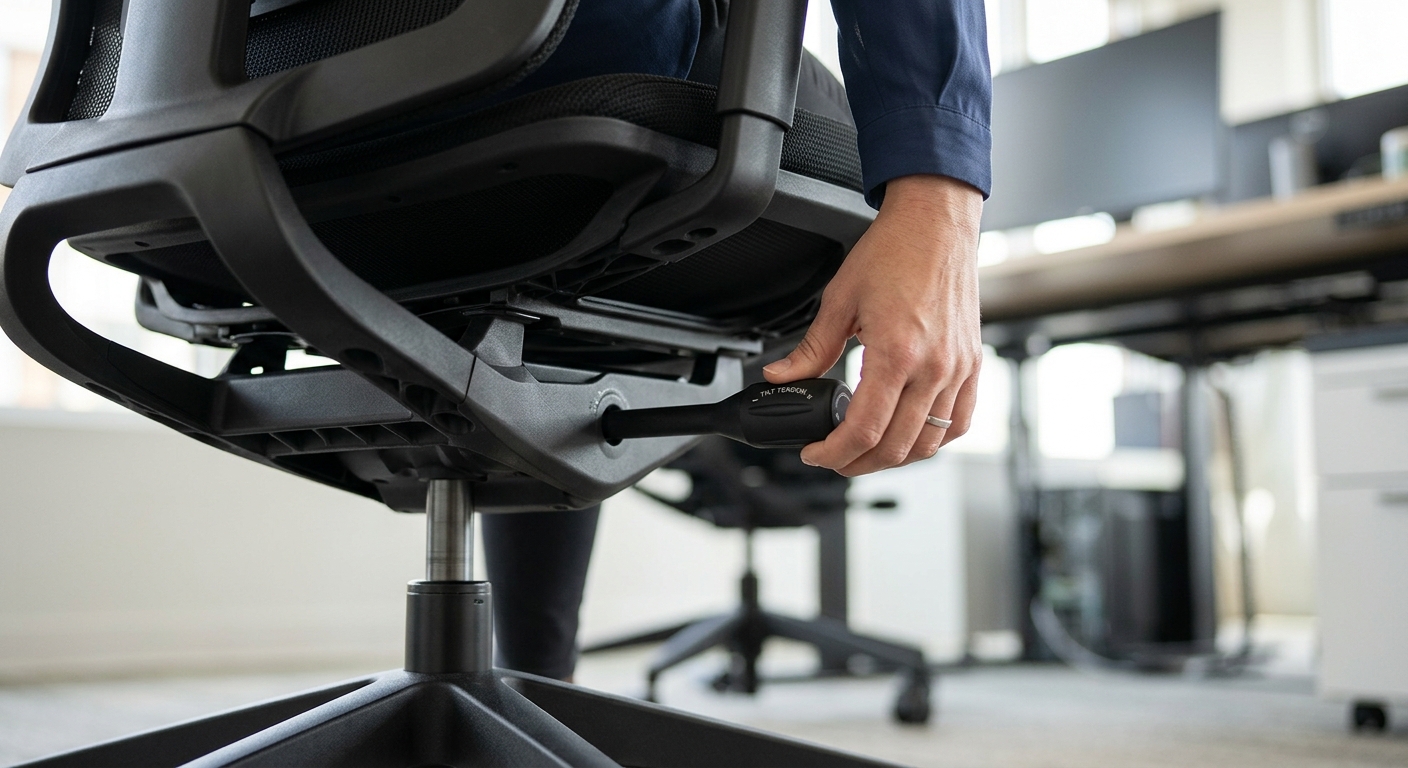
Salespeople often preset showroom chairs to a flattering middle setting that works for an ‘average’ body. Most shoppers never touch the levers under the seat. They sit, they like the general feel, they buy. Then it arrives at the office and nobody trains the team on what those five or six levers actually do.
Tilt tension, seat depth, lumbar height, armrest pivot — these aren’t cosmetic features. They’re the difference between a chair that adapts to your body and one that fights it. We’ve written a full breakdown of the ergonomic chair adjustments most people never touch, and it’s genuinely one of the most common reasons brand-new chairs get blamed for discomfort that adjustment would have solved in ten seconds.
Real Work Involves Twisting, Reaching, and Multitasking — Showroom Sitting Doesn’t
In the store, you sit still and evaluate. At your desk, you twist to grab a phone, lean forward to read a second monitor, reach for a file cabinet, and shift weight constantly while on calls. A chair’s stability under dynamic, asymmetric movement is almost never tested in a showroom, yet it’s exactly what determines whether the chair feels solid or wobbly six months in.
Chairs with a narrow base or lightweight nylon frame might feel fine sitting straight, but they can flex or creak under repeated twisting. This is one reason weight ratings printed on spec sheets are often misleading for real use — our piece on the real weight capacity of office chairs explains why manufacturer numbers rarely account for dynamic movement, not just static load.
The New Chair Smell Isn’t Just a Smell — It’s Off-Gassing
That fresh, new-furniture scent people associate with quality is actually volatile organic compounds (VOCs) releasing from foam, adhesives, and fabric treatments. In a showroom with high ceilings and constant airflow from dozens of open doors, you barely notice it. In a smaller, closed office with recirculated HVAC, that same off-gassing can cause headaches or throat irritation for sensitive employees during the first few weeks.
It’s a real complaint we hear often enough that we dedicated a full guide to it: why office furniture off-gasses and what to do about that new chair smell. If you’re furnishing an enclosed office, ask suppliers about GREENGUARD certification before ordering, not after employees start complaining.
How to Actually Test a Chair Before You Buy It in Bulk
If a five-minute showroom sit doesn’t tell you much, what does? Request a sample unit and put it through a real 2-3 day trial at an actual desk, with actual work happening. Have someone tall and someone shorter sit in it. Roll it on your actual floor. Check it against your real desk height, not the demo desk.
- Ask for a 30-day trial period with a return option written into the contract
- Test the chair on your office flooring, not the vendor showroom floor
- Have at least two people of different heights and builds sit in it for a full workday
- Check adjustment range against your actual desks, not a generic demo setup
- Review the warranty fine print before committing to a bulk order — see how office furniture warranties really work for what’s typically excluded
This kind of methodical testing is standard practice when we help clients furnish through our office furniture solutions, precisely because bulk mistakes are expensive to reverse.