
Furnishing a Startup Office on a Tight Budget: What to Splurge On and What to Skip
- 14 Jul, 2026
- Guides
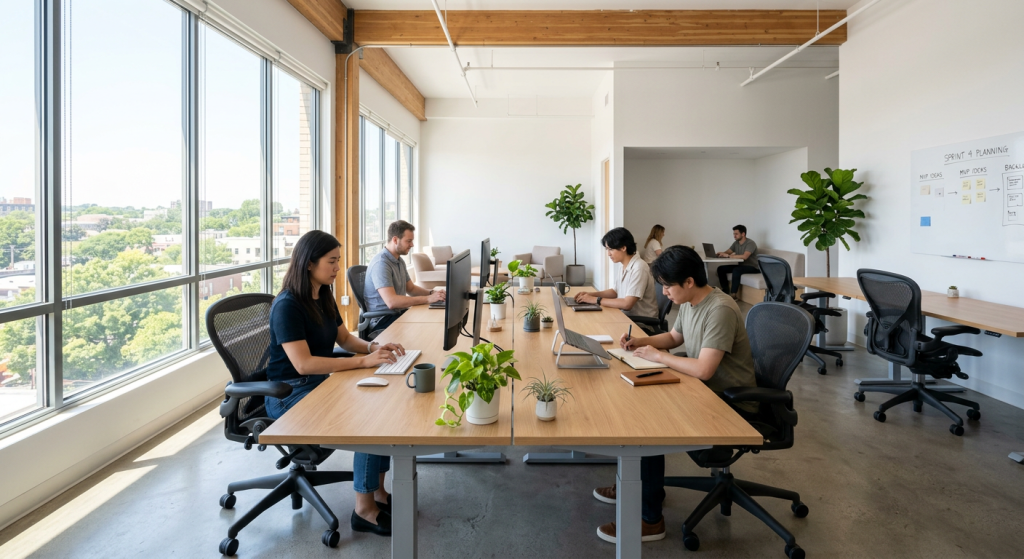
If you’re furnishing a startup office on a tight budget, spend your money on task chairs and desks — the things people touch for eight hours a day — and skip conference tables, reception furniture, and storage cabinets, which get used for minutes at a time. That single rule will save you thousands without making the office feel cheap. The math is simple: comfort items have high usage-hours-per-dollar, and status items have low ones.
The Rule Nobody Tells You: Price Per Hour of Use, Not Price Per Item
Most founders budget furniture like they’re buying a car — biggest line items get the most scrutiny. Wrong approach. What matters is how many hours a piece gets used per day, multiplied by how many days it survives.
A $180 task chair used 8 hours a day for 500 days costs about 4.5 cents per hour. A $2,000 conference table used 45 minutes a day costs roughly $5 per hour in year one alone. Once you frame it this way, the spending priorities write themselves: chairs, desks, and monitor setups win every time over meeting-room furniture and lobby pieces.
Do the 30-second math before every purchase
Ask: how many people, how many hours a day, how many years before we outgrow this office anyway (startups move fast)? If the answer is low-hours/low-lifespan, buy functional and cheap. If it’s high-hours, that’s where the budget goes.

Splurge On: Task Chairs — This Is Non-Negotiable
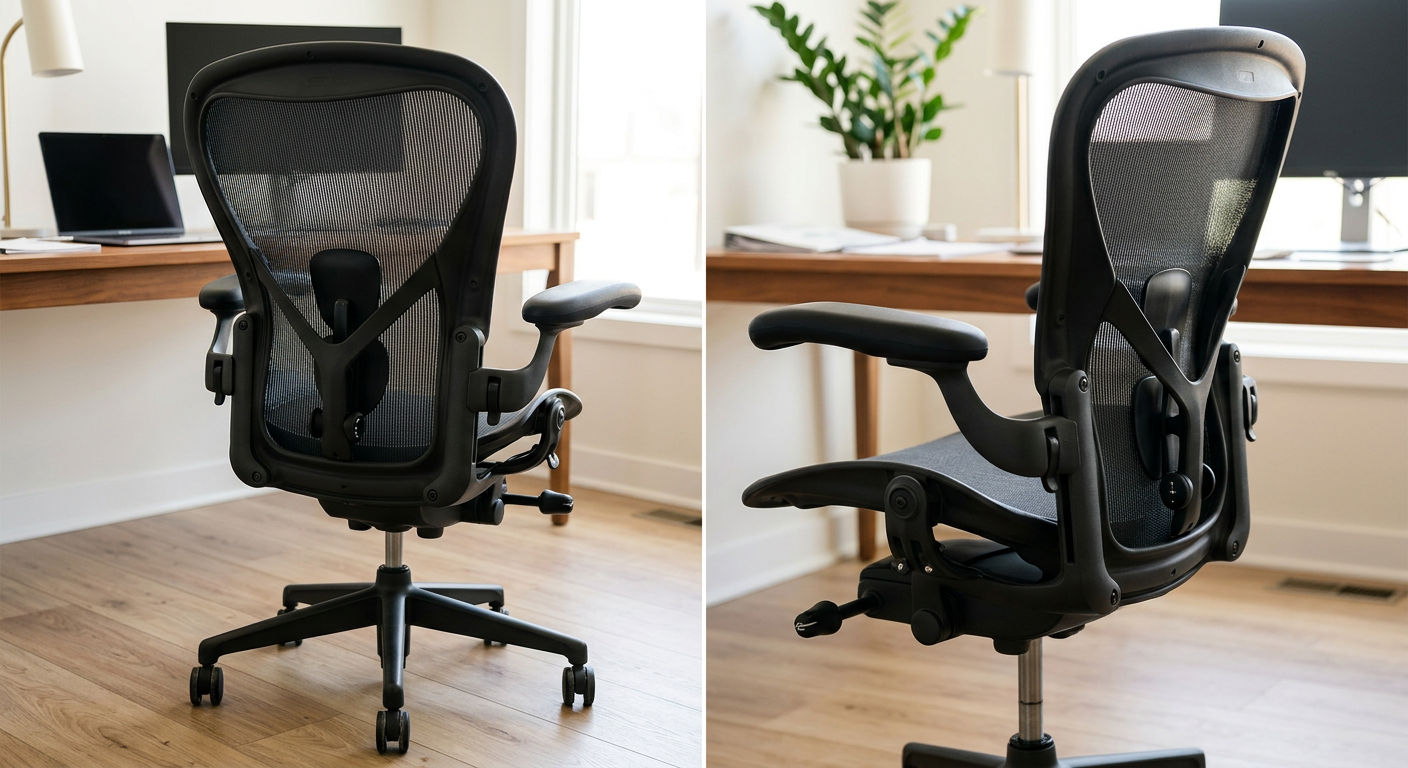
A bad chair is the single fastest way to lose a productive employee to back pain and afternoon fatigue. Startups running lean teams can’t afford sick days or slow output from discomfort, so this is the one category where ‘cheap’ actually costs more.
Budget $150-$300 per chair for a startup team, not $50. That range gets you real lumbar adjustment, breathable mesh, and a 5-year warranty instead of a 90-day one. For guidance on what actually matters in that price range, see our buyer’s guide to office chairs for 8+ hour workdays.
Skip: matching every chair to the brand aesthetic
Nobody needs a color-coordinated fleet of chairs from one designer line. Buy the same ergonomic model in one or two colors and move on — the savings from skipping ‘design coherence’ upcharges can fund an extra two or three chairs.
Splurge On: Desks That Actually Fit the Space
Undersized or oversized desks are a hidden productivity tax — people who can’t fit a laptop, monitor, and notebook comfortably end up hunched or cluttered, which shows up in posture complaints within weeks. Get the dimensions right before you get the finish right.
Standard desks run 60×30 inches, but plenty of startup teams squeeze into smaller footprints. Check our desk sizes and dimensions guide before ordering, and if you’re not sure what will physically fit your office, measure the space properly first — returns on bulky desks are expensive and slow.
Real-world example: the 12-person seed-stage team
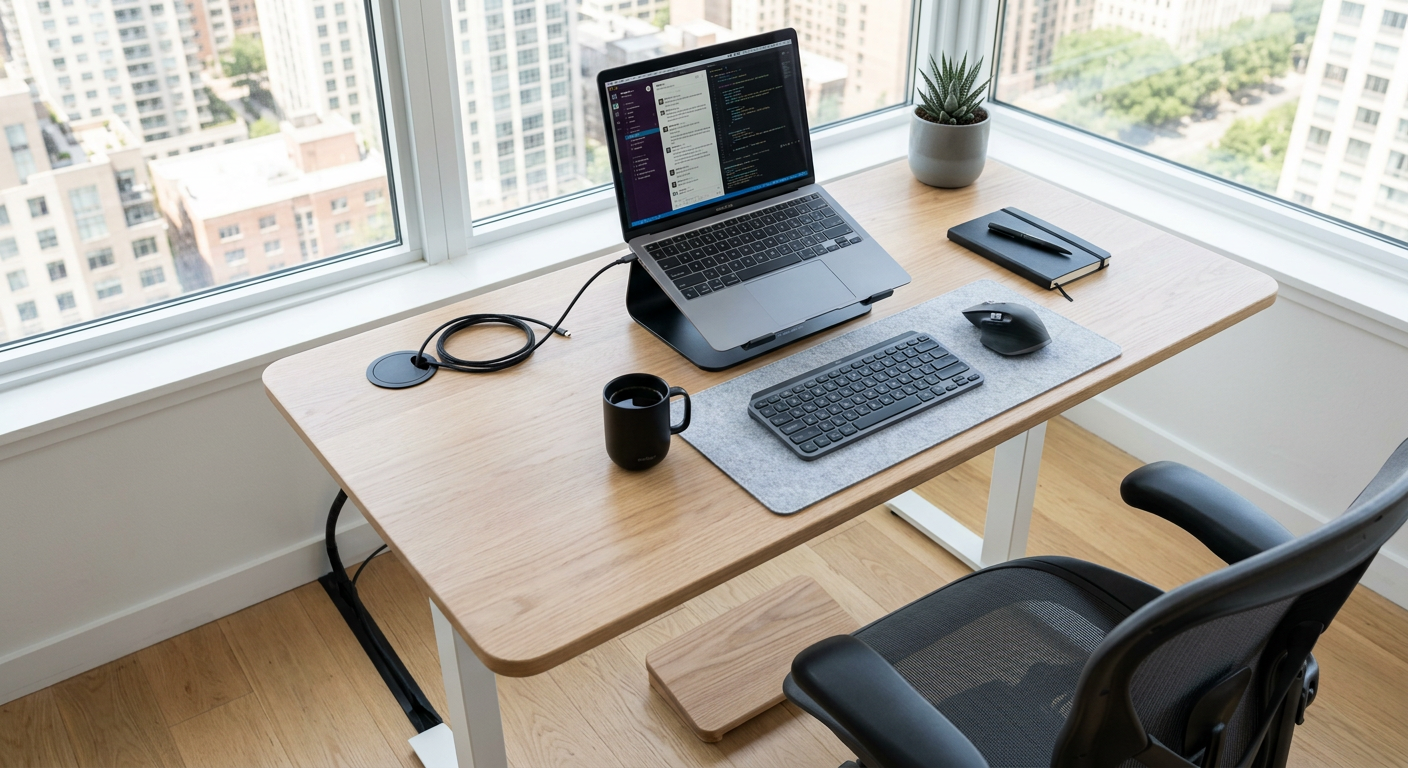
A 12-person fintech startup we advised initially ordered oversized executive desks for everyone, based on a stock photo they liked. Half didn’t fit the office layout. They swapped to compact 55×28 desks with grommet cable holes, saved 22% on the line item, and gained enough floor space for a small breakout couch.
Splurge (Selectively) On: Sit-Stand Desks — But Not for Everyone
Sit-stand desks genuinely reduce fatigue complaints, but outfitting an entire 20-person office with electric standing desks at $500+ each is a budget-killer most startups don’t need. Buy them for 30-40% of the team — rotate based on role or let people request one.
Developers and designers who sit for marathon stretches benefit most. Sales and ops staff who move around the office naturally can skip it without losing much. If you do buy standing desks, don’t cheap out on the accessories that make them usable day to day — see our breakdown of standing desk mats, monitor arms, and cable trays that actually earn their keep.
Skip: The Conference Table Everyone Obsesses Over
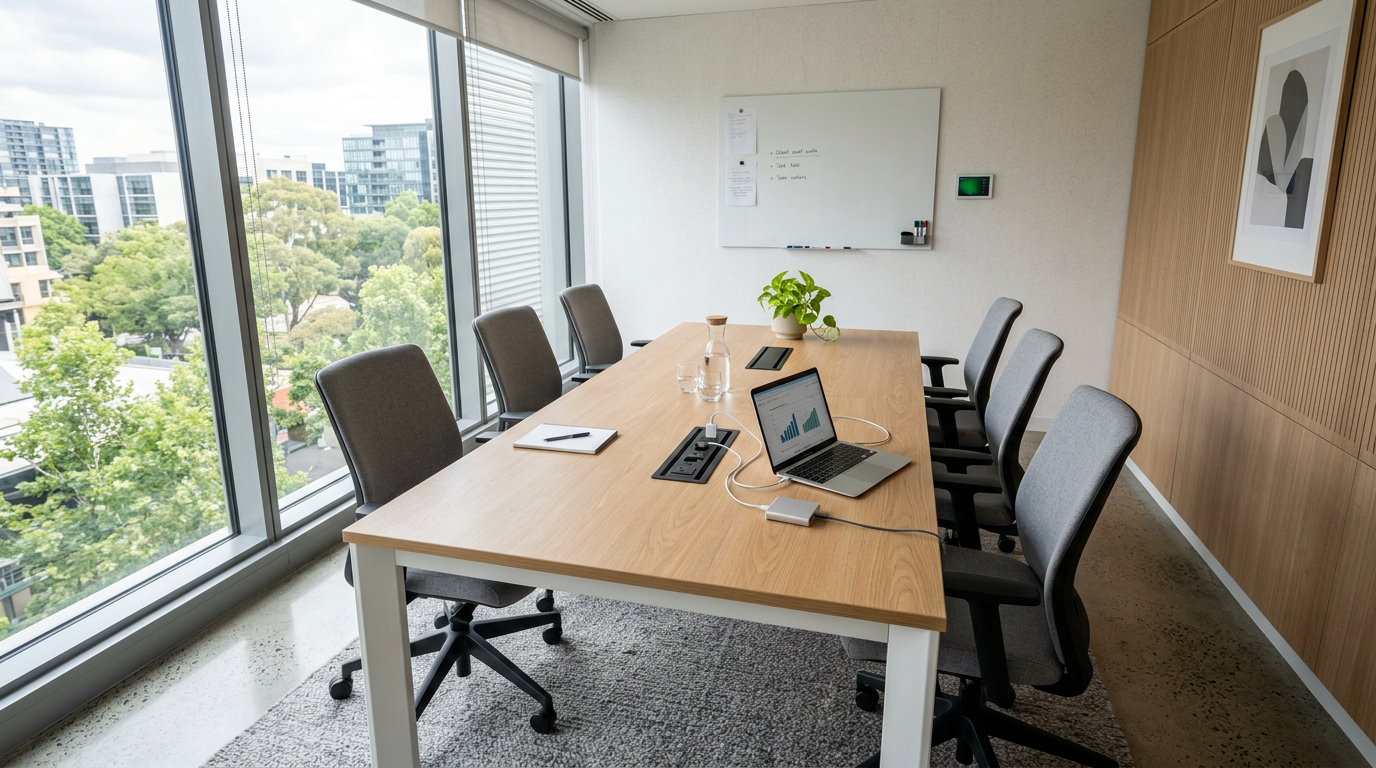
Founders love picking out an impressive conference table — it feels like a milestone purchase. But a 10-person team meets for maybe 3-5 hours a day combined across the whole table’s lifetime use. Spend $400-$600 on a solid, simple table instead of $3,000 on a designer piece.
What actually matters more than the table is the chairs around it and the power access — nobody notices the wood grain, but everyone notices a dead laptop mid-meeting. Our guide on choosing conference room chairs people actually want to sit in covers where that budget is better spent.
Skip: Reception and Lobby Furniture (For Now)
Unless you’re running client walk-ins daily — think a boutique agency or a showroom — a plush reception setup is dead capital for an early-stage startup. Investors and candidates care about the energy of the space and whether the team looks busy, not whether the lobby sofa is Italian leather.
A simple bench, a plant, and clear signage does the job for under $300. Save the real reception investment for when you’ve actually got regular visitor traffic — that’s a conversation worth having later, not in year one.
Skip: Traditional File Cabinets and Heavy Storage
Most startups today are close to paperless — contracts are signed digitally, invoices live in the cloud, and the printer sits mostly unused. Buying a wall of lateral file cabinets is solving a 2005 problem.
If you genuinely need physical storage (some legal, healthcare, or hardware startups do), go small and modular rather than a full cabinet bank. Our comparison of lateral vs. vertical file cabinets is worth a read if storage is a real requirement — but for most SaaS or services startups, a couple of lockable drawer units per desk covers it.
The Accessories That Are Cheap But Punch Way Above Their Price
This is the category budget-conscious founders overlook entirely, and it’s the best value in the whole furniture list. Monitor arms ($30-$60), cable trays ($15-$25), and anti-fatigue mats ($25-$40) cost almost nothing compared to furniture line items but directly fix posture, clutter, and desk fatigue complaints.
A single monitor arm often does more for someone’s daily comfort than a $400 chair upgrade would, simply because screen height is the #1 posture issue nobody adjusts correctly. Don’t let these get cut in a budget squeeze — they’re rounding errors compared to the desk and chair line items.
How to Sequence Purchases When Cash Is Tight
Don’t buy everything at once. A phased rollout protects cash flow and lets you correct mistakes before they scale across the whole office. Order chairs and desks for the current headcount first, add monitor arms and cable accessories in the same batch, then revisit conference and lounge furniture once you’ve got funding traction or actual client visits.
If you’re growing fast, think about how office design affects productivity as headcount doubles — furniture that worked for 8 people can create real bottlenecks at 25. Planning purchases in phases also means you’re not stuck with furniture that doesn’t match your next office’s layout.


