
Furniture for Classrooms and Training Centers: What Survives Daily Use by Dozens of People
- 07 Jul, 2026
- Guides
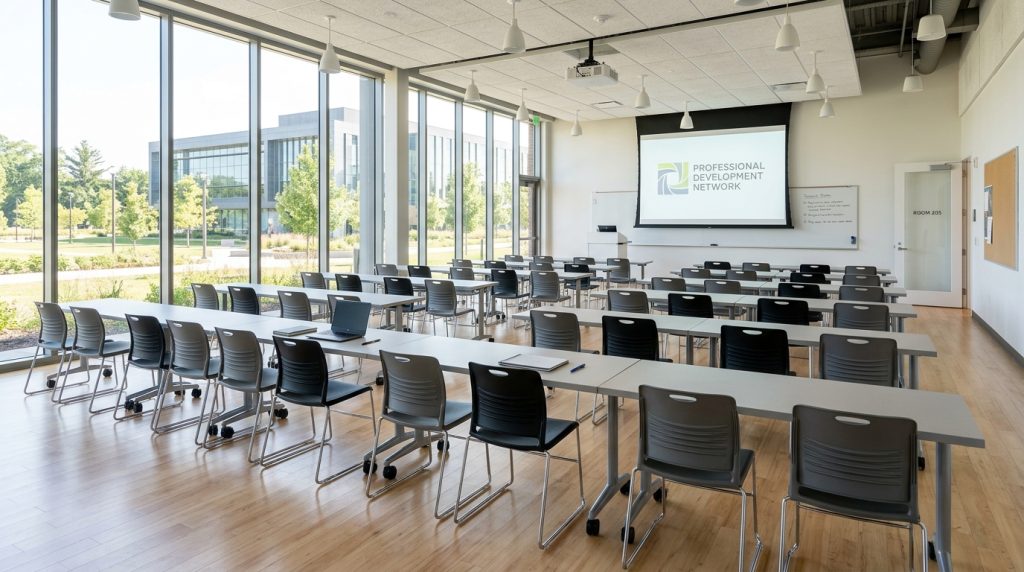
Furniture that survives dozens of daily users in a classroom or training center comes down to three things: welded steel or reinforced frames instead of screwed joints, non-porous surfaces that shrug off spills and marker ink, and hardware rated for constant movement — not just static sitting. Skip any one of those and you’re replacing chairs within 18 months instead of 8 years. The furniture that looks identical on a spec sheet often fails for completely different reasons once real people start using it every single day.
Why Classroom Furniture Fails Faster Than Office Furniture
A conference room chair gets used by one person for an hour, maybe twice a day. A classroom chair gets dragged across tile floors, tipped back on two legs, sat on sideways, and stacked at the end of every session — sometimes 30 times a week per unit. That’s not a durability gap, it’s a completely different stress profile.
Most furniture failures in training environments start at the joints, not the materials. Screwed leg connections loosen within months under repeated dragging and tilting. Welded frames don’t. That single manufacturing choice is the biggest predictor of whether a chair survives year one or year five.
Office-grade furniture is engineered for 8-hour sitting comfort. Classroom furniture needs to survive impact, dragging, and stacking — comfort is secondary to structural resilience. Buying office chairs for a training room is one of the most common and expensive mistakes facility managers make.

The Frame Material That Actually Matters
Steel wins for high-traffic training rooms, full stop. 18-gauge or 16-gauge welded steel tubing handles the tipping, dragging, and stacking abuse that classrooms dish out daily — and it doesn’t develop the hairline cracks that aluminum frames do after repeated flex cycles.
Where Aluminum Still Makes Sense
Aluminum frames make sense when rooms get reconfigured often — think flexible training centers that switch between lecture and workshop layouts weekly. Lighter frames mean less strain on staff moving furniture around, but they trade off some rigidity. If your room changes configuration less than once a month, steel is the better long-term bet.
Plastic Composite Frames: Fine for Low-Impact Use
Injection-molded polypropylene frames work well for lecture halls where chairs rarely move. They’re cheap, lightweight, and resist moisture — but they crack under repeated flexing, which makes them a poor fit for rooms with frequent rearranging.
Seat and Table Surfaces: What Survives Spills, Ink, and Scratches
Marker ink, coffee spills, and backpack scrapes are daily occurrences in training centers — and they destroy the wrong surface fast. High-pressure laminate (HPL) tabletops outperform low-pressure laminate by a wide margin: HPL resists gouging from binders and laptop corners, while LPL starts chipping at the edges within a year of heavy use.
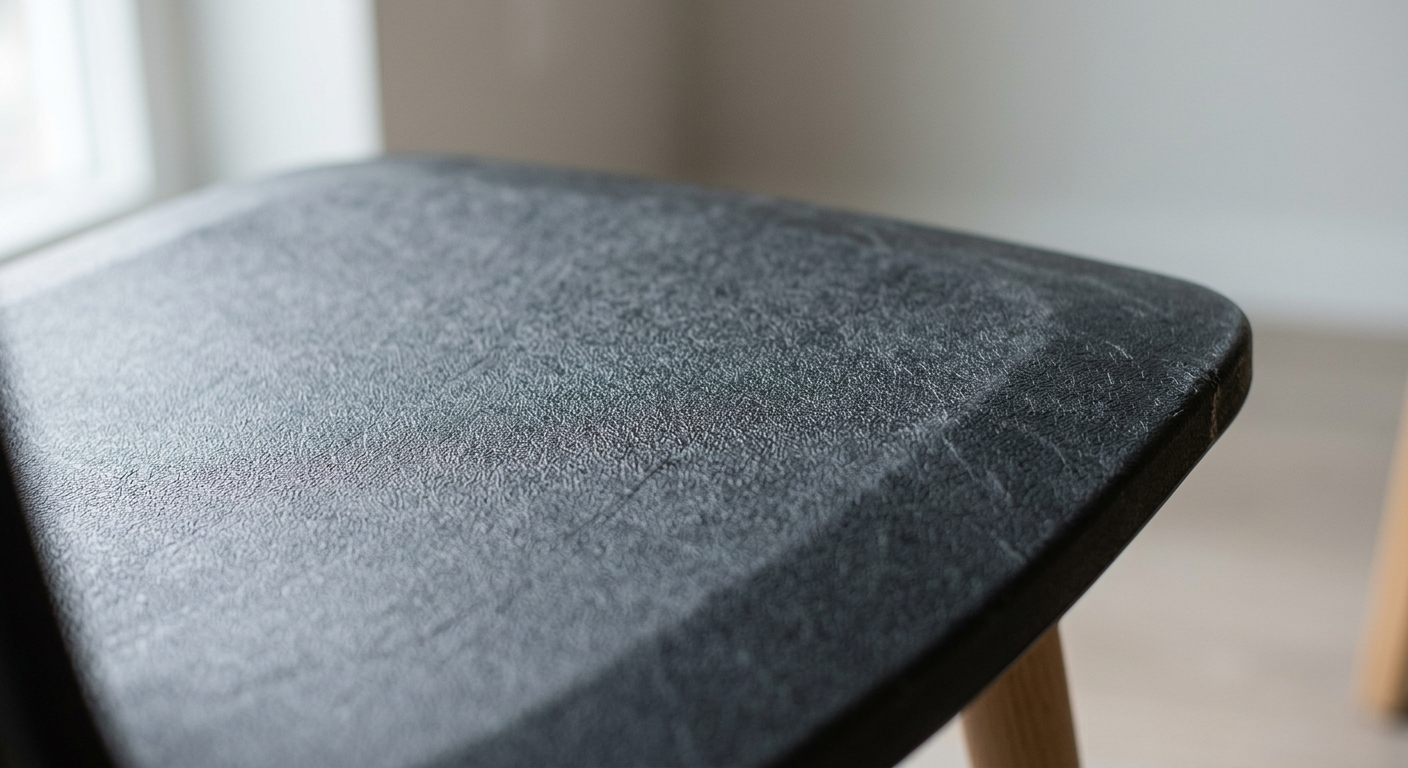
For seating, molded polypropylene shells with a slightly textured (not glossy) finish hide scuffs and clean up with basic disinfectant wipes — critical in shared training environments where multiple groups rotate through the same room daily. Fabric-upholstered seats look nicer for executive training sessions, but they absorb spills and require far more maintenance. Save fabric for boardroom-style rooms with lower turnover, similar to the logic in choosing conference room chairs people actually want to sit in.
Real-World Example: A Corporate Training Center’s Furniture Rebuild
A mid-size corporate training center running 6 back-to-back sessions a day, 5 days a week, replaced its upholstered task chairs after just 14 months. The fabric had worn through on the seat pans, and three chairs had cracked plastic armrests from students leaning on them while packing up.
The replacement order shifted entirely to welded-steel stacking chairs with polypropylene shells and HPL folding tables. Eighteen months later — with the same daily session volume — zero structural failures and only minor surface scuffing. The lesson wasn’t that the original furniture was low-quality; it simply wasn’t built for the use case. Matching furniture type to actual traffic patterns matters more than brand reputation.
Stacking and Storage: The Overlooked Durability Factor
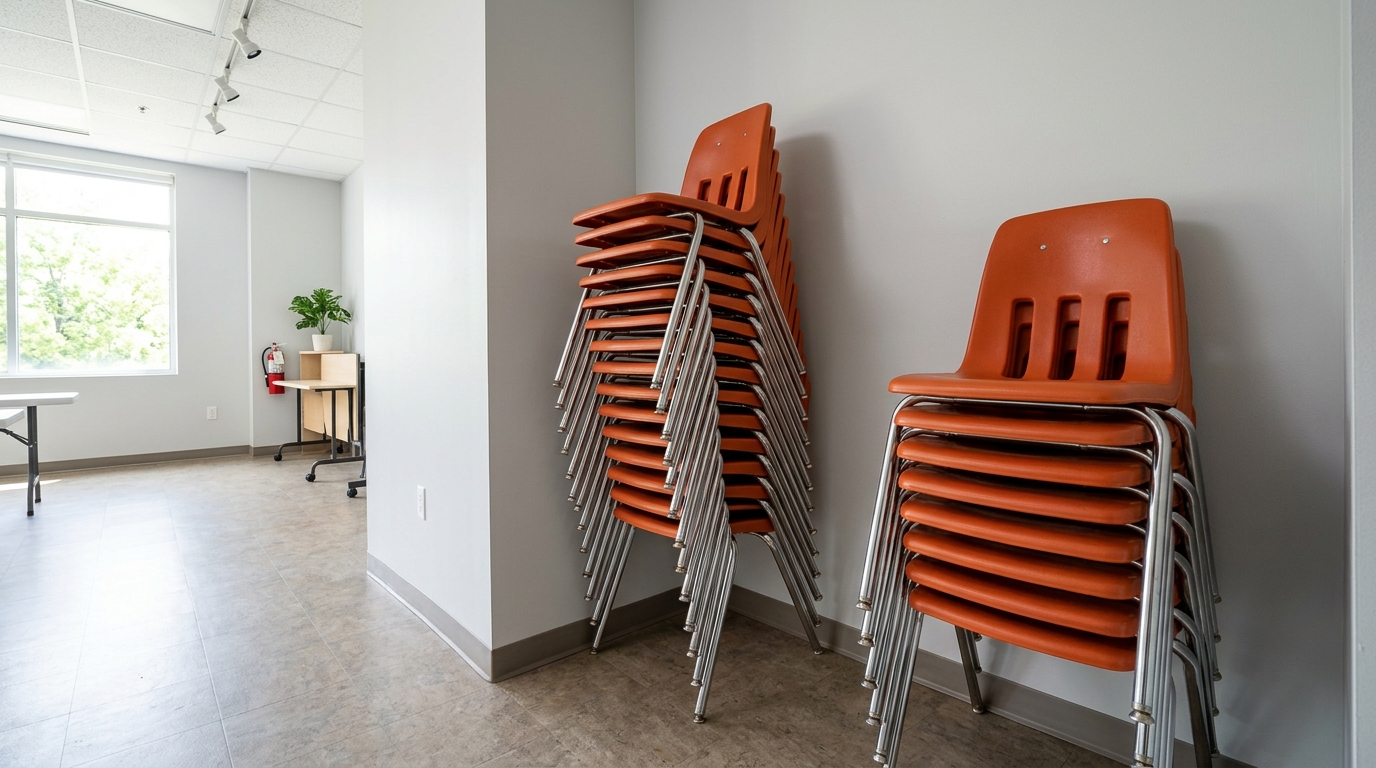
Chairs that get stacked daily need reinforced stacking points — usually a bumper or lip near the seat edge that prevents shell-on-shell contact. Without that detail, repeated stacking chips the finish and eventually cracks the shell at the stress point. It’s a small design feature that most buyers never check until it’s too late.
Nesting tables (where tabletops slide under one another for storage) reduce floor damage compared to folding tables that get dragged to storage rooms. If your training center reconfigures rooms multiple times a week, prioritize nesting or mobile-cart storage systems over traditional folding designs — the wheels alone save significant wear on both furniture and flooring.
Weight Ratings: Why the Number on the Spec Sheet Isn’t the Whole Story
Manufacturer weight ratings for classroom chairs are typically tested under static, seated conditions — not the dynamic loads of someone leaning back, shifting weight, or bumping into the chair while walking past. A chair rated for 275 lbs static might fail well below that under repeated dynamic stress, which is exactly the pattern in high-traffic training rooms. This mirrors the gap explained in the real weight capacity of office chairs — the same testing gap applies to classroom seating.
Ask suppliers for dynamic load testing data, not just static BIFMA numbers, if your training center serves a wide range of body types and usage intensity.
Tables: Edge Banding and Leg Mechanisms Matter More Than Tabletop Thickness
Buyers obsess over tabletop thickness, but edge banding is where most tables actually fail first. PVC edge banding that’s heat-sealed (not glued) resists peeling from constant bumping and cleaning-chemical exposure — glued banding starts lifting within a year in busy training rooms.
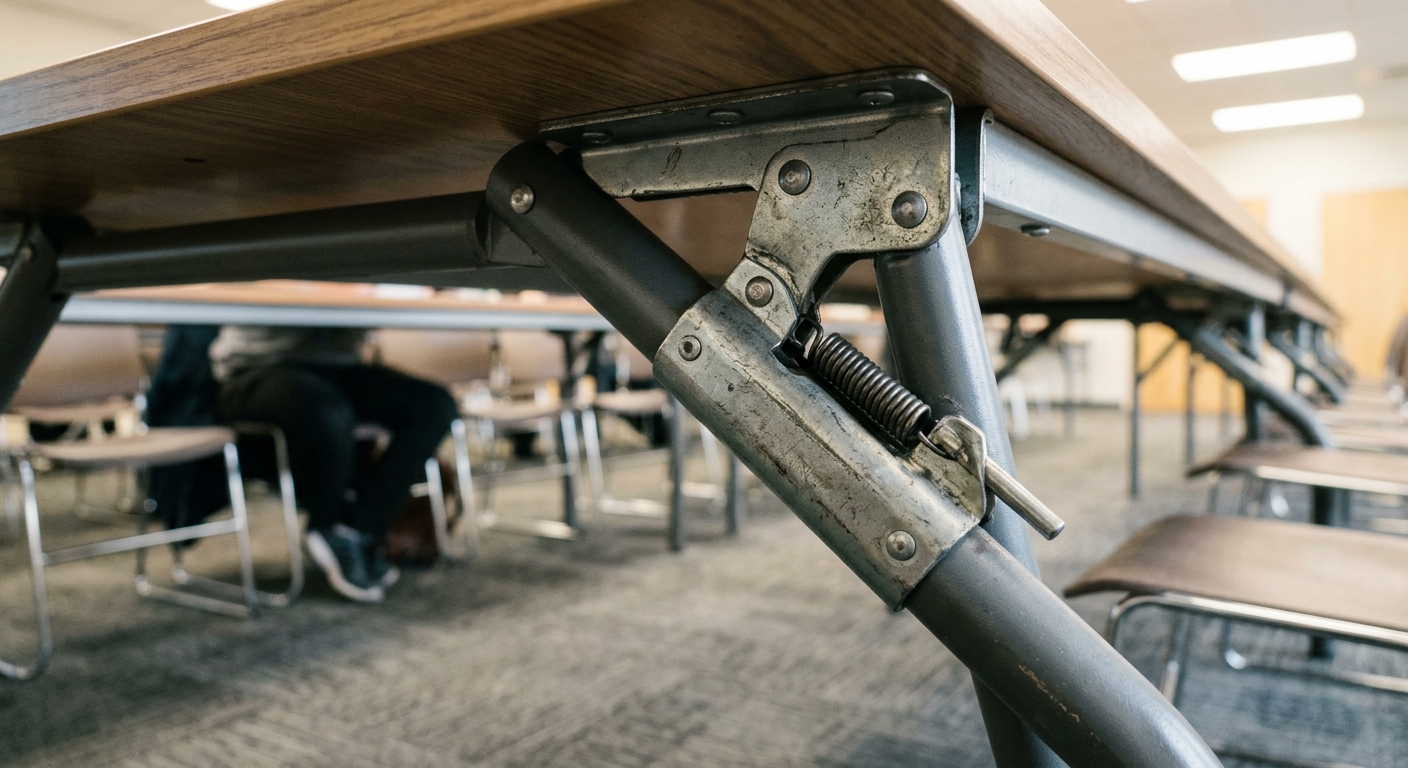
Folding leg mechanisms should have a positive-lock design, not just a spring clip. Spring-clip locks loosen with repeated folding cycles and eventually let tables collapse mid-use — a real safety issue, not just an inconvenience. If your center folds and stores tables more than twice a week, this detail alone justifies paying more per unit.
When Modular or Mobile Furniture Beats Fixed Setups
Training centers that run multiple session types — lectures, breakout groups, hands-on workshops — benefit from mobile furniture on locking casters more than fixed classroom rows. The flexibility reduces the wear-and-tear of manual dragging, which is one of the top causes of frame damage over time.
This same principle shows up in office environments too: see how modular furniture systems adapt to changing space needs. The underlying logic is identical — furniture designed to move survives movement better than furniture forced to move.


