
Furnishing a Coworking Space: Layout, Durability, and Member Retention in 2026
- 28 May, 2026
- Guides
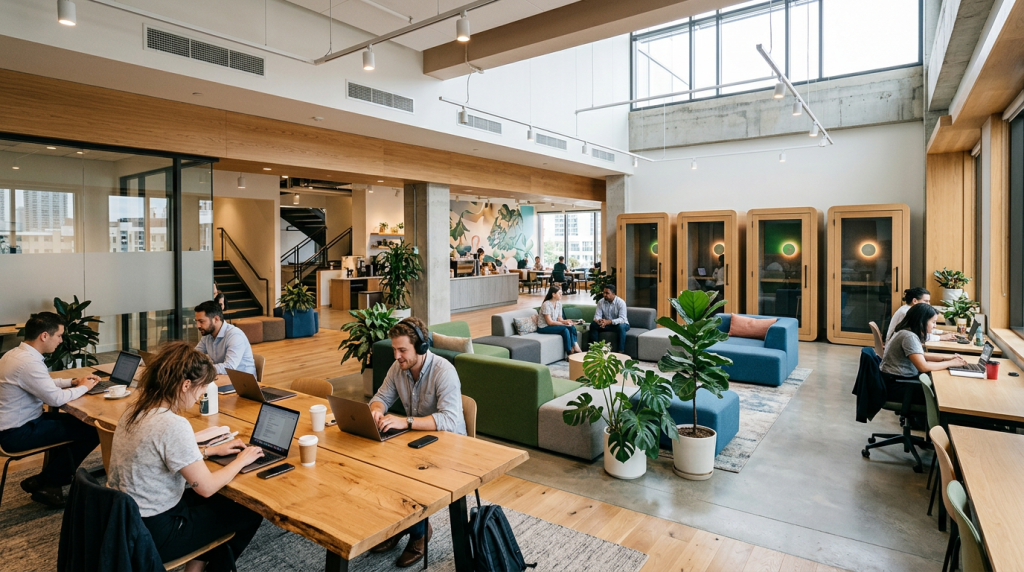
Furnishing a coworking space in 2026 comes down to three things: zoned layouts that match how members actually work, commercial-grade furniture built for 10x the wear of a private office, and comfort details that turn trial memberships into annual renewals. Get those right and retention climbs well above the industry average of roughly 60%. Get them wrong and you'll replace chairs every 18 months while watching members quietly migrate to the competitor down the block.
Start With Zones, Not Furniture
The biggest mistake operators make? Ordering furniture before mapping zones. You end up with beautiful desks scattered across a floor that has no acoustic logic and no behavioral flow.
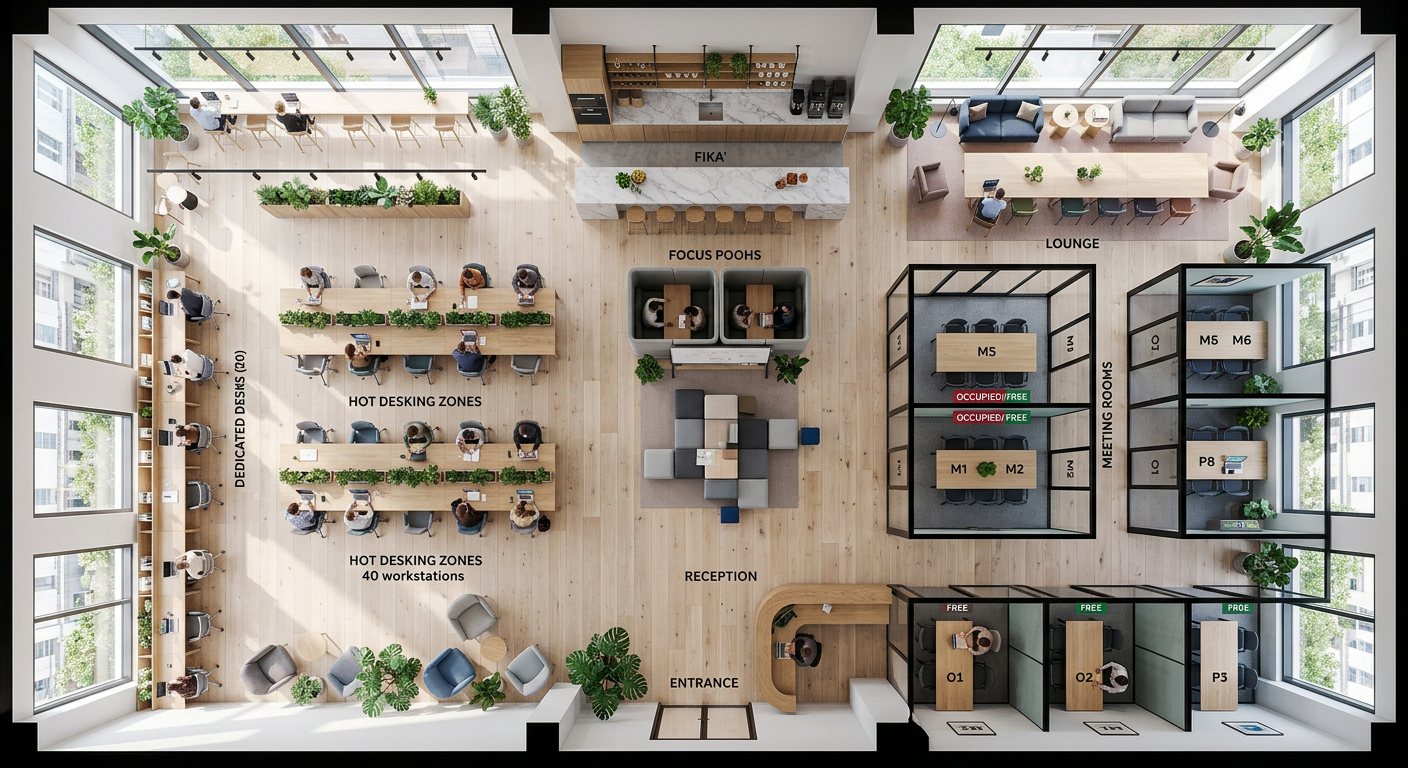
A healthy coworking floor has at least four distinct zones: a quiet focus zone (no calls, no meetings), a collaborative open zone (hot desks, casual conversation allowed), a call and video zone (phone booths, small huddle rooms), and a social zone (cafe, lounge, events). Each zone demands different furniture. Putting a plush lounge sofa 3 meters from a quiet desk is how you lose your serious freelancers within a month.
A practical ratio we see working well in 2026: 40% dedicated and hot desks, 25% meeting and call rooms, 20% lounge and social, 15% private offices. Adjust based on your member mix — developer-heavy spaces need more quiet, sales-heavy spaces need more call booths.
For deeper layout thinking, our guide on office design and productivity covers the zoning logic in more detail.
Why Commercial-Grade Durability Isn't Optional
A coworking chair gets sat in by 3 to 5 different bodies per day. A private-office chair gets one. That's a 3–5x wear multiplier — and residential or light-commercial furniture simply won't survive it.
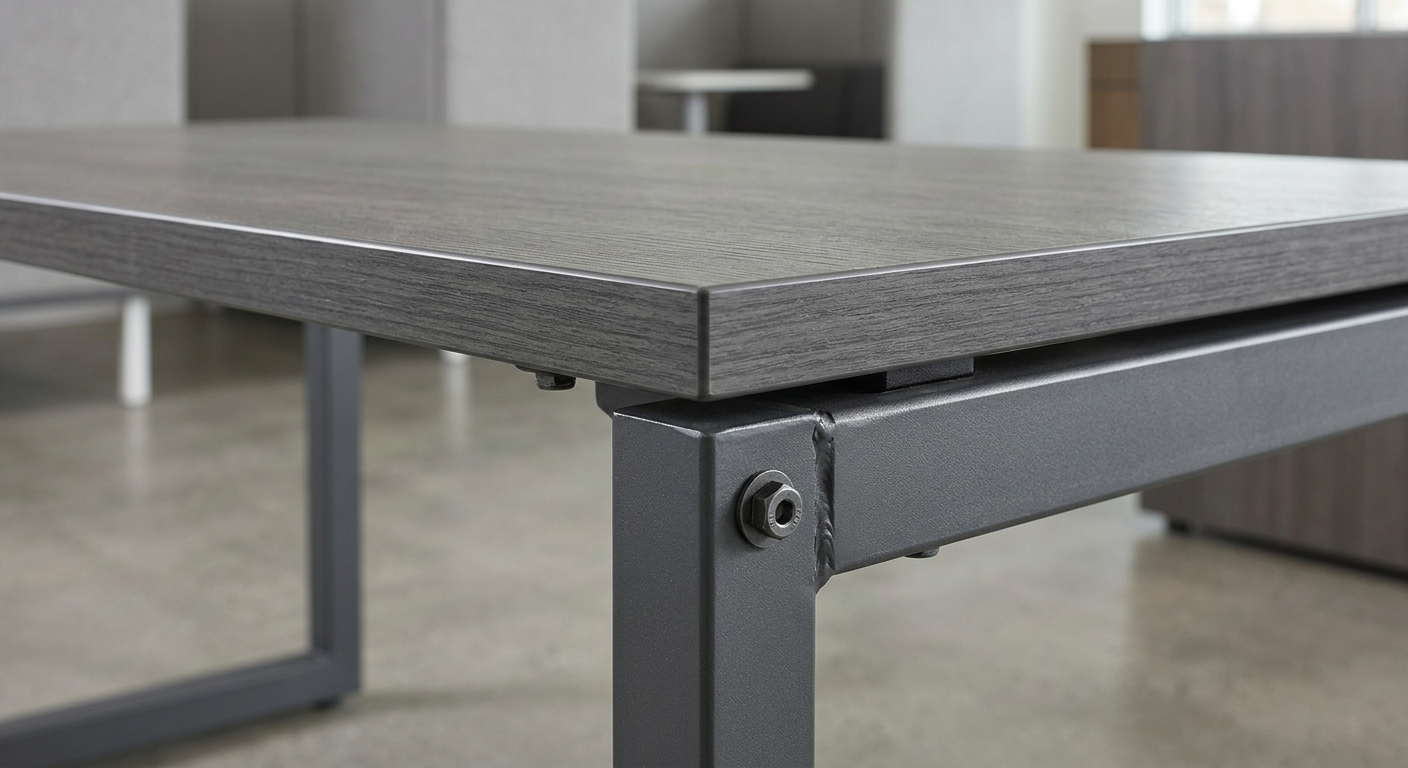
Look for BIFMA X5.1 certification on task chairs with a minimum 150,000-cycle test rating. For desks, commercial-grade laminate (0.8mm minimum thickness) or solid-surface tops outlast the 0.4mm residential laminate that chips within a year. Steel frames should be 1.5mm wall thickness minimum, not the 1.0mm you'll find in budget import furniture.
For instance, one operator we worked with in Singapore swapped their original “designer” wood-veneer hot desks for commercial HPL-surfaced benches after watching 30% of the tops warp, stain, or chip within 14 months. The replacement cost more upfront — but the new tops are entering year four with no visible wear.
If you're still weighing material trade-offs, our guide to office furniture materials breaks down the durability specs in detail.
The Chair Is the Single Biggest Retention Lever
Ask any departing member why they left and “my back started hurting” ranks in the top three answers every time. Chairs matter more than the coffee machine, more than the view, more than the Wi-Fi speed once it's above 500 Mbps.
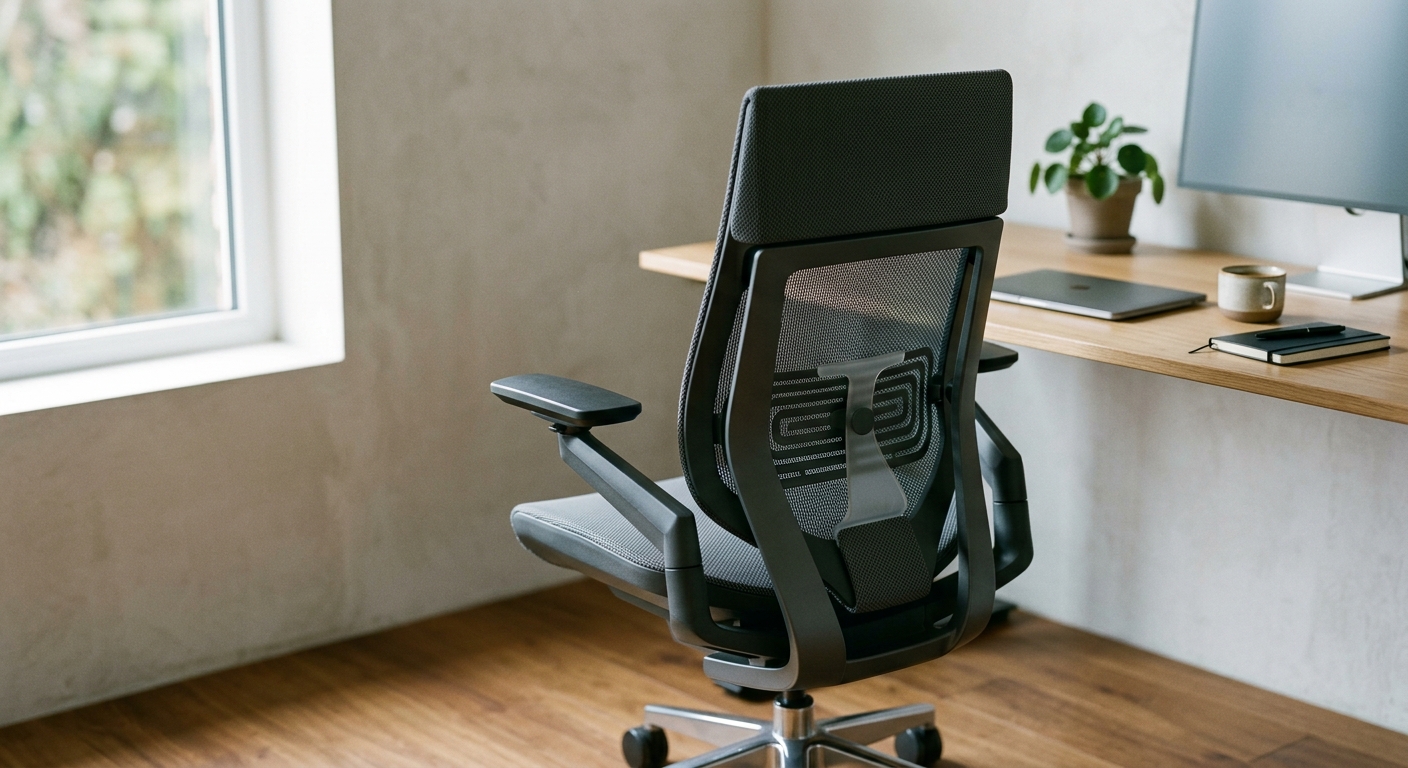
For hot desks, invest in mid-back mesh task chairs with adjustable lumbar, seat depth, and 3D armrests — roughly $250–$400 per unit in 2026 for commercial-grade quality. For dedicated desks, go further: full ergonomic chairs with headrests and memory foam seat pads ($400–$700 range). Skip the bargain $80 mesh chairs. They'll cost you members.
One number worth tattooing on your procurement brief: the incremental cost of a $400 chair over a $150 chair, amortized across 5 years and 4 daily users, is about 4 cents per user per day. Losing one member over chair discomfort costs you $300+ in monthly revenue.
Desk Sizing and Density: The Math That Actually Matters
Too tight and members feel packed in. Too loose and your revenue per square meter collapses. The sweet spot in 2026 sits between 7–9 sqm per workstation in open zones, 10–12 sqm for dedicated desks, and 14–18 sqm for private office seats.
Desk widths: 1200mm is the absolute minimum for a hot desk with a laptop plus external monitor. Go to 1400mm for dedicated desks where members set up semi-permanent second monitors, docks, and personal items. Bench depth should be 700mm — 600mm feels cramped once a monitor is added.
Our desk sizes and dimensions guide has the full measurement breakdown if you're planning a build-out. And don't overlook the space optimization principles that matter most when you're maximizing a smaller footprint.
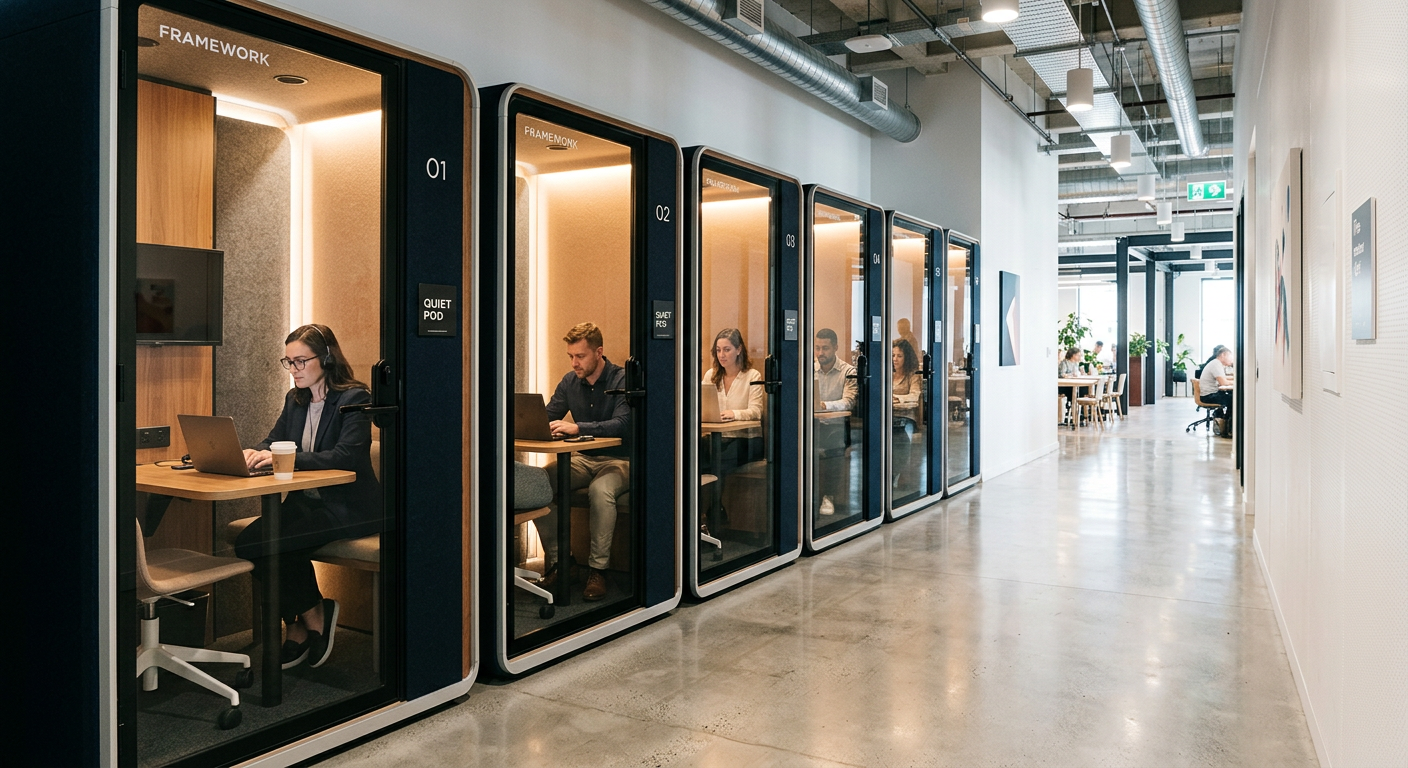
Phone Booths and Focus Pods: The 2026 Must-Have
Five years ago phone booths were a nice-to-have. In 2026 they're deal-breakers. Video calls dominate every knowledge-worker's day, and members will cancel memberships over a three-booth waiting queue.
Rule of thumb: one acoustic phone booth per 8–10 active members. Standing booths (for 15-minute calls) are cheaper and turn over faster. Seated pods (for 45+ minute calls) need ventilation, a desk surface, power, and ideally a small monitor input. Acoustic rating should be NIC 30 minimum — anything less and the “privacy” is illusion.
For instance, a Berlin operator we advised added six additional seated pods after tracking that 40% of member complaints mentioned call availability. Net retention jumped 11 percentage points in the following quarter. The pods paid for themselves in eight months.
Standing Desks: Now an Expectation, Not an Upgrade
In 2026, premium and mid-tier coworking spaces are expected to offer sit-stand capability on at least 30% of dedicated desks. Members notice when it's absent.
Electric height-adjustable frames have dropped to around $280–$380 per unit at commercial-grade quality with 100kg lift capacity and dual motors. For shared hot desk zones, consider fewer standing desks clustered in one area rather than spreading them thinly — it's easier on the budget and creates a recognizable “standing zone”.
Worth reading alongside this: our piece on the impact of standing desks on productivity and health has the research data you can cite to members and investors.
Lounge and Soft Seating: The Social Glue
Coworking isn't just desks. The lounge is where members run into each other, start conversations, and form the community bonds that make them stay. Underinvest here and you have an expensive library, not a coworking space.
Modular sofa systems outperform traditional three-seaters in flexibility and durability — you can reconfigure them for events, replace individual damaged modules, and scale as membership grows. Commercial-grade upholstery should be rated 50,000+ Martindale rubs. Bouclé looks great in photos but pills within months under coworking use; opt for tight-weave commercial fabrics or high-quality leather alternatives instead.
For more on this, our guide to modular sofa systems for modern offices covers the configurations that work best.

Small Details That Quietly Drive Renewals
The big furniture gets attention. The small stuff drives the quiet satisfaction that shows up in renewal rates.
- Cable management: grommets on every desk, under-desk trays, charging built into lounge side tables. Dangling cables are the visual equivalent of a dirty bathroom.
- Personal storage: lockers for hot deskers, file pedestals for dedicated members. $150 per locker is cheap insurance against the #1 hot desk complaint.
- Task lighting: ambient ceiling light alone isn't enough for 9-hour workdays. Adjustable desk lamps at dedicated stations signal care.
- Plants and biophilic touches: members consistently rate “greenery” in their top 5 amenities. Real plants beat plastic — even low-maintenance pothos and snake plants.
None of these are expensive individually. Together they create the feeling of a space that was designed for humans, not spreadsheets.
Budget Benchmarks for 2026 Fit-Outs
Ballpark figures we're seeing from operators launching new locations in 2026:
- Economy tier: $1,200–$1,800 per workstation (functional commercial-grade, basic lounge)
- Mid tier: $2,000–$3,200 per workstation (sit-stand desks, better chairs, designed lounge zones)
- Premium tier: $3,500–$5,500+ per workstation (custom millwork, top-tier ergonomics, architectural phone booths)
These include desks, chairs, storage, proportional share of meeting rooms, lounge, and phone booths — not construction, HVAC, or tech. A 1,500 sqm mid-tier space with 150 workstations typically lands between $300k–$480k in furniture alone.
Skimping on chairs and phone booths to save 15% upfront is the classic false economy. You'll spend the difference on replacements and churn within 24 months.
Building a Space Members Want to Stay In
Great coworking furniture isn't about picking the trendiest pieces — it's about matching furniture specs to the behavioral demands of each zone, buying commercial-grade durability that survives the 3–5x wear factor, and obsessing over the ergonomic and acoustic details that members feel without being able to articulate. Do that and your retention numbers do the talking.
If you're planning a new coworking build-out or refurbishing an existing location in 2026, our team at vision-furniture designs and manufactures commercial-grade coworking furniture specifically for this use case — from benching systems to acoustic phone booths. Take a look at our office furniture solutions or get in touch to discuss specifications and volume pricing.


