
The Real Weight Capacity of Office Chairs: Why Manufacturer Ratings Mislead You
- 22 May, 2026
- Guides
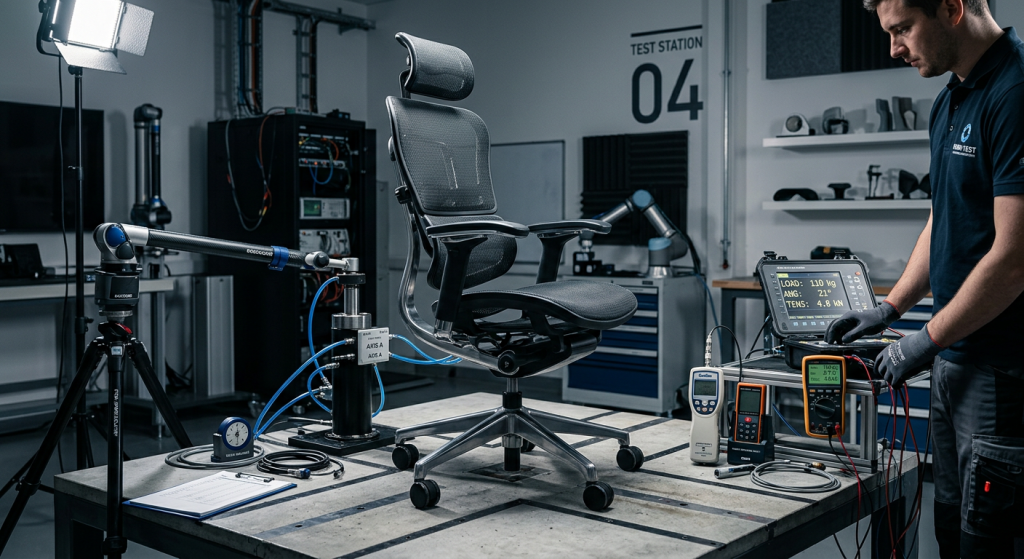
Manufacturer weight ratings on office chairs are almost always overstated for real-world use — a chair labeled 250 lb is tested under static, controlled conditions that ignore how humans actually sit, shift, and lean over an 8-hour day. The honest rule of thumb: subtract 20–25% from any published capacity to get a realistic daily-use ceiling, and look at the BIFMA test class, not the headline number, to predict how the chair will hold up.
What the Rating on the Box Actually Measures
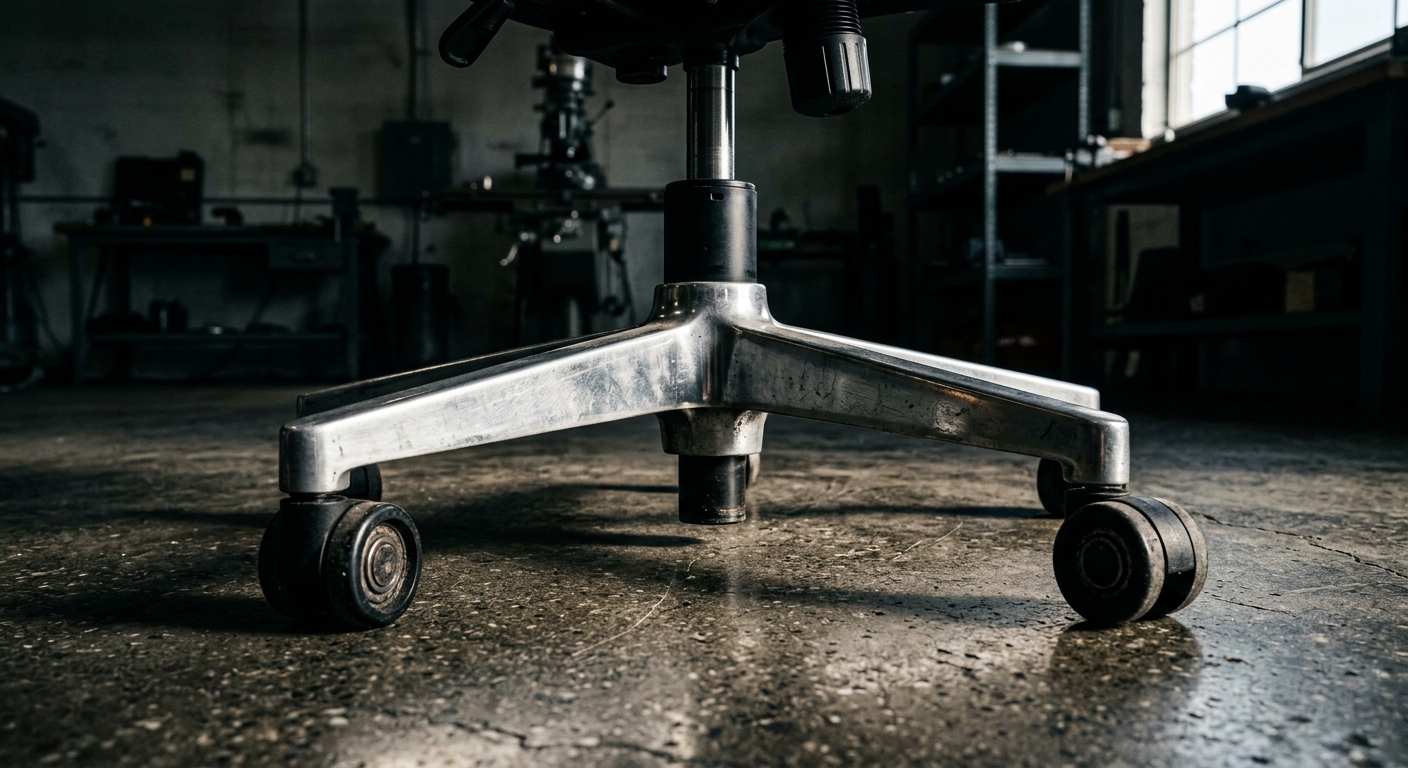
That “Supports up to 275 lb” sticker isn't a usage guarantee. It's a static load tolerance derived from BIFMA X5.1 — the North American test standard for office seating. The chair sits in a rig, a weighted dummy presses straight down, and engineers verify nothing snaps.
The problem? Real sitting isn't static. You lean back. You roll across a hard floor. You drop into the seat after lunch. You shift your weight onto one armrest while reaching for a phone. Each of those motions multiplies peak force on the base, gas cylinder, and tilt mechanism — sometimes by 2–4x the user's bodyweight.
So when a manufacturer advertises 300 lb capacity, that's the load the chair survived in a lab. It is not the weight at which the chair will last seven years under daily abuse.

The Three BIFMA Tests That Matter Most
If you only learn three test protocols, learn these. They expose the weak points every weight rating glosses over.
Drop Test (Section 7)
A 225 lb sandbag is dropped onto the seat from a 6-inch height — repeated until failure or for a set number of cycles. A budget chair rated for 250 lb might pass 10 drops; a commercial chair targets 300,000+ cycles of equivalent dynamic loading.
Cyclic Load Test
The chair is loaded and unloaded thousands of times to simulate years of sit-downs. This is where cheap welds, plastic bases, and underspec'd gas lifts crack — usually long before the seat foam wears out.
Tilt Mechanism Fatigue
The recline is engaged and released 120,000+ times for commercial-grade chairs. A heavier user accelerates wear here exponentially because the tilt spring carries more load every cycle.
A chair that aces all three at full rating is genuinely heavy-duty. A chair that passes only the static load test is, in practical terms, a 6-month chair for a 280 lb user.
Why the Gas Cylinder Is the Real Bottleneck
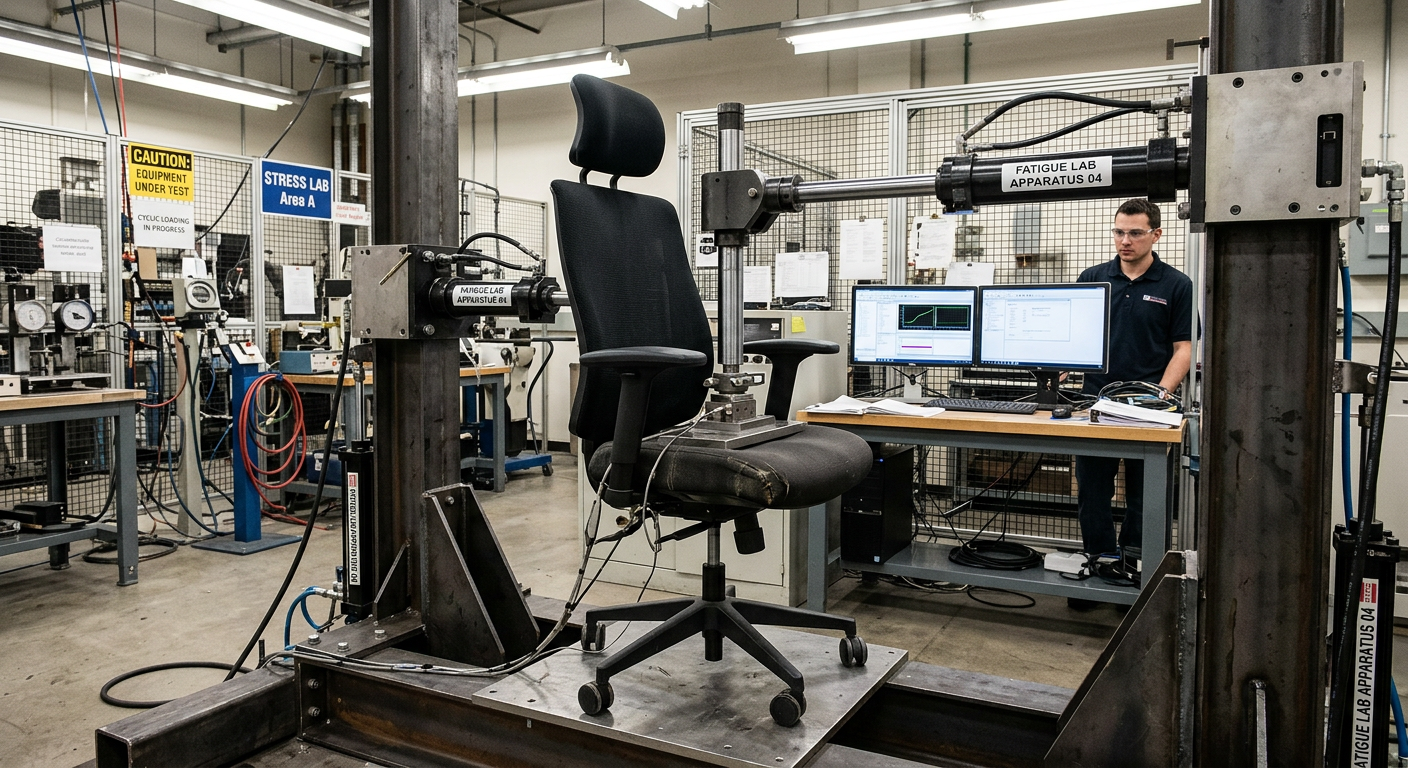
Here's something most buyers never check: the pneumatic cylinder is the single most common failure point on heavily-loaded office chairs, and it's classified by BIFMA into four classes.
- Class 1: Light residential. Avoid for any office use.
- Class 2: Light commercial. Marginal at best.
- Class 3: Standard commercial. Fine for users under ~230 lb.
- Class 4: Heavy-duty commercial. The only honest choice for users over 250 lb or 8+ hour shifts.
A chair can be marketed as “heavy-duty 400 lb capacity” while shipping with a Class 3 cylinder. Six months in, the cylinder starts sinking — the seat slowly drops while you're working — and suddenly your “400 lb chair” needs a $40 part swap. Always ask the manufacturer for the cylinder class in writing.
Dynamic Load: The Math Manufacturers Hope You Don't Do
Sitting down isn't gentle. When a 240 lb person flops into a chair from standing, the peak instantaneous load on the base can exceed 600 lb for a fraction of a second. Engineers call this the impact factor.
A realistic load multiplier looks like this:
- Gentle sit: 1.2x bodyweight
- Normal sit: 1.8x bodyweight
- Drop-in sit: 2.5–3x bodyweight
- Leaning back hard: 1.5x bodyweight concentrated on the back tilt
That's why we suggest the 20–25% derating: a 300 lb static rating becomes a comfortable 225–240 lb dynamic-use ceiling. For a procurement manager outfitting a 50-person office, this matters. If 10% of your team weighs over 230 lb, “standard” 250 lb chairs will start failing in years 2–3, not year 7.
A Real-World Case: Why the 'Big & Tall' Label Often Isn't Enough
A logistics company we worked with bought 80 chairs rated at 350 lb for their dispatch floor — a 24-hour operation with three shifts of operators averaging 220 lb. The chairs were marketed as “big & tall” and looked the part: wider seat, extra padding, beefy arms.
Within 14 months, 23 chairs had failed. The pattern was almost identical: tilt tension knobs stripped, then the recline mechanism collapsed. Why? The chairs were rated for 350 lb static use, but BIFMA tilt testing had only been run to 60,000 cycles. With three operators per chair per day, each chair was hitting 60,000 recline cycles in roughly 10 months.
The replacement chairs they specified — same 350 lb rating, but with documented 200,000-cycle tilt testing and Class 4 cylinders — are now four years in with zero mechanism failures. Same headline number. Completely different chair.
The lesson: in any 24/7 or multi-shift environment, ask for the cycle counts, not the capacity. For more on this kind of high-intensity use case, our open plan vs. private office layout breakdown covers how furniture stress varies by environment.
Base, Casters, and Armrests: The Quiet Failure Points
The 5-Star Base
Nylon bases are fine up to about 250 lb of user weight. Glass-reinforced nylon stretches that to roughly 300 lb. Above that, you want polished aluminum or cast steel — not because nylon will shatter immediately, but because under repeated dynamic loading it slowly deforms, throwing the chair out of plane. You'll feel it as a subtle wobble that gets worse.
Casters
Standard 50mm casters are rated for ~75 lb each (5 casters × 75 = 375 lb total system). Sounds like plenty until you remember weight isn't evenly distributed when you lean. Heavy users on hard floors should specify 60mm or 65mm casters with steel bearings.
Armrests
Armrests aren't part of the seat weight rating at all — but they're routinely used as leverage when standing up. A 220 lb user pushing down through one armrest exerts 150+ lb of point load on a single mounting bracket. Plastic-mounted armrests fail here first. Look for steel-cored arms bolted through the seat pan.
How to Read a Spec Sheet Without Getting Fooled
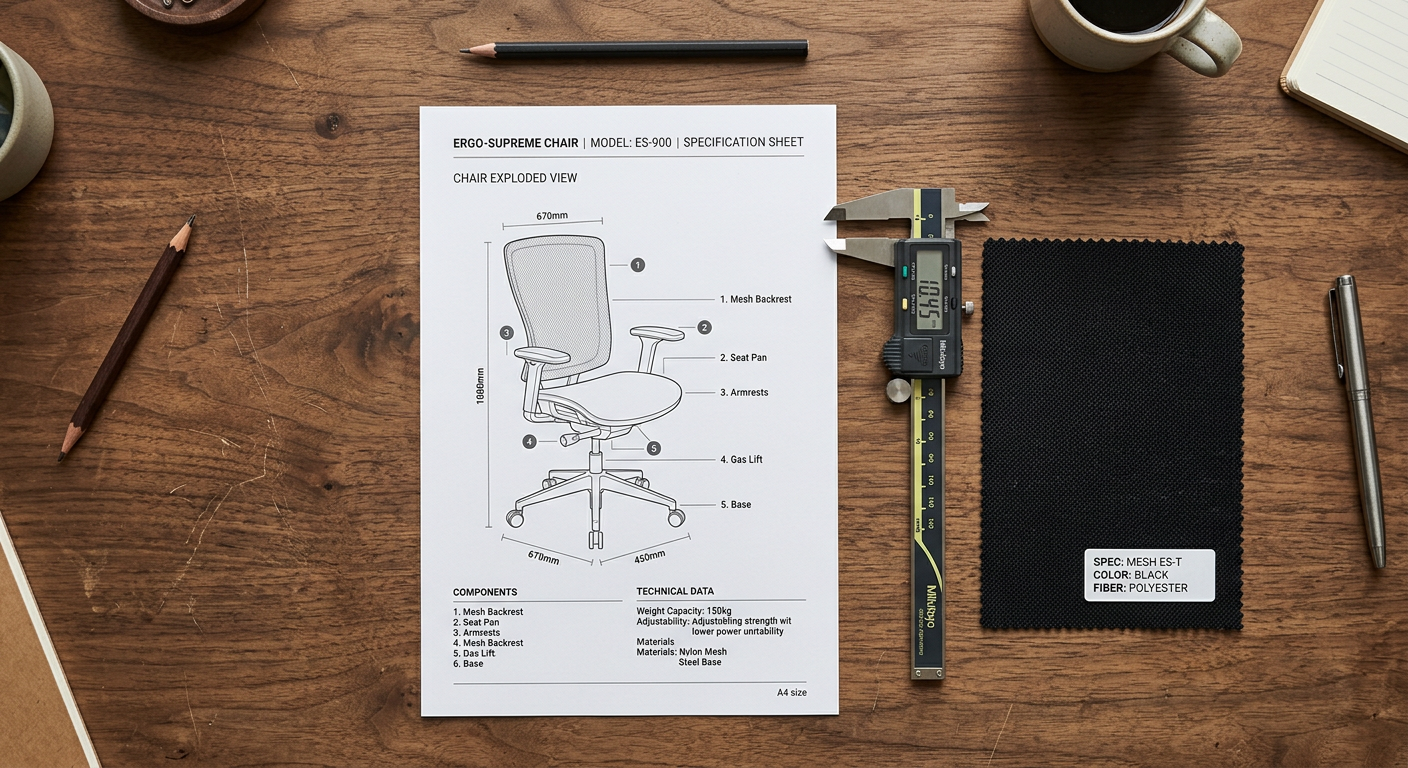
When you're evaluating a chair, the marketing page is useless. Go straight to the technical data sheet — and if the vendor can't provide one, that's your answer. Here's what to look for:
- BIFMA X5.1 compliance stated by test cycle count, not just “BIFMA certified”
- Gas cylinder class (you want Class 4 above 250 lb daily use)
- Base material spelled out (aluminum vs. nylon vs. reinforced nylon)
- Mechanism cycle rating — recline, height adjustment, tilt-lock
- Warranty terms by component — many warranties cover the frame for 10 years but the mechanism for only 2
A genuine commercial chair will publish all of this. A residential-grade chair sold as “ergonomic office” will hide behind one big number. The difference between a $280 chair and a $620 chair is almost always in the spec sheet, not the photos. Our practical guide to selecting office furniture walks through how to compare these specs across vendors.
Matching the Chair to the User and the Hours
Weight rating is only half the equation. The other half is duty cycle — how many hours per day, how many days per week, and how many distinct users.
Single user, under 8 hours/day
A 250 lb-rated chair from a reputable manufacturer is honest at user weights up to ~210 lb. Replace at year 7.
Single user, 8–10 hours/day
Step up to a 300 lb-rated chair with Class 4 cylinder regardless of your weight. The duty cycle alone justifies it.
Hot-desking or shared
Spec for the heaviest 90th-percentile user on your floor, then add 50 lb of headroom. Shared chairs experience 2–3x the mechanism cycles of dedicated chairs.
24/7 operations
Intensive-use chairs rated for 400 lb and 300,000+ cycles. This is also where chair quality intersects with retention — the same logic we cover in our piece on furniture's evolution from function to well-being.
Getting Honest Numbers from Your Supplier
Buying office chairs at scale comes down to whether your vendor will put specifics in writing. Here are the four questions that separate serious suppliers from box-shifters:
- What's the cycle count on your BIFMA testing — not just “BIFMA certified”?
- What class is the gas cylinder, and what's its independent rating?
- What's the base material and load rating in isolation?
- Can you provide failure-rate data from existing commercial deployments?
A vendor that answers all four clearly is worth talking to. A vendor that defaults to “Don't worry, it supports 300 pounds” is selling you marketing, not engineering. At vision-furniture, every commercial seating product ships with a full spec sheet covering each of these points, and our team will walk procurement managers through the right configuration for their actual user base and duty cycle. If you're sizing chairs for a new office, a renovation, or a 24/7 operation, browse our commercial seating range or get in touch through our distributor page for a custom quote.


