
Open Plan vs. Private Office: How Furniture Choices Make or Break Each Layout
- 14 May, 2026
- Guides
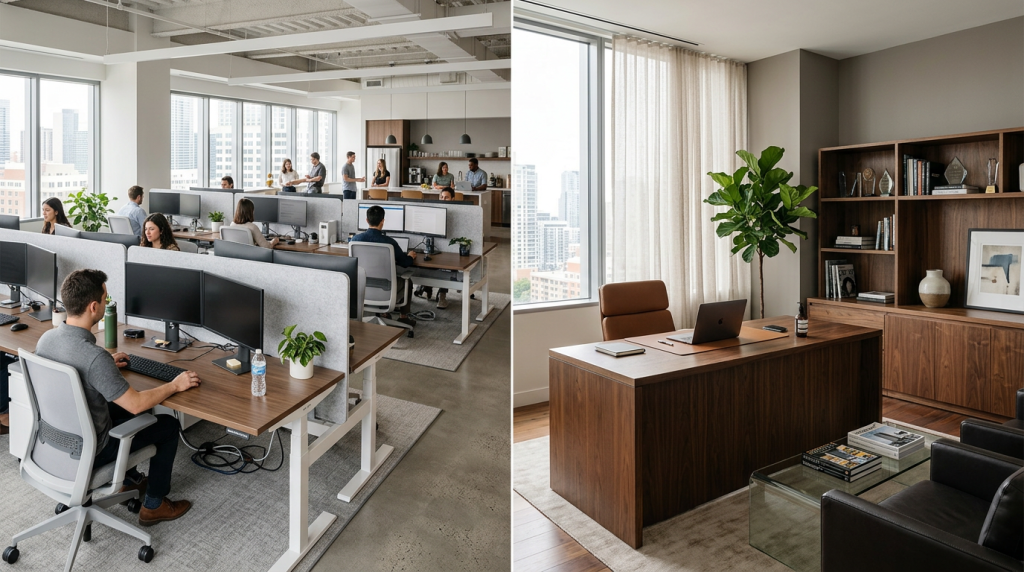
Open plan offices succeed or fail on acoustic furniture, modular zoning, and shared storage — get those wrong and you have a noisy bullpen nobody can think in. Private offices, on the other hand, hinge on ergonomic seating, generous desking, and a few statement pieces that signal authority and create a calm focus zone. Same square footage, completely different furniture playbook.
The Core Difference: Furniture Is the Layout
Walls don't define a modern office — furniture does. In open plan environments, a workstation with a 54-inch acoustic screen, a low credenza, and a phone booth nearby is essentially performing the job that drywall used to do. In a private office, the desk, guest seating, and bookcase establish hierarchy, function, and tone without anyone saying a word.
This is why copying a Pinterest layout almost never works. The pieces have to match the layout's job. A trendy bench desk in a private executive office looks ridiculous. A solid wood partner desk in an open sales floor wastes 40 square feet of expensive real estate. Pick the layout first, then let the furniture do its actual work.
Open Plan: Where Acoustic Furniture Earns Its Keep
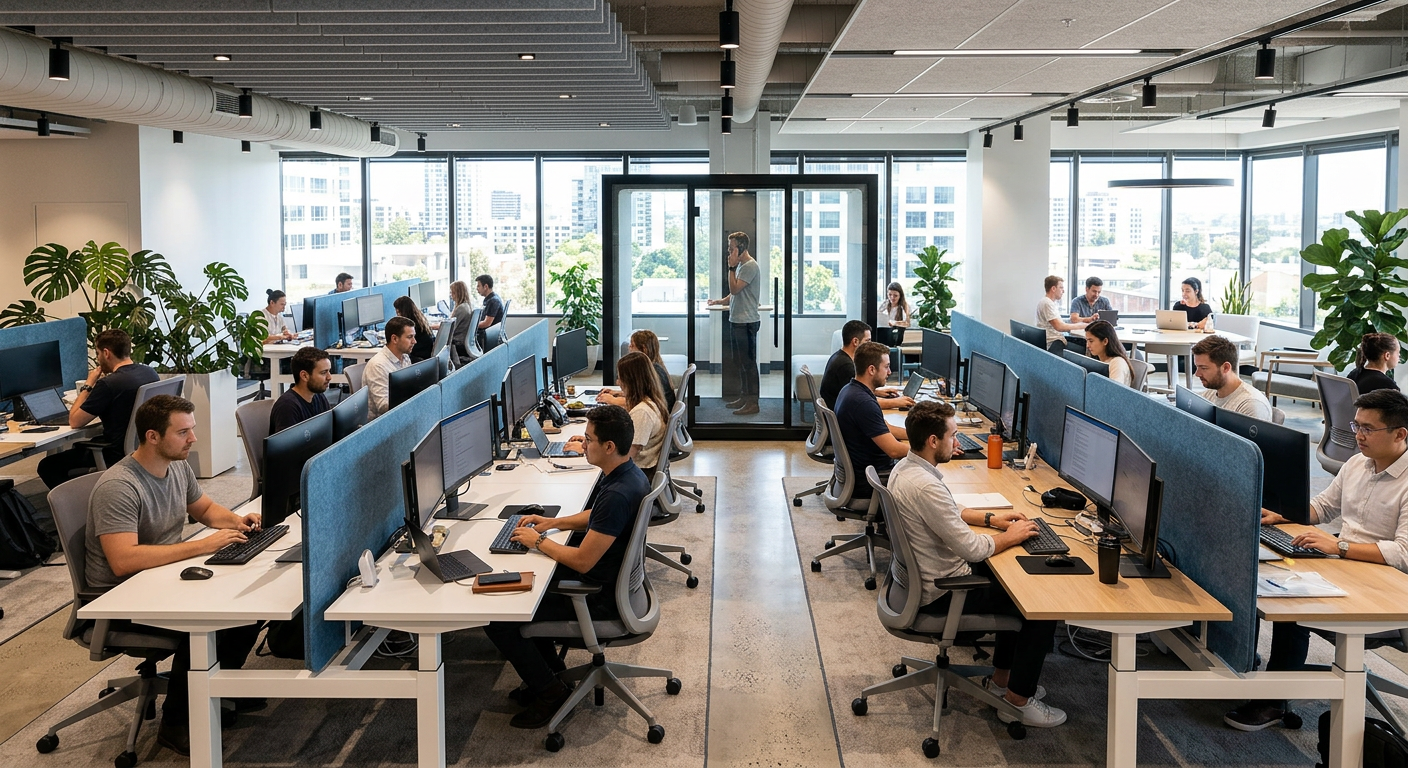
Here's the dirty secret of open plan: most of the complaints aren't about openness — they're about noise. A 2024 Leesman survey found 76% of workers in open offices cite acoustic distraction as their top productivity killer. Fix the sound, and most of the layout's downsides disappear.
What actually works
- Acoustic desk screens with NRC (Noise Reduction Coefficient) ratings of 0.6 or higher — fabric-wrapped PET felt is the sweet spot for price and performance.
- Tall storage units (60–72 inches) placed perpendicular to desk rows to break up sound travel.
- Upholstered phone booths or single-person pods — one booth per 8–10 desks is the rule of thumb.
- Sound-absorbing ceiling baffles, which technically aren't furniture, but most furniture vendors will spec them as part of a package.
For instance, a 40-person marketing agency we worked with in Austin retrofitted their open floor with PET felt screens between every two desks plus four phone booths along the perimeter. Reverb time dropped from 1.4 seconds to 0.6 seconds, and overheard-conversation complaints fell by roughly two-thirds. The fix cost about $32,000 — far cheaper than rebuilding offices.
If acoustics are your top concern, our guide to the best cubicles for open offices goes deeper on screen heights and panel materials.
Private Offices: Where Ergonomics and Statement Matter More
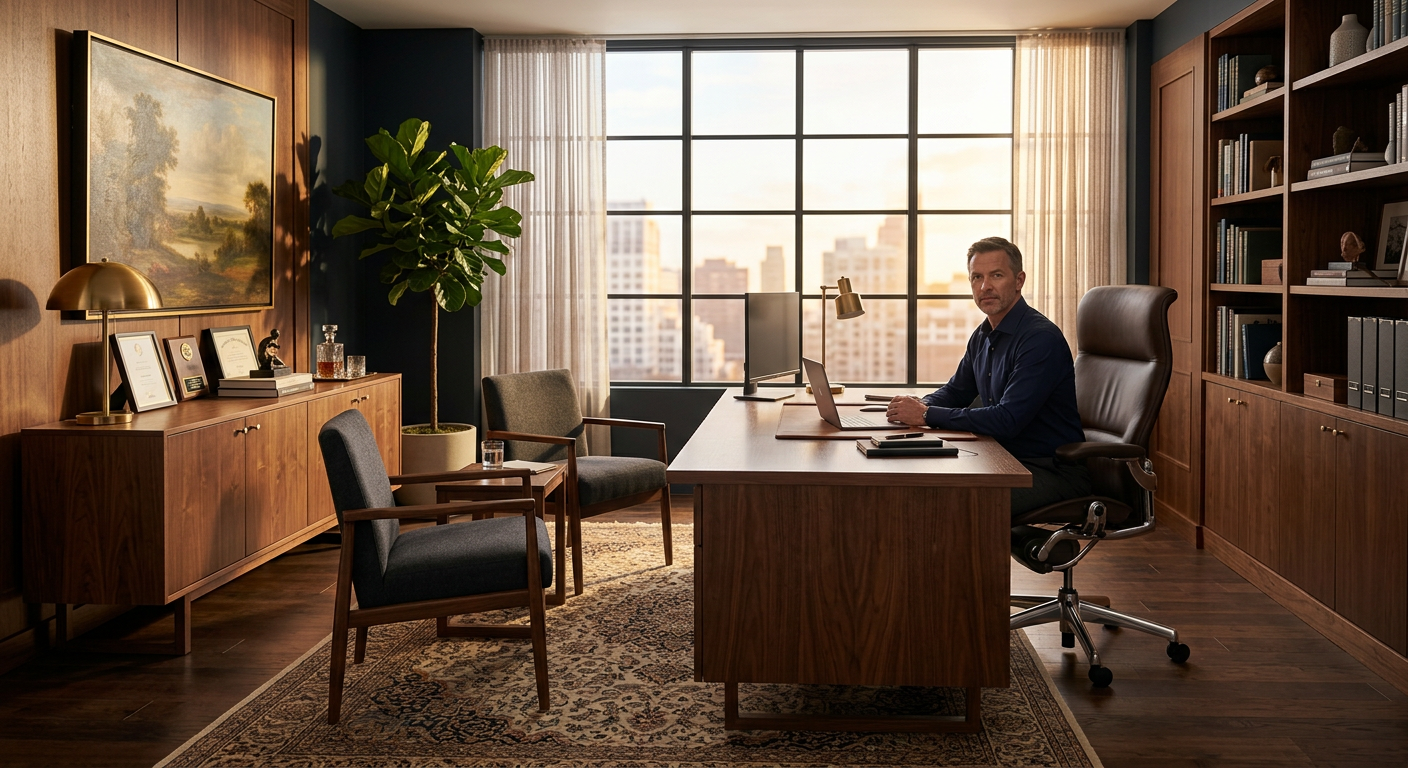
In a private office, you only need to furnish one person — so spend the money. The math is simple: an executive earning $180k who loses two hours a week to a bad chair costs the company roughly $9,000 a year in wasted output. A $1,800 ergonomic chair pays for itself in ten weeks.
The non-negotiable list
- Task chair with adjustable lumbar, seat depth, and armrests — minimum BIFMA certification.
- Desk surface of at least 60" x 30", ideally height-adjustable. See our desk sizing guide for proper dimensions.
- Guest seating for two — lounge chairs or pull-ups, depending on how often clients visit.
- Credenza or low storage doubling as a printer surface and personal display area.
For C-suite spaces, the calculus shifts toward presence. A solid walnut desk and a leather executive chair aren't vanity — they're cultural signaling for clients walking through the door. Our CEO office design guide breaks down the spec hierarchy in detail.
Side-by-Side: Open Plan vs. Private Office Furniture
Here's how the two layouts compare across the criteria that actually drive purchasing decisions.
| Criteria | Open Plan | Private Office |
|---|---|---|
| Furniture cost per seat | $1,200–$2,800 | $2,500–$8,000+ |
| Acoustic priority | Critical | Moderate |
| Density (sq ft per person) | 60–100 | 150–250 |
| Best for | Collaboration, sales, agile teams | Focus work, leadership, confidential roles |
| Reconfiguration ease | High ✓ | Low ✗ |
| Privacy level | Low to medium | High |
| Typical lead time | 4–8 weeks | 6–12 weeks |
| Wear & replacement cycle | 5–7 years | 8–12 years |
The numbers tell a clear story: open plan costs less per seat and reconfigures faster, but you'll replace it sooner and you'll spend more on acoustic mitigation than you expect. Private offices are slower and pricier upfront but age more gracefully.
The Hybrid Reality: Most Offices Need Both
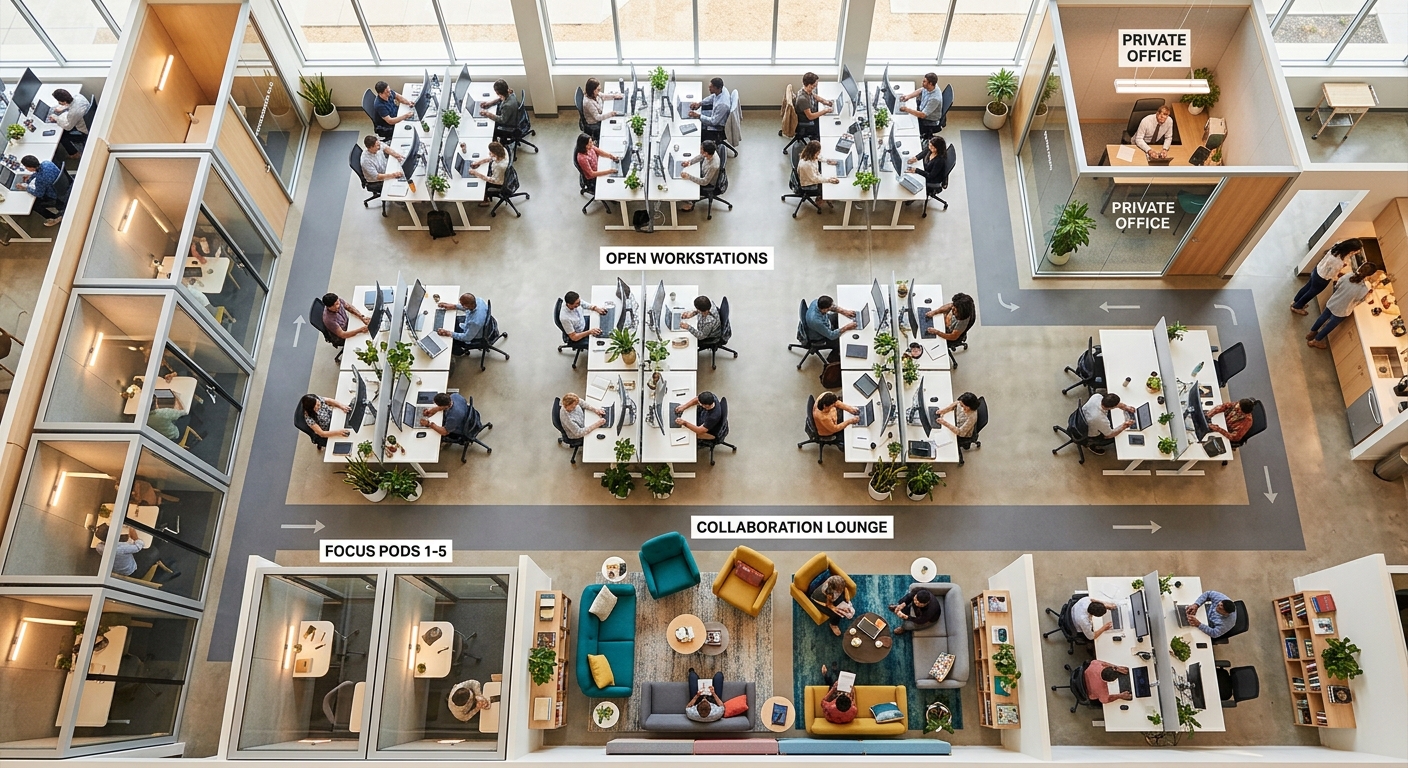
Pure open plan is dying. Pure private-office floors are rare outside law firms. What works in 2026 is a zoned hybrid: roughly 60–70% open collaborative space, 20–30% enclosed focus rooms and offices, and 10% lounge or social areas.
How furniture supports the zones
The trick is matching furniture vocabulary to zone function. Open desking with low screens for collaboration. Enclosed pods with task chairs for heads-down work. Soft seating clusters near windows for informal meetings. A team area that flows between all three.
Take a 25-person fintech startup in Singapore as an example: they built 18 open workstations, three two-person huddle rooms with small round tables, one boardroom with a U-shaped conference table, and two phone booths. Total furniture spend was $68,000 — about $2,720 per seat — and they fit it all into 2,100 square feet. The CEO got a 100-square-foot private office. Everyone else flexed between zones based on the task.
Cost Math: Where the Money Actually Goes
Furniture budgets get blown in predictable places. In open plan, it's almost always acoustic add-ons and storage retrofits — items that weren't on the original BOM (bill of materials) but became necessary once people moved in. Budget at least 15% of total open-plan furniture spend for acoustic treatment from day one.
In private offices, the killer is custom millwork and oversized desks. A standard 72" executive desk runs $1,800–$3,500. A custom 96" partner desk with veneer matching and integrated power can hit $12,000. Decide early whether you're buying furniture or commissioning architecture — they're different price categories.
Three line items people forget
- Cable management — $80–$200 per workstation. Skip it and your beautiful new office looks like a server room within a month.
- Task lighting — $150–$400 per desk in private offices where overhead light is uneven.
- Floor protection — chair mats or hard caster wheels, $40–$120 per chair.
Material and Finish Choices That Outlast the Layout
Layouts change every 5–7 years. Furniture should outlive at least one reorg. That means picking finishes that won't lock you into a specific aesthetic.
For open plan: neutral fabric panels (charcoal, oatmeal, or soft sage), white or light wood laminate work surfaces, and powder-coated steel frames. These read clean in any color scheme and don't show wear quickly. Avoid trend colors on large surfaces — that orange accent wall of fabric panels will look dated by 2029.
For private offices: real wood veneer (walnut, white oak, or rift-cut ash) ages better than laminate and can be refinished. Full-grain leather on executive chairs softens into character; bonded leather peels within three years. If sustainability matters to your brand, look for GREENGUARD Gold certified finishes — they're also better for indoor air quality, as we cover in our non-toxic office furniture guide.
How to Decide: A Quick Diagnostic
Still torn? Answer these five questions honestly:
- What percentage of your team's work is collaborative vs. focused? Above 60% collaborative leans open. Above 60% focused leans private or hybrid.
- How sensitive is the work? Legal, healthcare, finance, HR — these need enclosed spaces by default.
- What's your real estate cost per square foot? Above $80/sq ft annually, density matters and open plan wins on math.
- How often do teams reorganize? Frequent reorgs reward modular open systems.
- What does your leadership actually do all day? If they're on calls and in meetings 80% of the time, they need enclosed offices — not glass-walled fishbowls.
Score yourself across these and the answer usually emerges. Most companies land in hybrid territory, which is why modular furniture systems have become the default rather than the exception.
Putting It Into Practice
The layout-versus-furniture question isn't either/or. Pick the layout your work actually needs, then let furniture do the heavy lifting: acoustic screens and modular desking for open plans, ergonomic seating and durable wood finishes for private offices, and clear zone definition if you're going hybrid. Get the furniture right and the layout debate mostly fades into background noise — literally.
If you're planning a buildout, refresh, or expansion in 2026, our team at Vision Furniture can spec, manufacture, and ship complete open-plan systems, private office suites, or hybrid floors directly from our own factory. Browse our full product range or reach out through our service team for a layout consultation. The right furniture isn't a finishing touch — it's the layout itself.


